Stargazing La Palma Logo
English| EUR
Suggested for you
More currencies
Book Now
Open today · 10:00–17:00

Stargazing La Palma

Stargazing La Palma — Roque de los Muchachos Reserved Entry

Above the cloud sea by day, beneath the Milky Way by night.

4.8 /5 · 2,400 reviews
141K+ travelers chose this
Free Cancellation
Right now: Moderate — summer peak Clear mountain skies expected today.
3-4 hours after dark
1 Languages
Small groups, max 12
Free Cancellation
Free cancellation Instant confirmation Mobile voucher Verified partner Book now, pay later
2,396 m
Peak Altitude
Above sea level at observatory site
16
Active Telescopes
Dedicated to night-time observation
1985
Founded
Officially inaugurated in June
60+
Partner Institutions
International scientific organizations involved
Choose your ticket

Stargazing La Palma tickets at a glance

Compare fares, pick the fit — all bookings are mobile-voucher and eligible for free cancellation where shown.

Stargazing Experience in La Palma's World-Class Sky 1 hr 30 min
Standard Entry

Stargazing Experience in La Palma's World-Class Sky

4.6 (162)
€38
  • Entry ticket
  • Mobile voucher
  • Valid same day
  • Free cancellation
Book this ticket
La Palma Night Sky Telescope Experience 2 hr
Standard Entry

La Palma Night Sky Telescope Experience

4.9 (20)
€39
  • Entry ticket
  • Mobile voucher
  • Valid same day
  • Free cancellation
Book this ticket
Compare options

Compare Stargazing La Palma ticket options

Experience DurationRatingSkip-the-lineGuideSmall groupFree cancel. Price
Guided Experience
Most popular
Roque de los Muchachos Stargazing Experience with Wine
7 hr★ 4.4 €55 Book →
Standard Entry
Stargazing Experience in La Palma's World-Class Sky
1 hr 30 min★ 4.6 €38 Book →
Standard Entry
La Palma Night Sky Telescope Experience
2 hr★ 4.9 €39 Book →

Is Stargazing La Palma at the Visitor Centre Worth the Cost?

Worth it for astronomy-curious; skippable for casual night-sky visitors

The honest value math on stargazing la palma starts with a simple fact: the sky itself costs nothing. Any dark layby above the cloud inversion gives you the Milky Way for free. So the 15 EUR entrance fee at the Roque de los Muchachos Visitor Centre is not buying you stars — it buys context: the exhibits explaining why the Gran Telescopio Canarias, the Starlight Reserve designation and the island's sky-protection law made this ridge one of Earth's best astronomical sites. For anyone who wants to understand what they are looking at, that 15 EUR is well spent, and cheaper than most guided stargazing la palma tours. For a visitor who only wants a dark sky and a folding chair, it is an avoidable cost. Note too that the fee covers the centre only; telescope domes require separate booking, so budget accordingly.

What makes it worth it

  • 15 EUR buys real astrophysics context, not just views
  • Cheaper than a guided night excursion
  • Explains the Starlight Reserve and telescope array
  • Daylight visit needs no separate night trip
  • Sits at 2,400m above the cloud inversion

Keep in mind

  • Night sky is free everywhere else on La Palma
  • Observatory dome access needs separate booking and fee
  • Exhibits-only visit disappoints hardcore telescope enthusiasts
  • Fee adds to already long mountain drive costs

Bottom line: Pay the 15 EUR if you want to understand the sky above La Palma; skip it and drive to a dark layby if you only want to look at it, and remember that stargazing la palma tickets for the centre are not the same as a stargazing la palma tour of the domes.

Featured Experiences

Popular Stargazing La Palma tours & activities

Hand-picked experiences loved by thousands of travelers

Recommended Experience

Powered by GetYourGuide

Another traveler favorite

Powered by GetYourGuide
Private Telescope Stargazing Experience in La Palma 1.5 hours Free Cancellation

Private Telescope Stargazing Experience in La Palma

Explore the cosmos with your own dedicated telescope at a certified dark-sky site in the Canary Islands

4.7 (14)
FromFrom €50
See details
Stargazing & Wine at Bodegas Teneguía 2 hours Free Cancellation

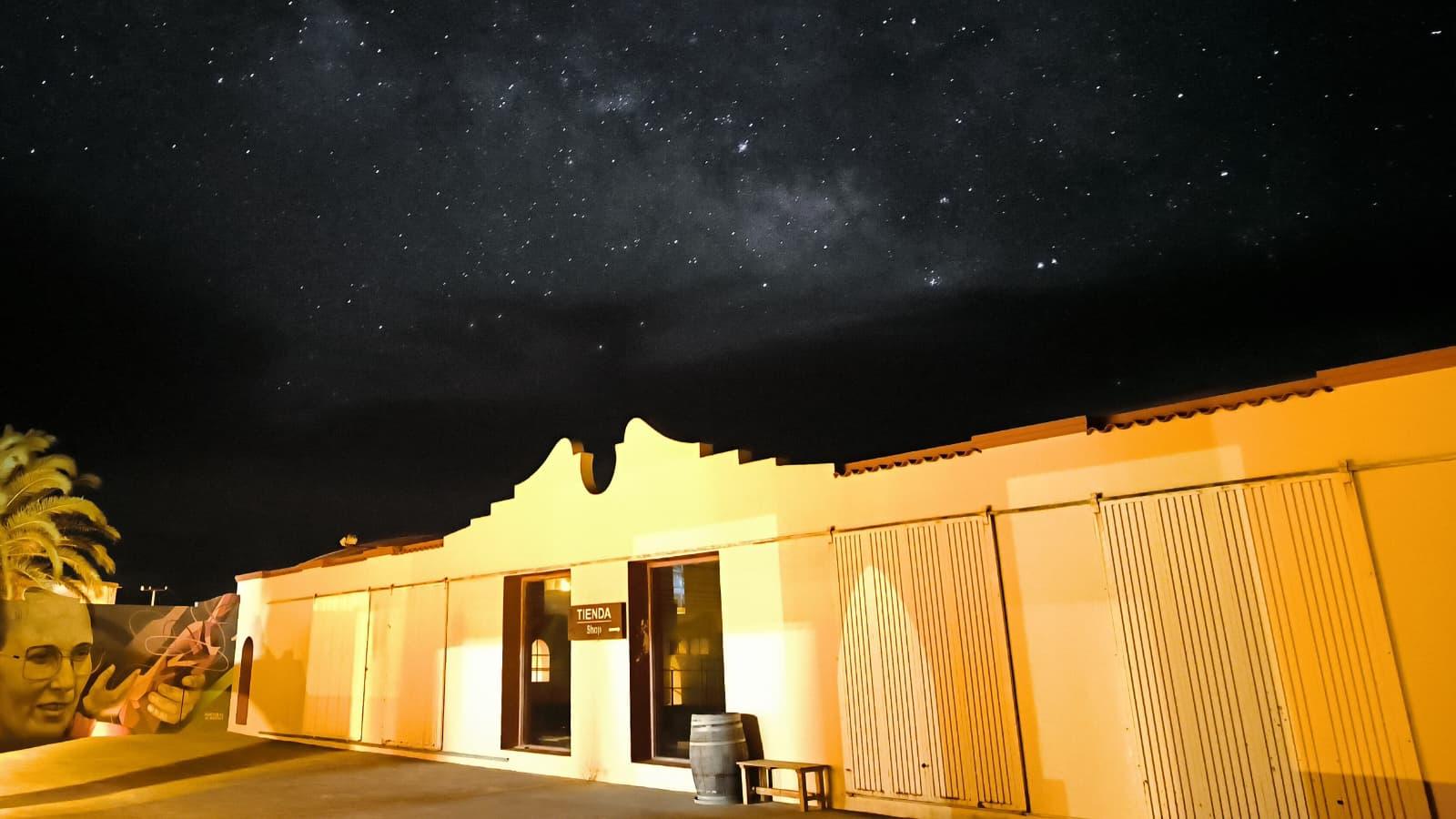
Stargazing & Wine at Bodegas Teneguía

Savor volcanic wines and explore the cosmos under La Palma's pristine night sky at a historic winery

5 (3)
FromFrom $40.5
See details
Roque de los Muchachos Observatory & Visitor Centre Tour 5.5 - 6.5 hours Free Cancellation

Roque de los Muchachos Observatory & Visitor Centre Tour

Explore world-class telescopes at La Palma's premier astronomical research facility with expert guides

4.5 (10)
FromFrom €58
See details
Premium Stargazing Experience at Roque de Los Muchachos 1.5 hours Free Cancellation

Premium Stargazing Experience at Roque de Los Muchachos

Explore celestial wonders from La Palma's summit using professional telescopes with expert guidance

4.1 (60)
FromFrom €75
See details
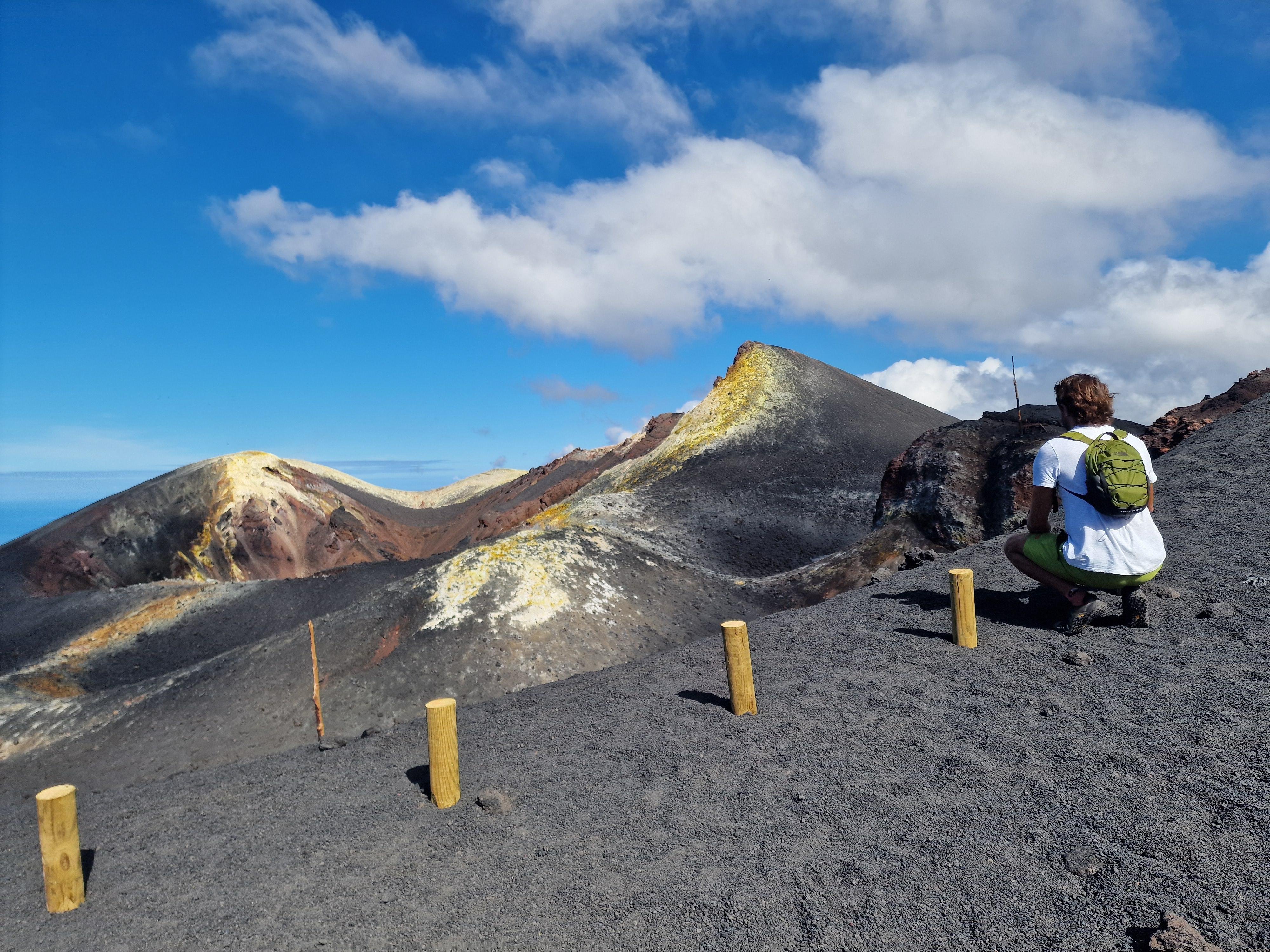
Tajogaite Volcano Hike & Sunset Picnic 5 hours Free Cancellation

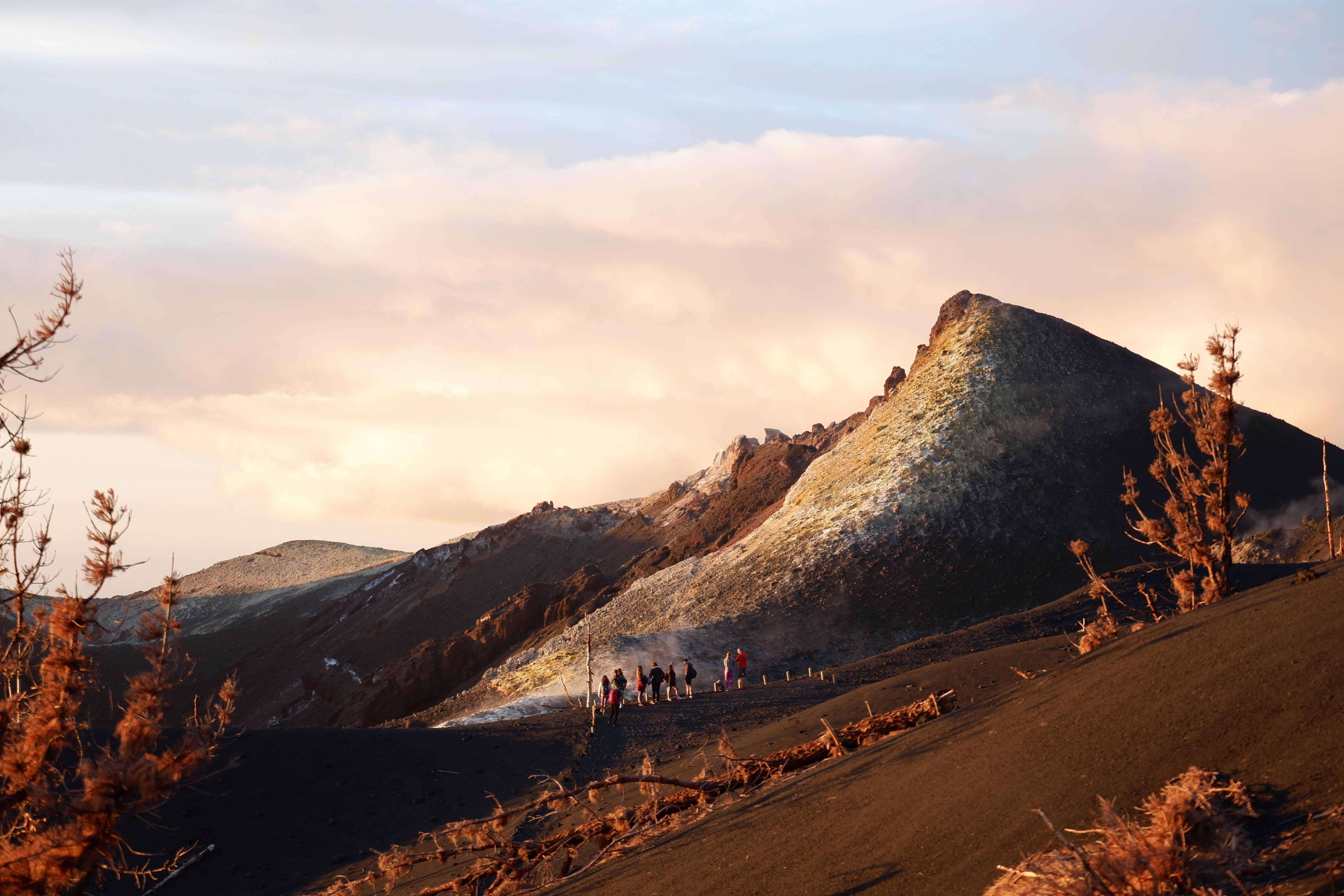
Tajogaite Volcano Hike & Sunset Picnic

Explore La Palma's newest volcano, witness dramatic lava landscapes, and enjoy sunset with local wine

4.9 (12)
FromFrom €45
See details
Tajogaite Volcano Official Trek with Licensed Guide 4 hours Free Cancellation

Tajogaite Volcano Official Trek with Licensed Guide

Explore La Palma's newest volcanic landscape on a guided 7km downhill hike through 2021 lava flows

4.9 (457)
FromFrom $41.65
See details
Tajogaite Volcano Guided Trek 4 hours Free Cancellation

Tajogaite Volcano Guided Trek

Trek to La Palma's newest volcano, created in 2021, and witness the dramatic landscape sculpted by lava

4.8 (2100)
FromFrom €38
See details
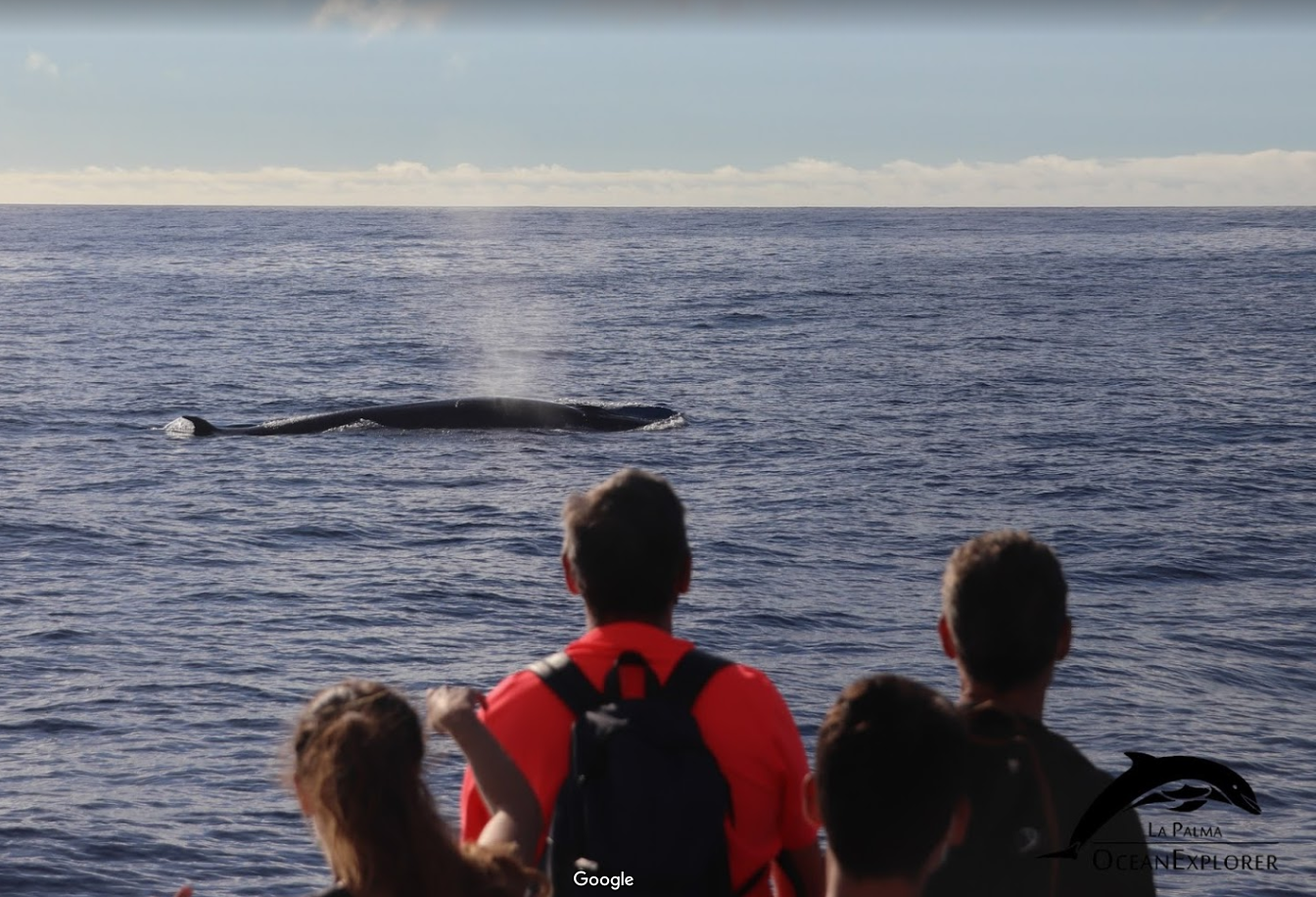
Marine Wildlife Expedition with Biologist Guide 3 hours Free Cancellation

Marine Wildlife Expedition with Biologist Guide

Three-hour coastal voyage to observe cetaceans with expert marine biology commentary and cave visits

4.5 (1110)
FromFrom €60
See details
Your journey

Your Stargazing La Palma day, step by step

1
Arrival

Arrival

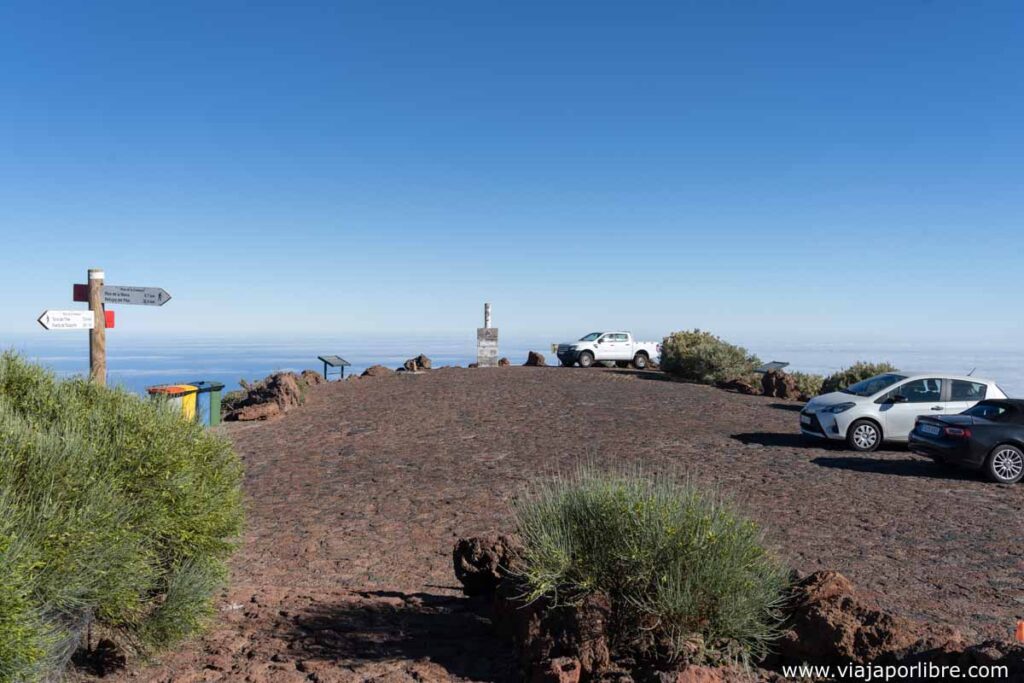
Park at the Visitor Centre lot

2
Exhibition Tour

Exhibition Tour

Explore the astronomy and geology galleries

3
Viewpoint Walk

Viewpoint Walk

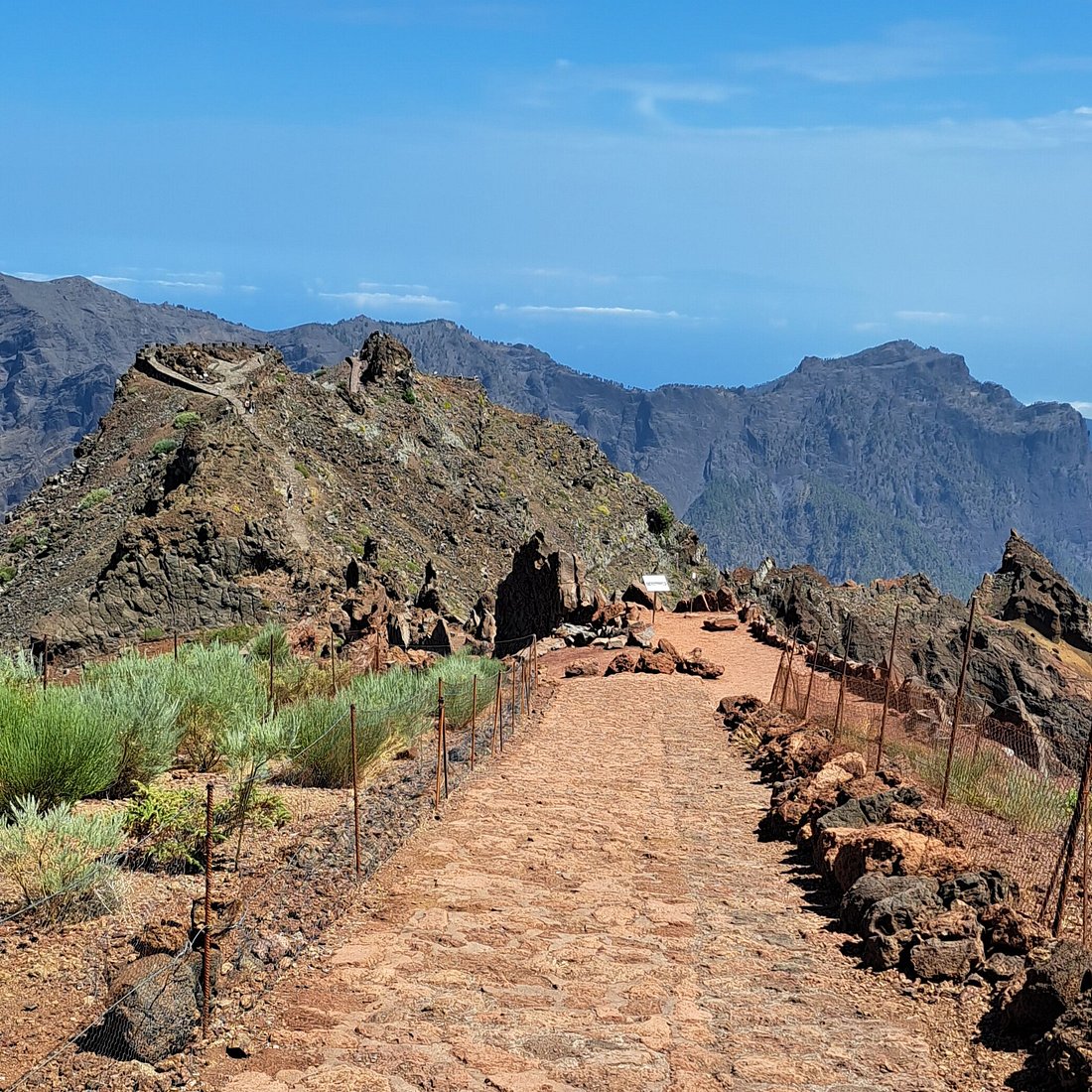
Walk the exterior paths for mountain views

What you'll see

What you'll see at Stargazing La Palma

Astronomy Exhibition

Astronomy Exhibition

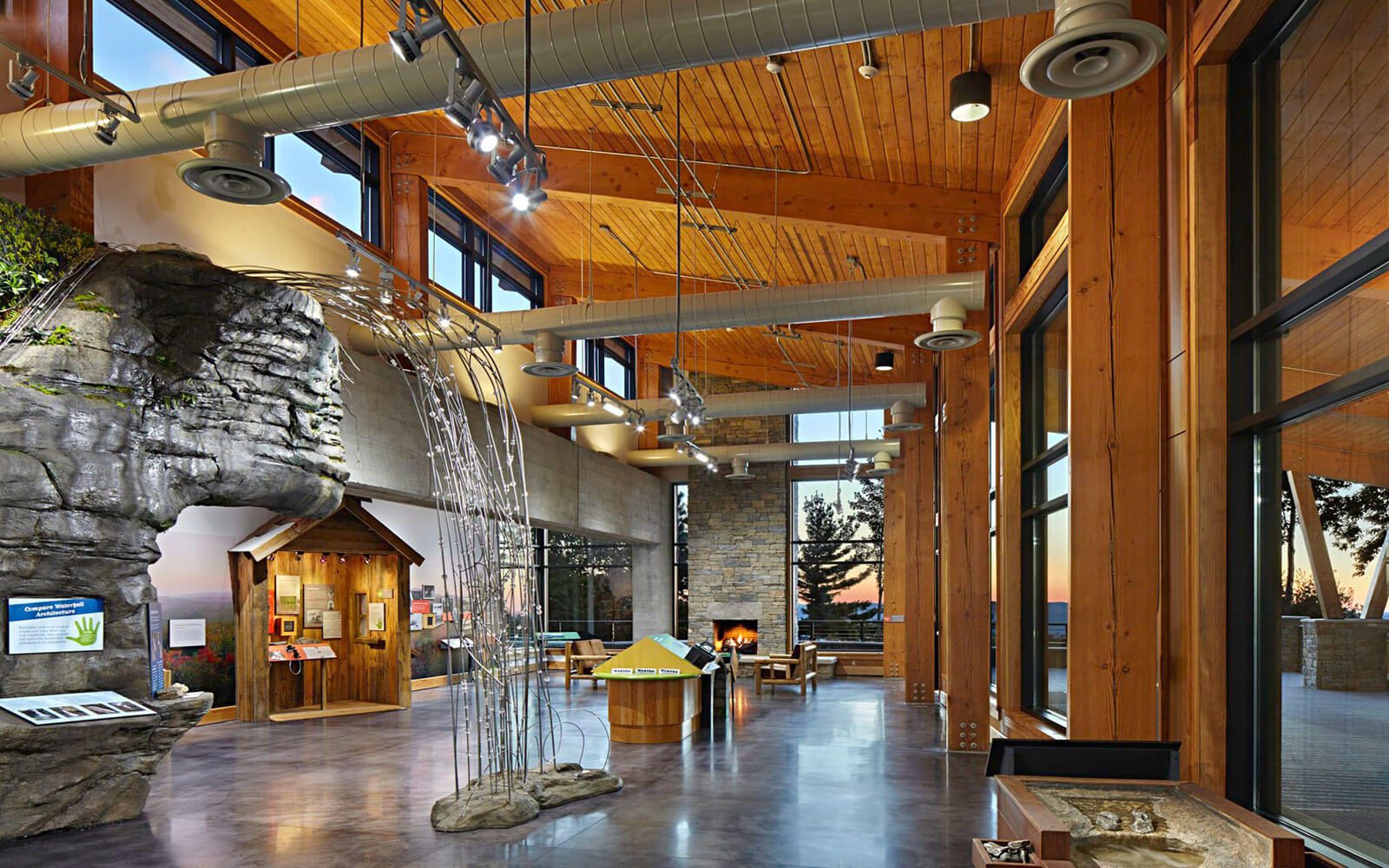
Features historical instruments and modern data from the telescopes on-site. The collection explains the 2,400-meter altitude advantage for clarity.

Caldera Views

Caldera Views

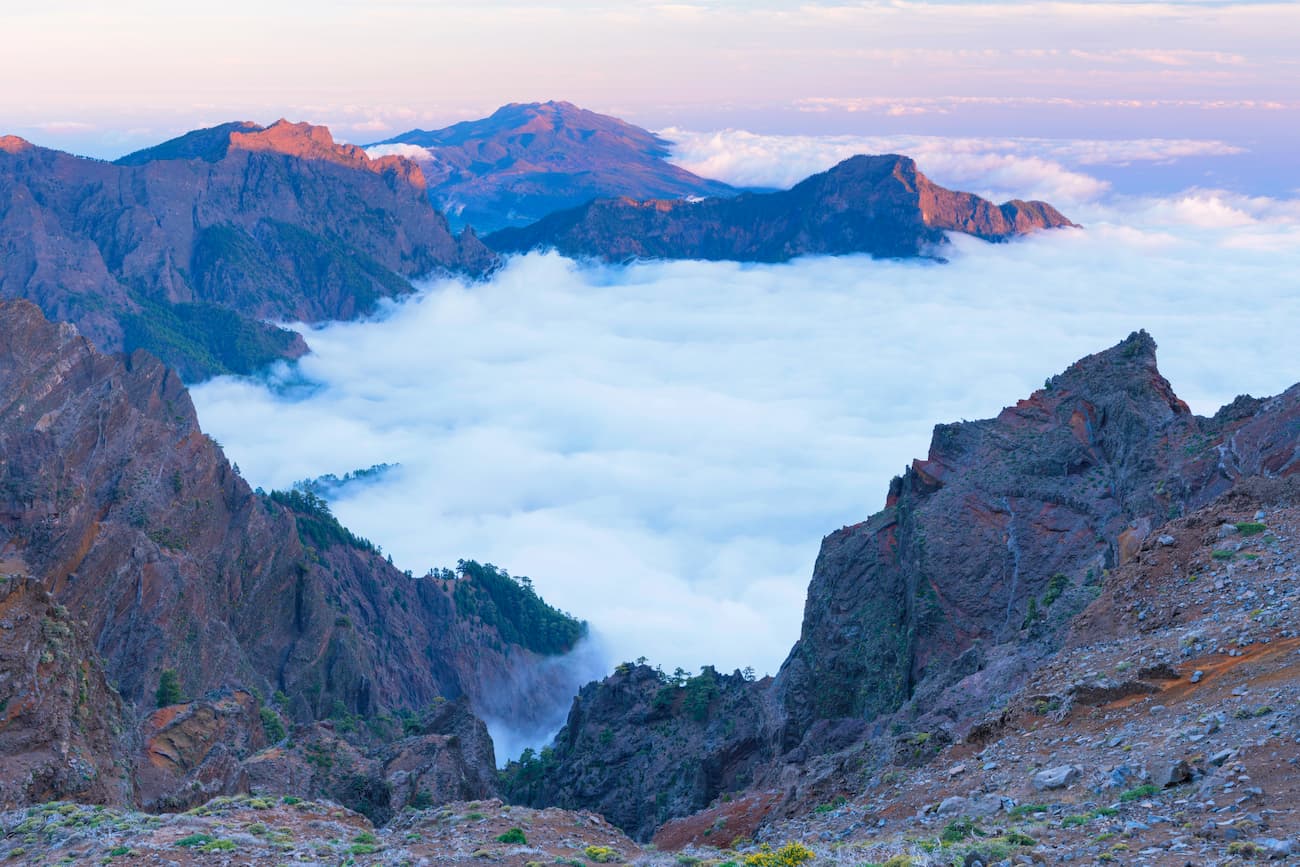
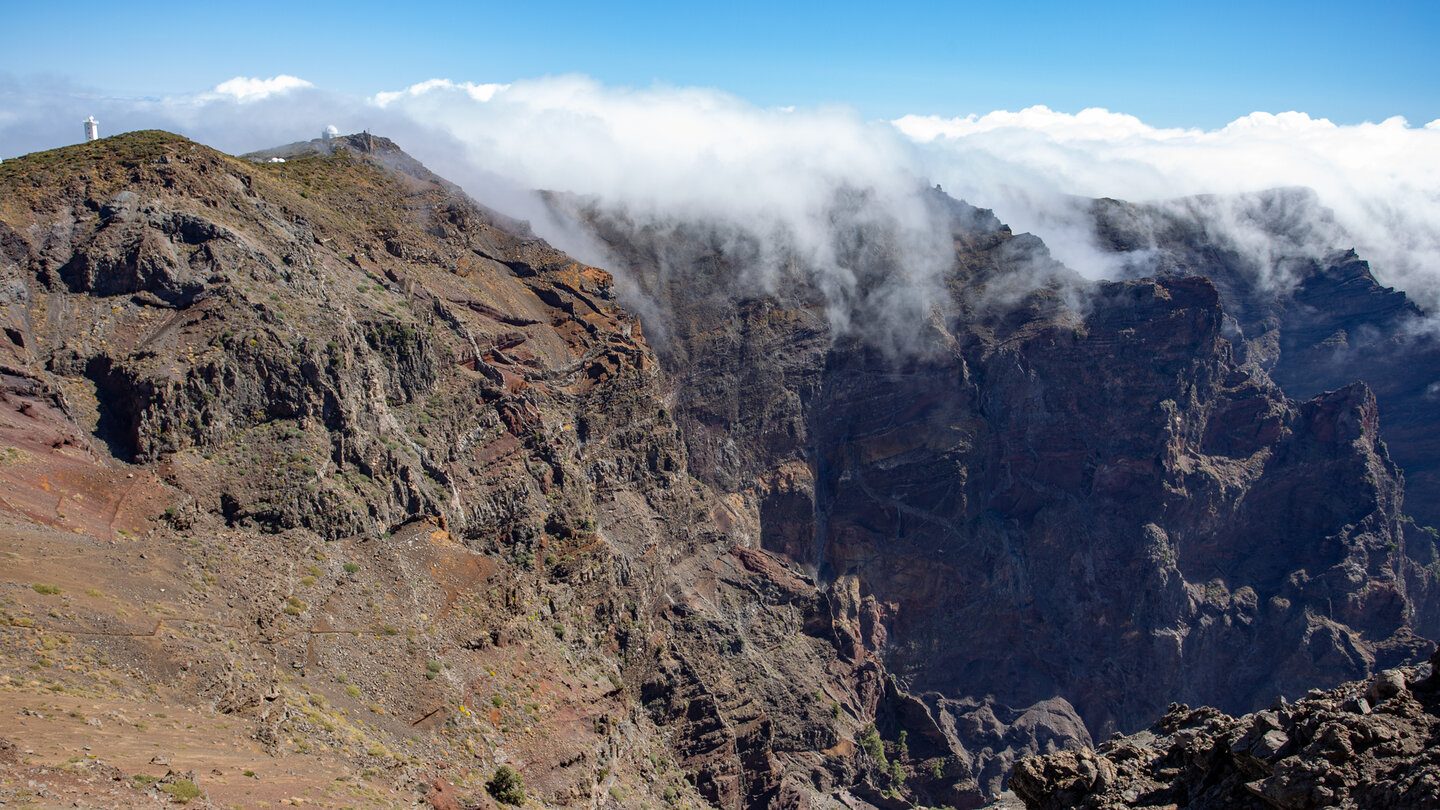
The Visitor Centre overlooks the caldera, a massive crater 1,500 meters deep. It represents millions of years of volcanic history.

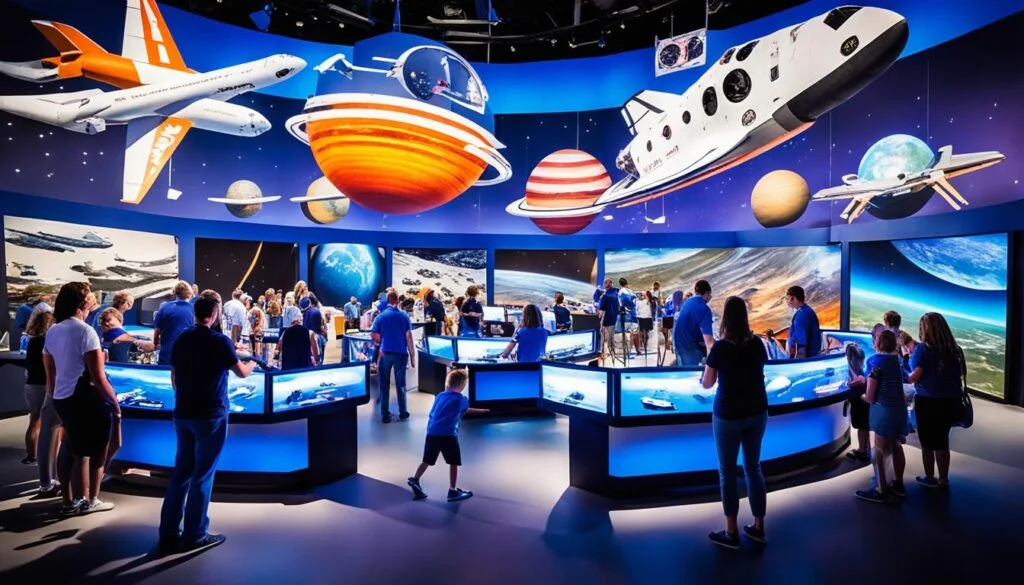
Interactive Models

Interactive Models

Detailed scale models show the mechanics of the solar system. These exhibits are designed for hands-on learning.

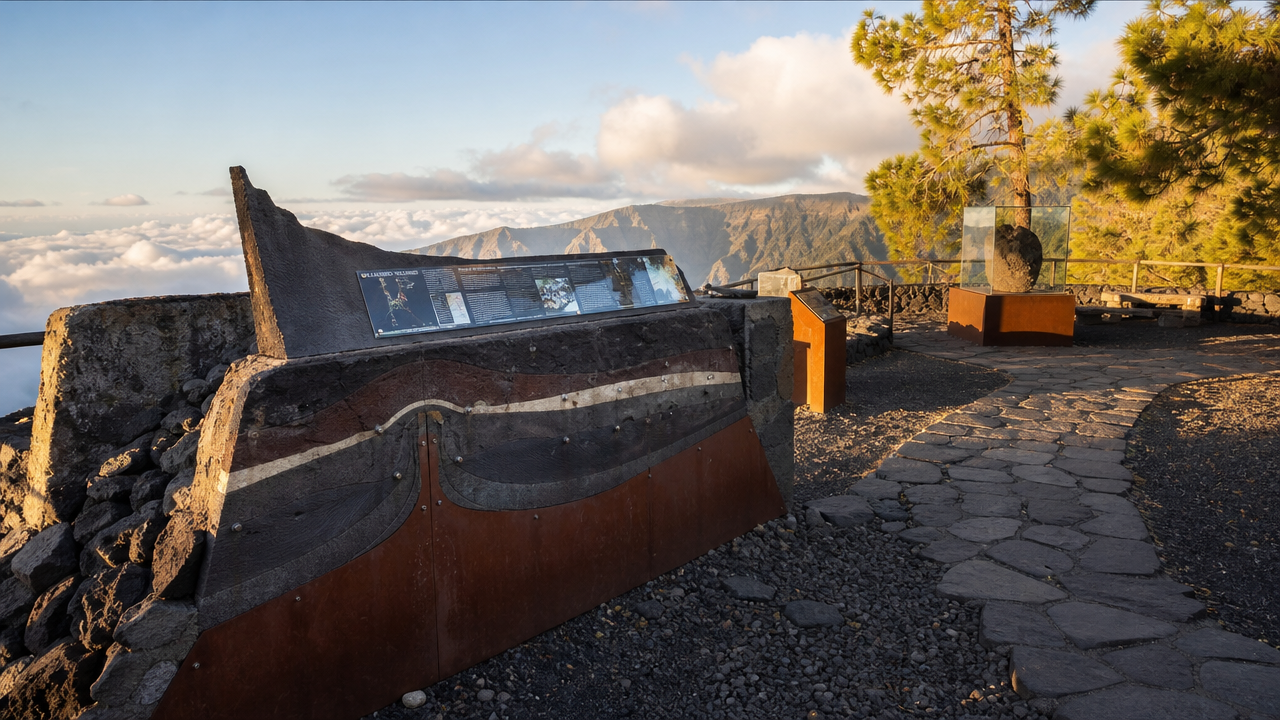
Geological Display

Geological Display

This area covers the formation of the Canary Islands through volcanic activity. Visitors can see rock samples from the island layers.

The experience

What visiting Stargazing La Palma is really like

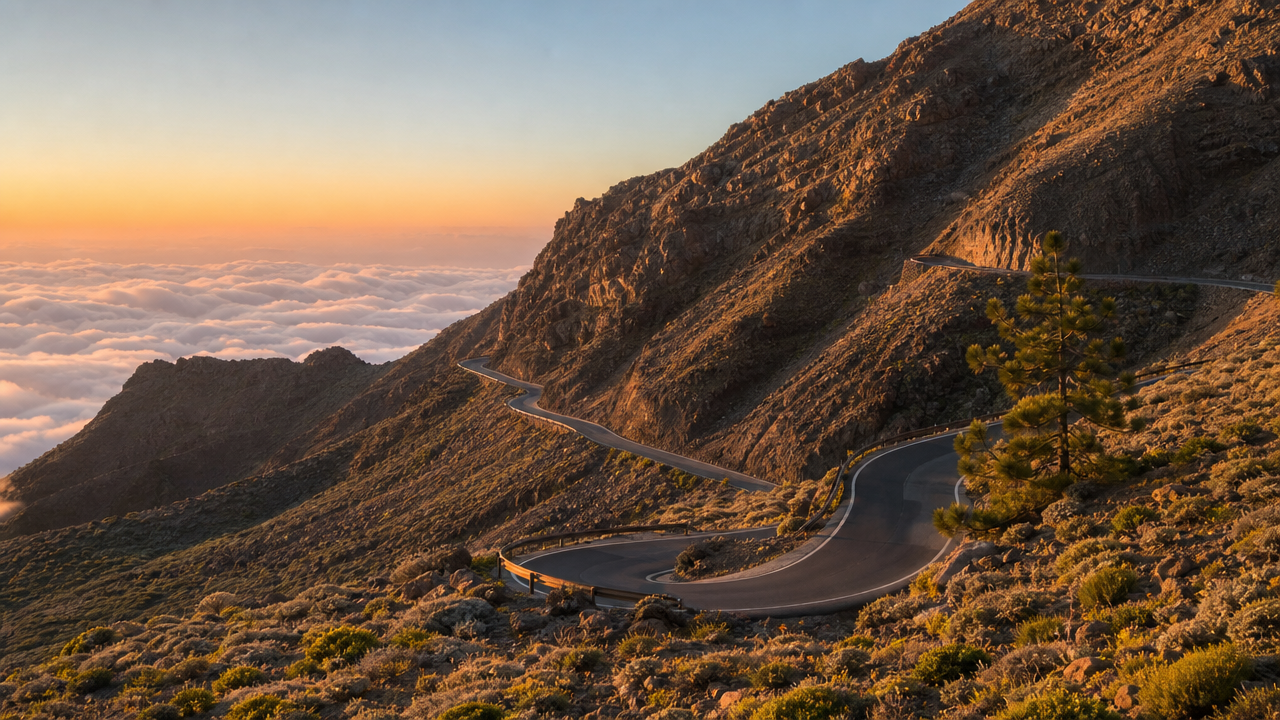
You leave the coast in daylight and climb the LP-4, gaining more than two kilometres of altitude across a series of hairpins. Around 1,500 metres you punch through the cloud sea; behind you the island vanishes under white, and ahead the pine forest gives way to bare scoria.

Read more Show less

Bring a jacket — the ridge runs cold even in August.

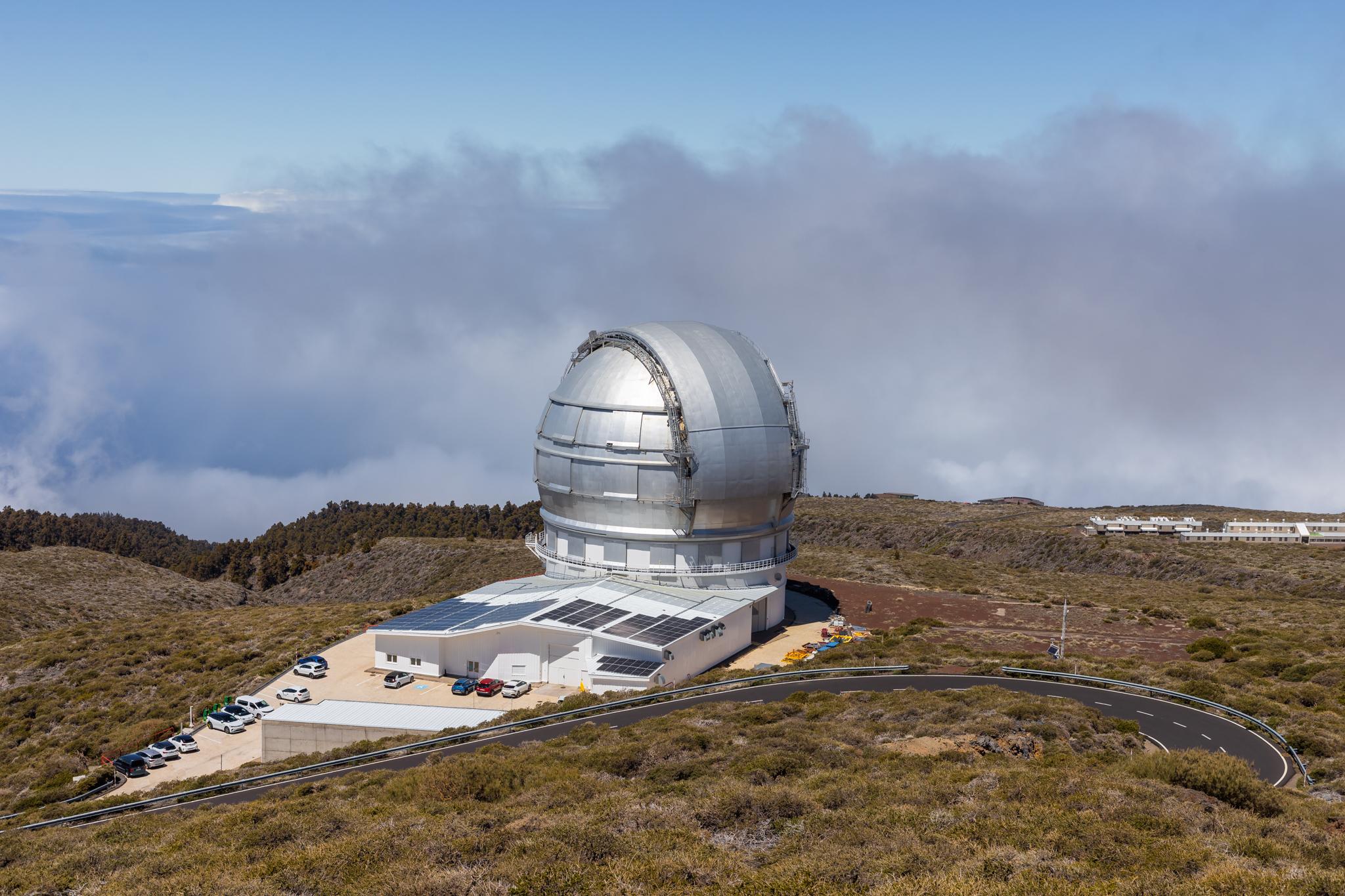
You arrive at the Roque de los Muchachos Visitor Centre inside the 10:00–16:00 window, pay the 15 EUR entrance, and start with the mirror-segment display before the mid-afternoon coach groups fill the exhibition floor. You trace the light path of a 10.4-metre telescope with your hand. You watch a live seeing monitor tick over in real numbers. Outside, you follow the ridge path and count the domes along the caldera rim, the Gran Telescopio Canarias unmistakable at the far end.

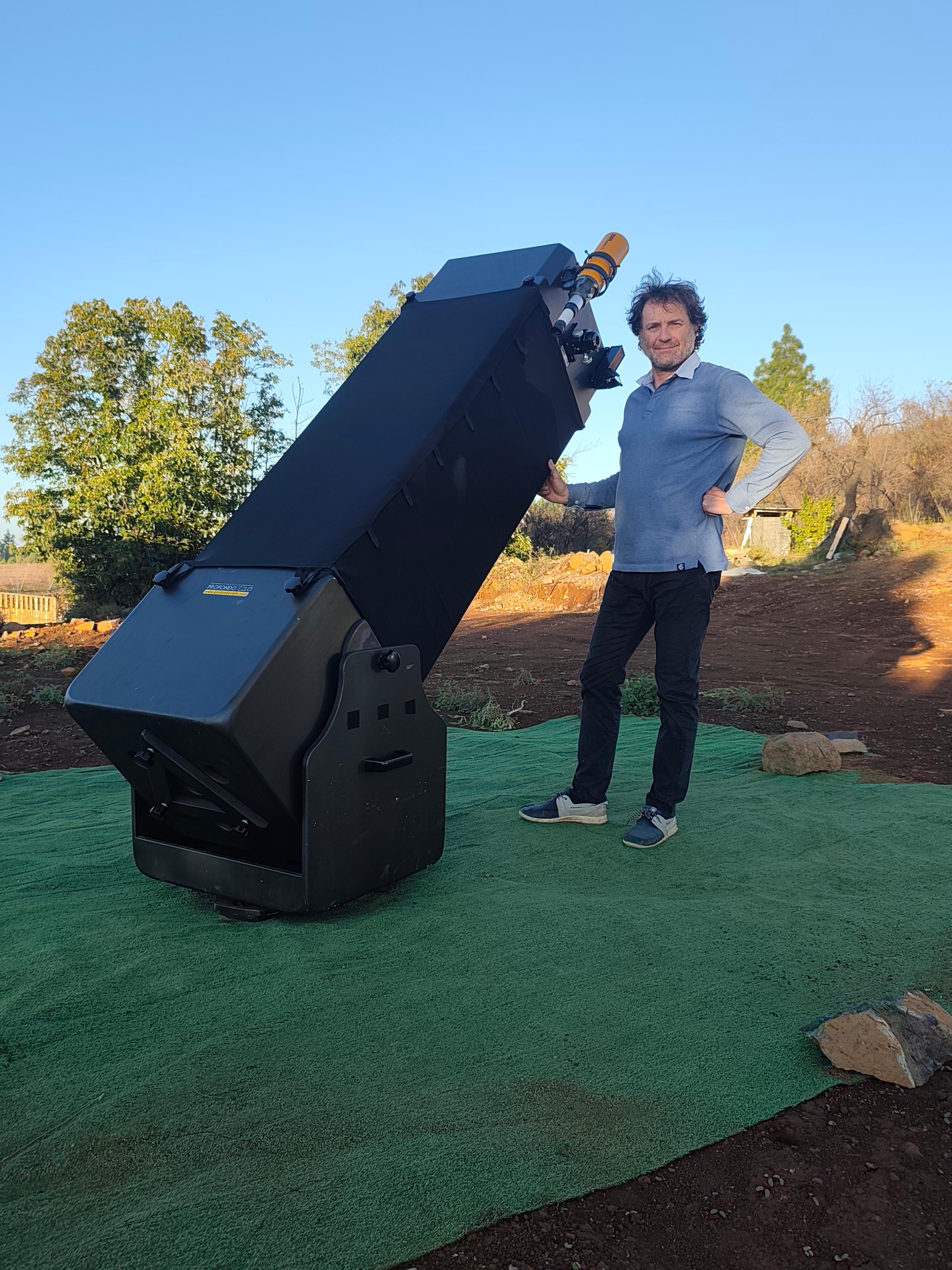
Then you descend. Most stargazing la palma tickets pair the centre with a guided session lower down, and you reach a signposted viewpoint before the last light goes. You let your eyes adapt for twenty minutes without a phone screen. A guide swings a Dobsonian onto Saturn, then the Lagoon Nebula. Any stargazing forecast la palma will have told you the sky is clear; standing under it, you understand what that actually means.

Stargazing La Palma
Everything You Need to Know

Your complete Stargazing La Palma guide

All the details about your upcoming adventure in one place

Stargazing La Palma Beneath Starlight Reserve Skies

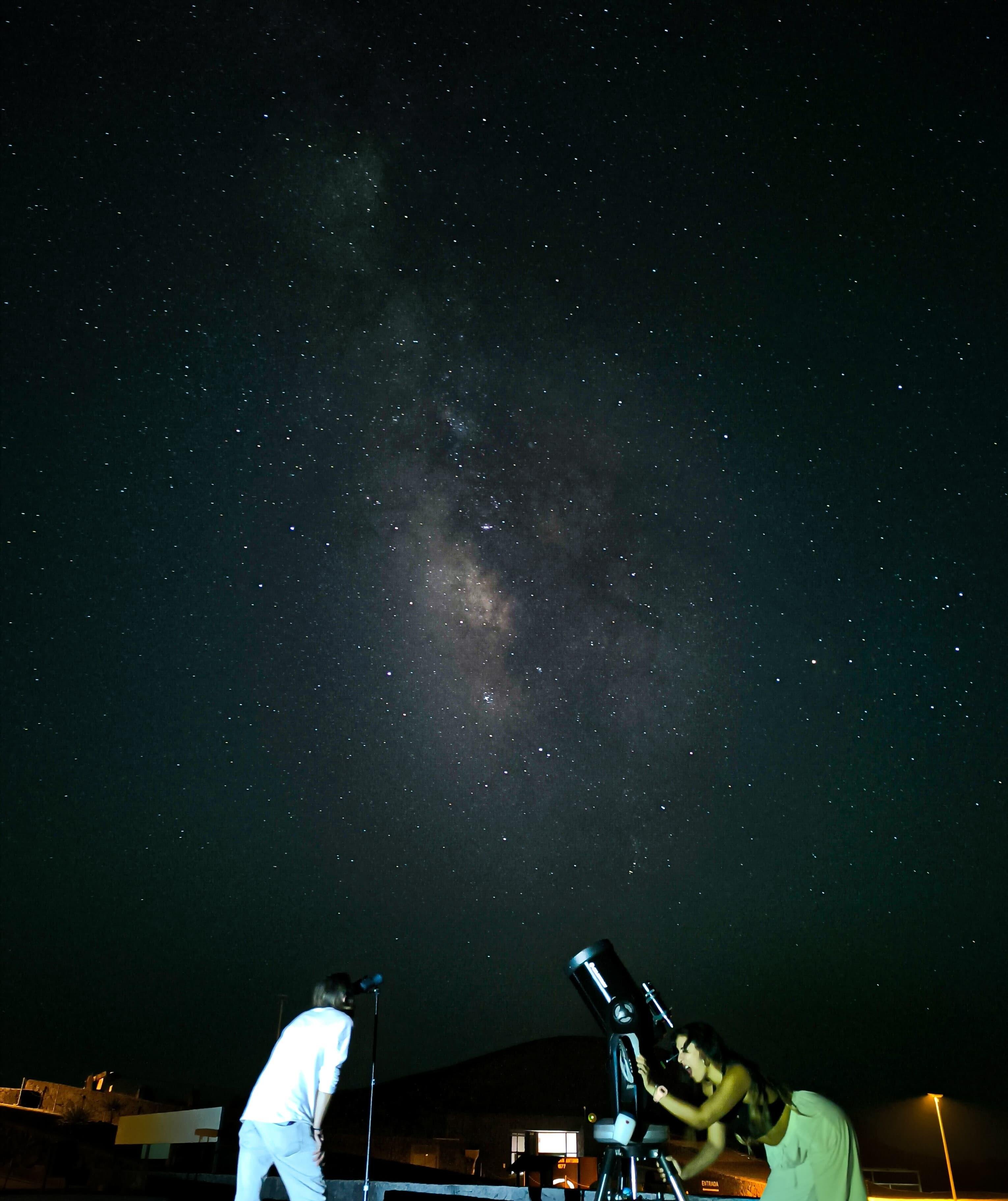
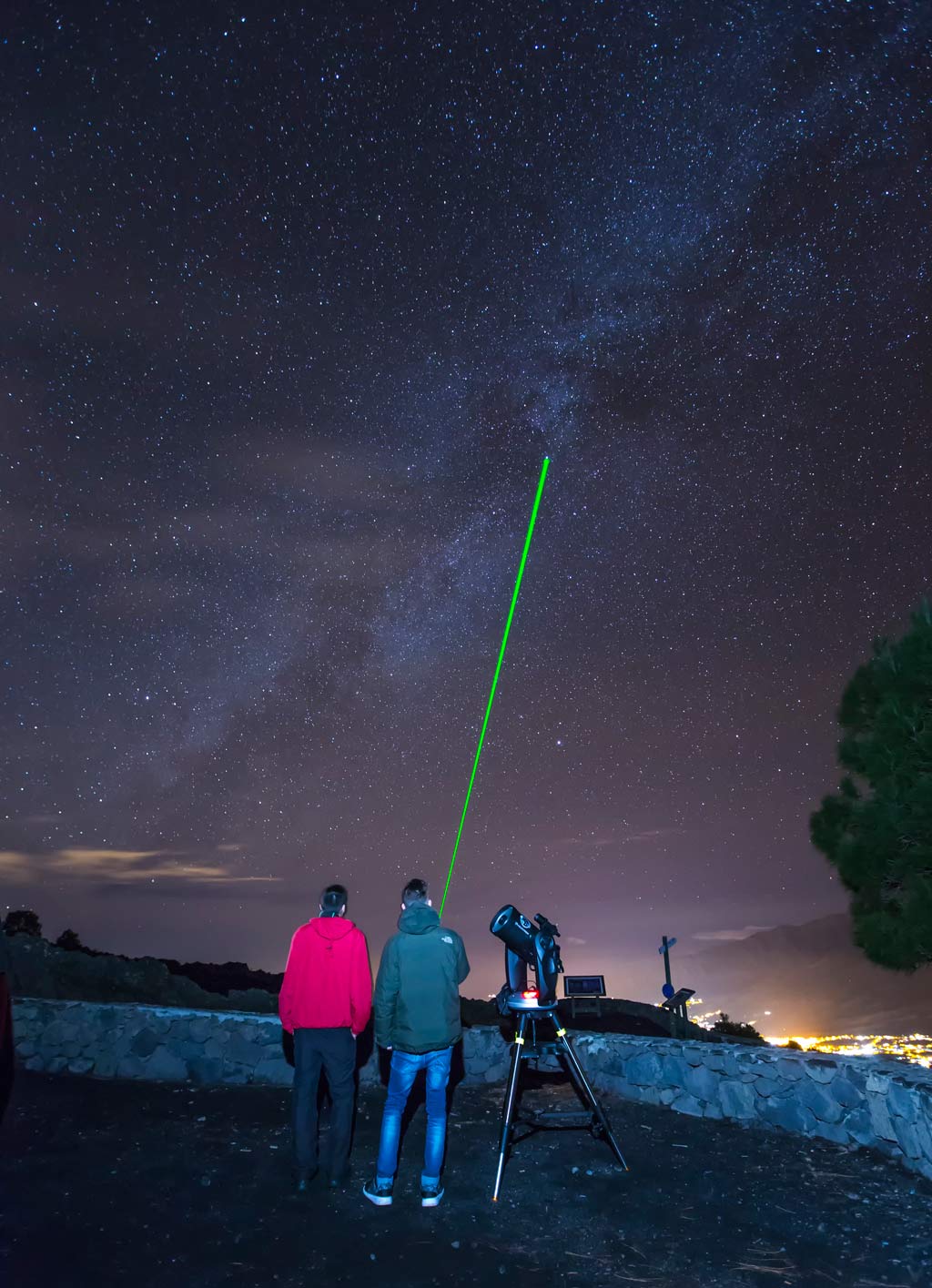
Certified as a Starlight Reserve and home to the Roque de los Muchachos observatory, the island makes stargazing la palma one of the clearest night-sky experiences in the Atlantic. Known locally as observación de estrellas, the outing places guides and telescopes above the cloud inversion layer, where the Milky Way, Saturn's rings and open clusters read sharply against sky-protection-law darkness. Most stargazing la palma tours leave from Santa Cruz de La Palma and drive up to a sheltered ridge viewpoint with mounted optics and laser-pointer orientation.

La Palma protects its darkness by law. The Spanish Ley del Cielo of 1988 regulates streetlight shielding, air traffic corridors and radio interference across the entire island, making it one of the few inhabited places on Earth where the night sky carries legal status.

That statute is why stargazing la palma appears on astronomy itineraries alongside Mauna Kea and the Atacama.

The reason is geography. The island rises to 2,426 metres at Roque de los Muchachos, above a persistent inversion layer that traps humidity and dust below roughly 1,500 metres. Cool Atlantic air, stable laminar flow off the trade winds, and a caldera rim that blocks light from the coastal towns combine into what astronomers call exceptional seeing. Measurements here routinely record sub-arcsecond atmospheric blur, a figure most continental sites never approach.

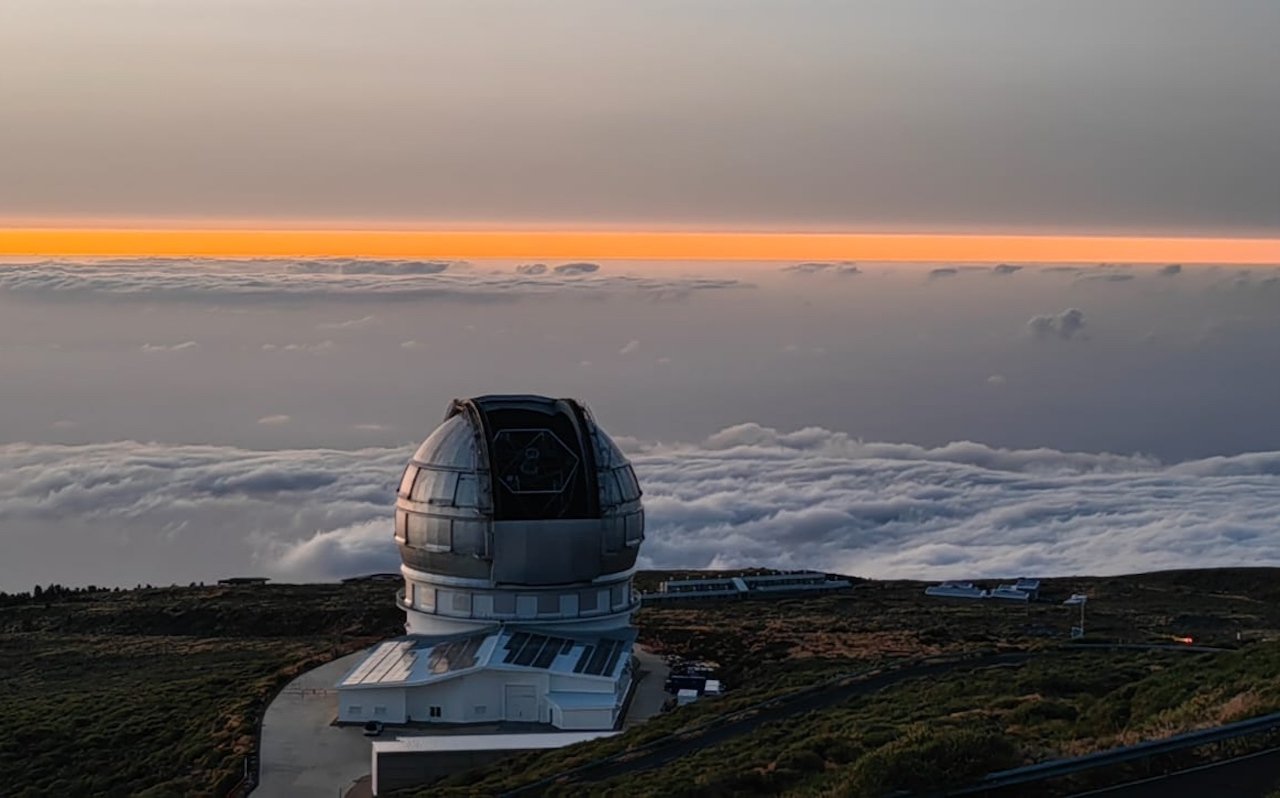
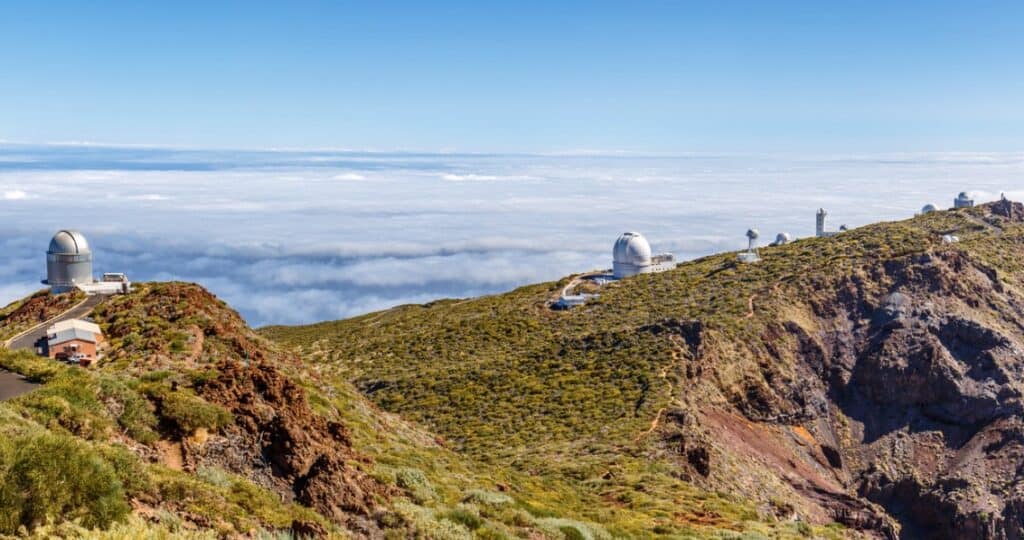
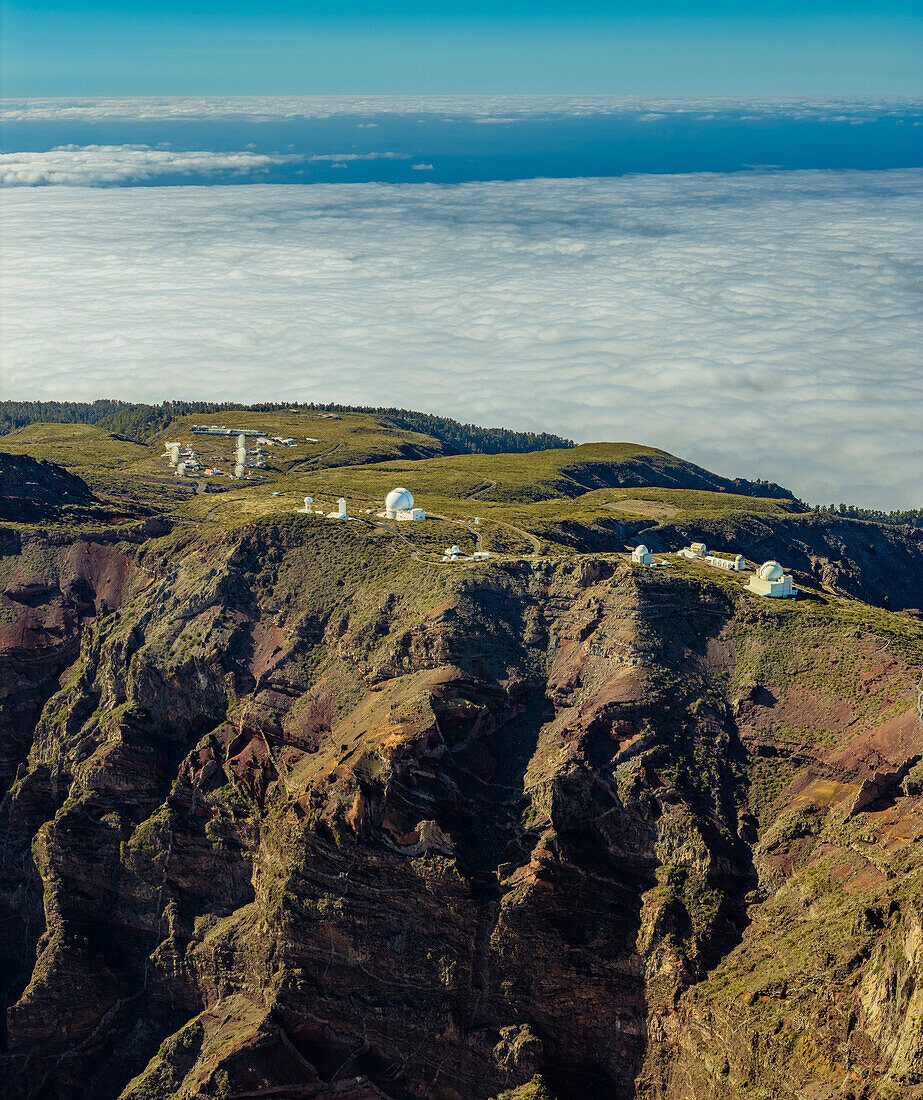
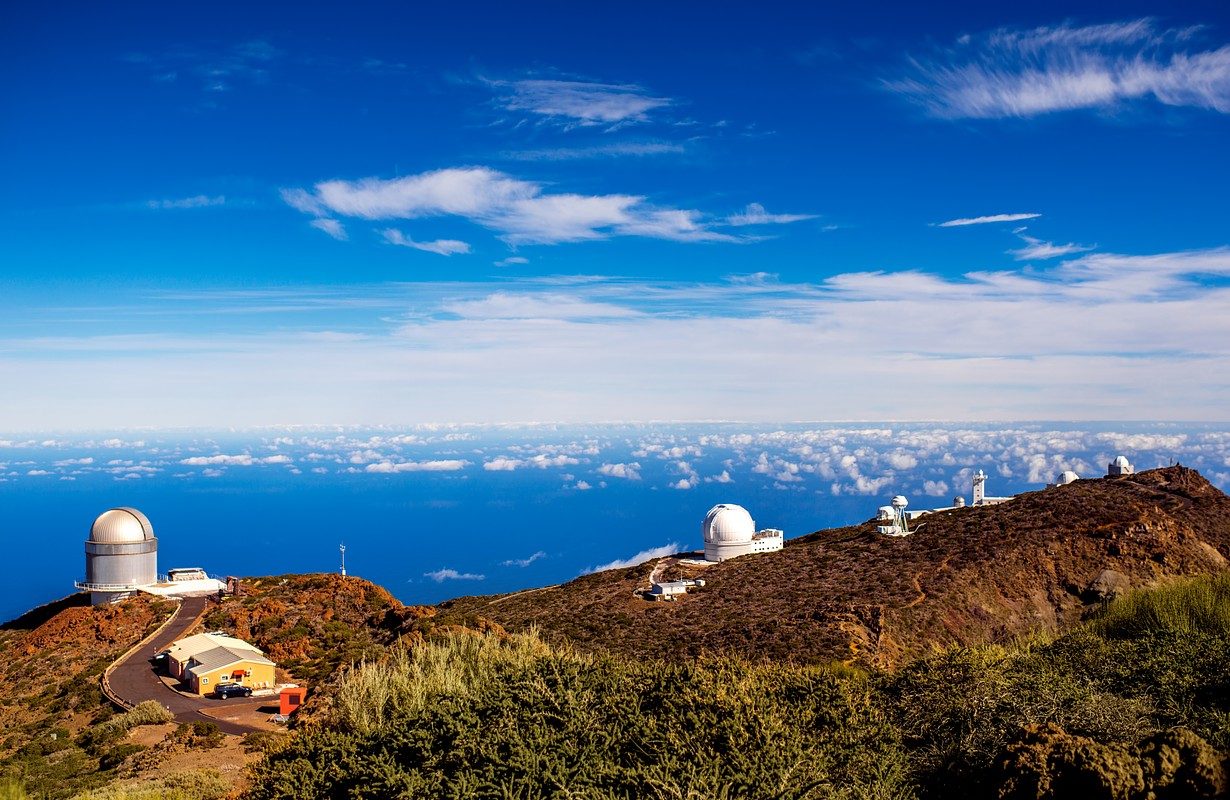
The Roque de los Muchachos Observatory, operated by the Instituto de Astrofísica de Canarias, occupies the summit ridge in Garafía. Its instruments include the Gran Telescopio Canarias, a 10.4-metre segmented mirror that remains among the largest single-aperture optical telescopes in operation, alongside the MAGIC Cherenkov arrays and the William Herschel Telescope. The domes sit in a line along the caldera edge, white against volcanic scoria, visible from the LP-4 road long before arrival. UNESCO designated the surrounding zone a Starlight Reserve, a category created partly in response to conditions documented here.

Below the summit, stargazing spots la palma are formalised into sixteen signposted astronomical viewpoints, each with orientation panels and low-glare surfaces. Llano del Jable, on the volcanic ash plain, and the Mirador Astronómico del Llano del Jable frame the Milky Way core through late summer. Many operators running a stargazing trip la palma combine these viewpoints with portable Dobsonian telescopes and laser-guided constellation talks in Spanish and English.

The Visitor Centre at the summit interprets this work for daytime arrivals: instrument models, mirror-segment displays, and live data feeds from the telescopes above. Observatory interiors themselves require separate booking and are not covered by centre admission. Guides selling stargazing la palma tours typically pair an afternoon at the centre with a descent to a lower viewpoint after dusk, when temperatures on the ridge fall sharply.

A stargazing la palma holiday therefore divides cleanly. Daylight belongs to the mountain, the caldera and the engineering. Darkness belongs to the sky the island has spent four decades defending, and to the observers who travel here for stargazing la palma precisely because so little of it has been lost.


La Palma is one of the few inhabited places on Earth where the night sky carries legal status.

Dress code

Mountain temperatures at the Roque de los Muchachos Visitor Centre drop significantly. Wear layers and sturdy shoes for navigating outdoor paths.

Bags & security

Large backpacks are not permitted inside exhibition galleries. Personal items must remain with the visitor at all times.

Photography

Non-commercial photography is permitted for personal use. Tripods are prohibited inside the Visitor Centre galleries.

Families & strollers

Interactive exhibits cater to school-aged children interested in space. Keep groups together while exploring the facility.

Accessibility

The main floor of the Roque de los Muchachos Visitor Centre provides level access for mobility aids. Exterior paths feature uneven volcanic terrain.

Food & drink

No dining facilities are available on-site. Bring enough water and snacks for your visit to this remote location.

Not allowed

× Tripods × Large luggage × Drones × Alcohol × Food inside galleries × Smoking × Professional camera gear × Sharp objects × Flammable items

What to bring

✓ Water bottle ✓ Sunscreen ✓ Warm jacket ✓ Walking shoes ✓ Hat ✓ Camera

Opening hours

Mon Closed
Tue 10:00–17:00
Wed Closed
Thu Closed
Fri 10:00–17:00
Sat 10:00–17:00
Sun 10:00–17:00

How to get there

Closures & exceptions

  • ·Mon — Weekly closure
  • ·Wed — Weekly closure
  • ·Thu — Weekly closure

At a glance

Opening Hours

10:00–17:00 (Tue, Fri, Sat, Sun)

Address

Roque de los Muchachos Visitor Centre, LP-4, 38729 Garafía, Santa Cruz de La Palma

Accessibility

Ground floor exhibition areas are wheelchair accessible

Best Arrival

10:00–16:00 for optimal lighting and driving conditions

Storage

No lockers available at the Visitor Centre

Navigation

Follow LP-4 mountain road signs towards the observatory

Getting there

Car · 90 min · N/A

Follow the LP-4 road from Santa Cruz de La Palma. The drive takes approximately 90 minutes depending on traffic conditions.

Cancellation policy

Visitor Centre entrance tickets are non-refundable. Separate bookings for observatory tours are subject to individual operator policies.

Plan your time

Planning Your Stargazing La Palma Visit Duration

Recommended time

2 hours

Most visitors spend approximately two hours exploring the interactive exhibits at the visitor center before preparing for nocturnal astronomy activities. Engaging with the Roque de los Muchachos Visitor Centre displays allows you to understand the astrophysics research conducted at the summit, though you should secure your stargazing la palma tickets well in advance. Crowds remain manageable during the morning, but you may experience longer queues for specific multimedia stations during mid-afternoon. If you are participating in organized stargazing la palma tours later that evening, ensure you leave enough transit time to reach your designated observation point after your center visit. Planning your stargazing la palma tour around these intervals provides a balanced schedule for both educational engagement and celestial observation.

Crowd levels through the day

10:00–11:30 Light
11:30–13:00 Moderate
13:00–15:00 Heavy
15:00–17:00 Moderate
Plan ahead

Best time to visit Stargazing La Palma

Weather · crowds · average price — dots go green to amber to red as each metric rises.

Spring

March to May offer mild temperatures and blooming flora across the mountain slopes.

Summer

June to August provides the clearest skies for viewing but requires sun protection during peak hours.

Autumn

September to November is ideal for stable weather patterns before winter precipitation begins.

Winter

December to February brings cold temperatures and occasional snow on the summit path.

Insider tips

Helpful tips for visiting Stargazing La Palma

Hydration

Drink plenty of water before ascending to avoid altitude-related fatigue. Dehydration is common due to low humidity at high altitudes.

Sun Protection

Apply high-SPF sunscreen even on cloudy days. The solar radiation is intense at this elevation.

Where to meet

Stargazing La Palma meeting points

Visitor Centre Entrance

Visitor Centre Entrance

LP-4, 38729 Garafía

Meet at the main information desk

Get directions
The story

Historical Foundations of Stargazing La Palma

The story begins with atmosphere, not architecture. In 1856 the Scottish Astronomer Royal Charles Piazzi Smyth carried instruments up Tenerife's Guajara and Teide, proving that mountain summits above the inversion layer deliver steadier images than any lowland site in Europe. His expedition established the Canary Islands as a reference point in observational astronomy more than a century before the first dome rose on La Palma. The modern chapter opened in 1959, when Francisco Sánchez Martínez began systematic sky-quality measurements in the archipelago. Those campaigns led to the founding of the Instituto de Astrofísica de Canarias in 1975 and to the selection of the Roque de los Muchachos, a caldera rim at 2,396 metres in the municipality of Garafía. The 1979 Acuerdos de Cooperación en Materia de Astrofísica opened the summit to international partners, and King Juan Carlos I inaugurated the Observatorio del Roque de los Muchachos on 29 June 1985 before delegations from more than a dozen nations. Anyone considering stargazing la palma today is standing inside that treaty framework. Instruments followed in sequence. The Isaac Newton Telescope, relocated from Herstmonceux in Sussex, saw first light in 1984; the 4.2-metre William Herschel Telescope followed in 1987; the Nordic Optical Telescope and the Telescopio Nazionale Galileo widened the summit's reach through the 1990s. The Gran Telescopio Canarias, with its 10.4-metre segmented primary mirror, achieved first light in 2007 and was inaugurated in 2009, briefly the largest single-aperture optical telescope in the world. The MAGIC and LST-1 Cherenkov arrays extended the site into gamma-ray astronomy. Protection came through law. The 1988 Ley del Cielo, the first dark-sky legislation of its kind in Spain, restricted lighting, air traffic and radio interference across the island; UNESCO ratified the Starlight Declaration at La Palma in 2007. The 2021 Tajogaite eruption tested that inheritance, coating domes in ash without halting operations. Visitors booking stargazing la palma tickets, joining stargazing la palma tours or arranging a private stargazing la palma tour inherit the results of that long defence of darkness — the astronomical tourism that now defines the island's landmarks.

1856

Charles Piazzi Smyth conducts his mountain-altitude observing expedition on Tenerife, establishing the Canaries' astronomical credentials.

1959

Francisco Sánchez Martínez begins systematic sky-quality measurements across the archipelago.

1975

The Instituto de Astrofísica de Canarias is formally constituted.

1979

The Acuerdos Internacionales de Cooperación en Materia de Astrofísica open the Canarian summits to foreign institutions.

1985

King Juan Carlos I inaugurates the Observatorio del Roque de los Muchachos on 29 June before international delegations.

1988

Spain's Ley del Cielo imposes lighting, flight-path and radio restrictions to protect the observatory's dark skies.

2007

The Gran Telescopio Canarias achieves first light, and UNESCO's Starlight Declaration is signed on the island.

2021

The Tajogaite eruption blankets the caldera rim in ash without ending summit operations.

Photo spots

Top Photography Spots for Stargazing La Palma

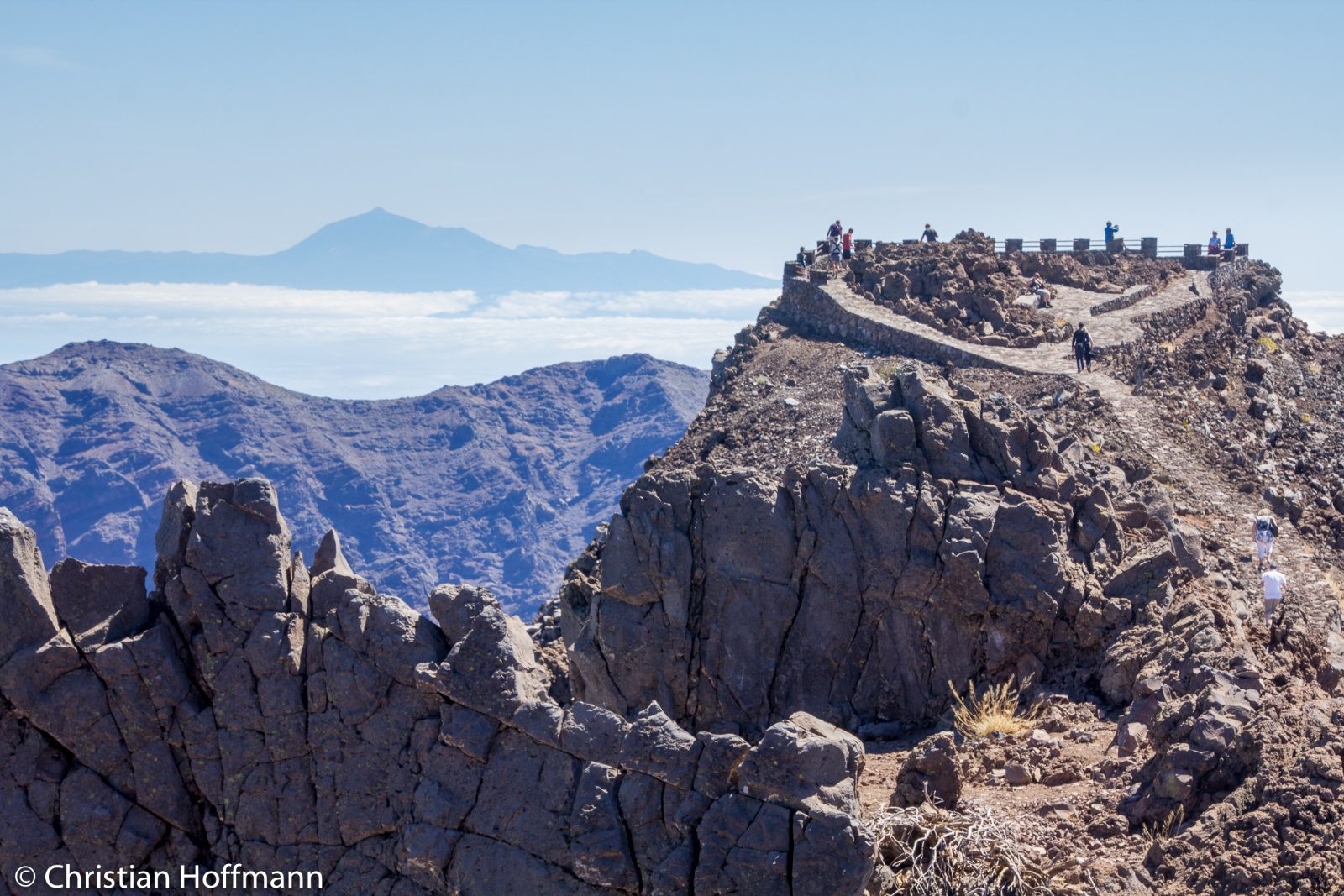
Mirador del Roque de los Muchachos

Mirador del Roque de los Muchachos

Best light · Golden hour

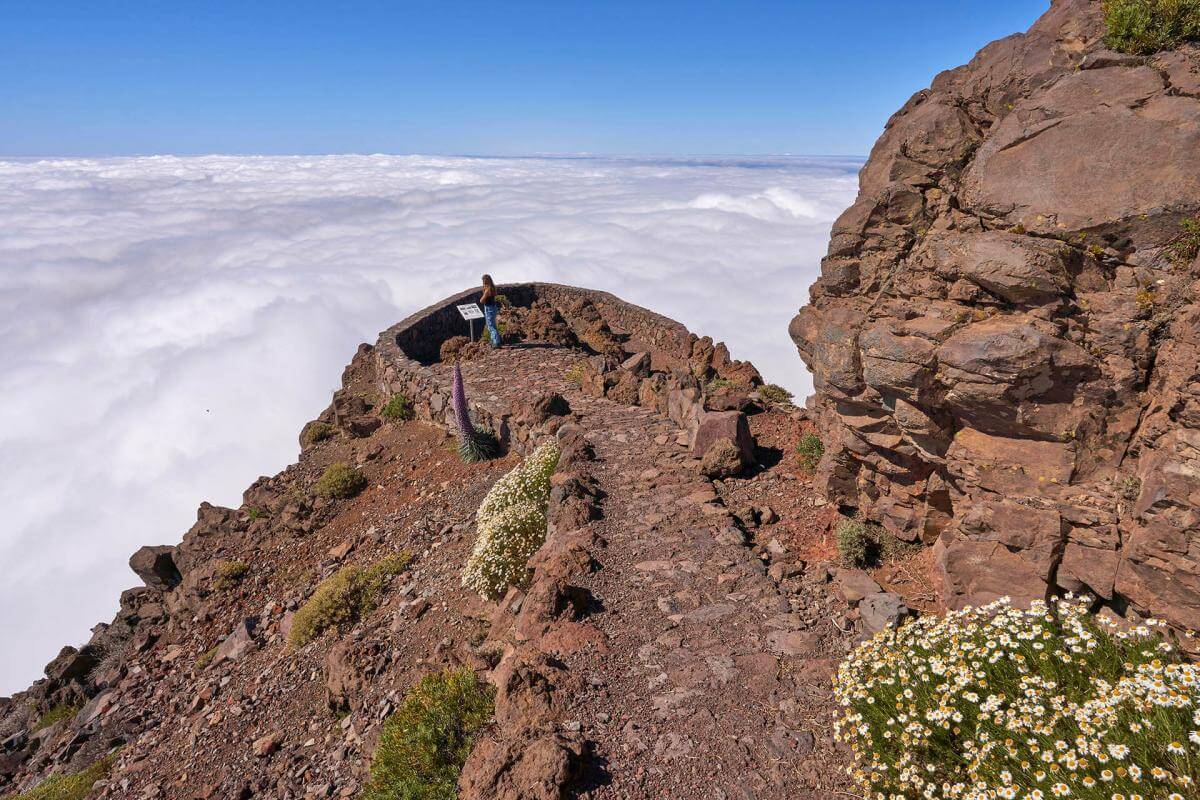
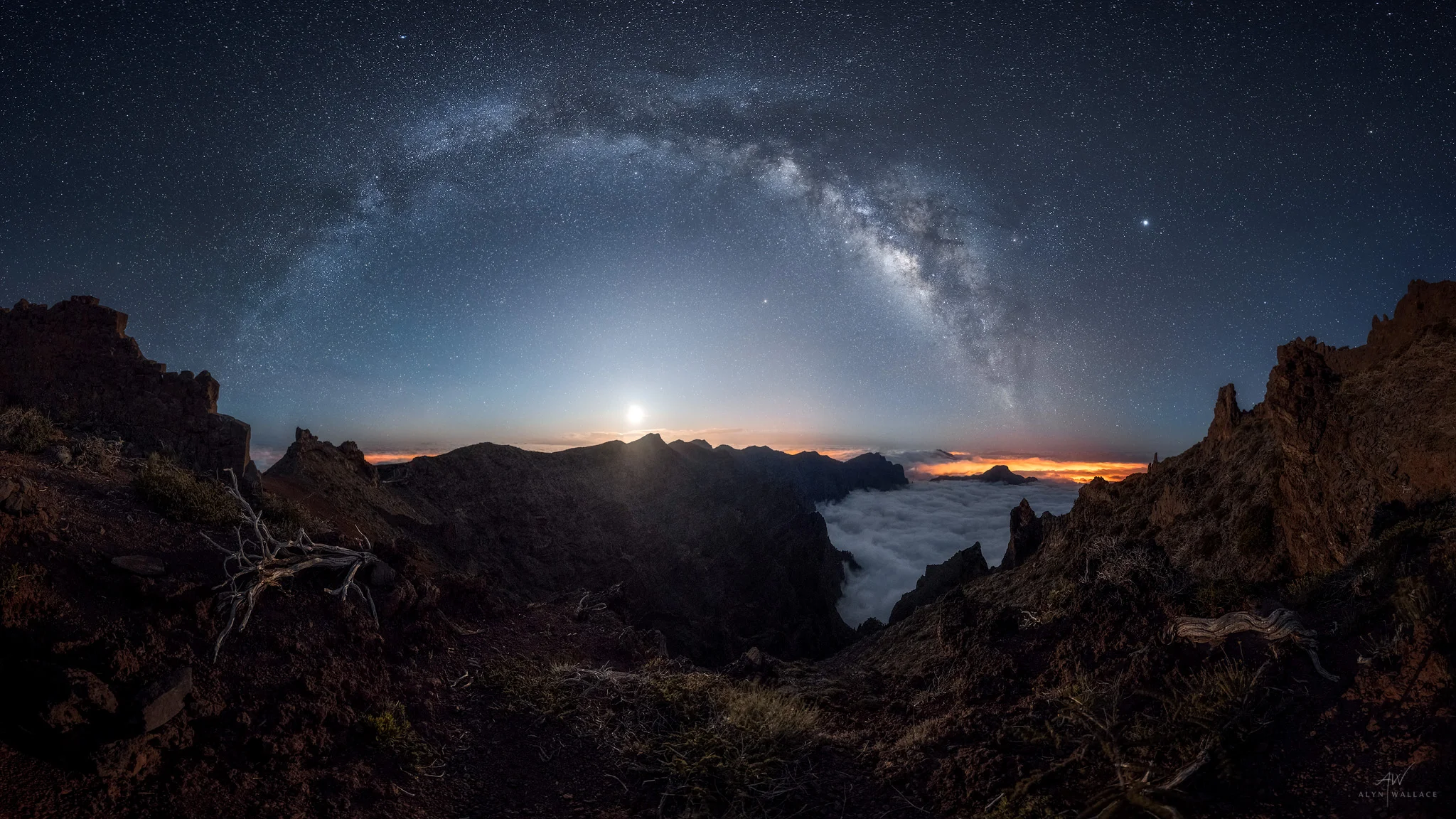
Position your tripod on the north-facing platform to capture the dramatic jagged ridge lines and the sea of clouds below. This vantage point provides a clear horizon for stargazing la palma with the silhouettes of massive telescopes in the frame.

Visitor Centre Terrace

Best light · After sunset

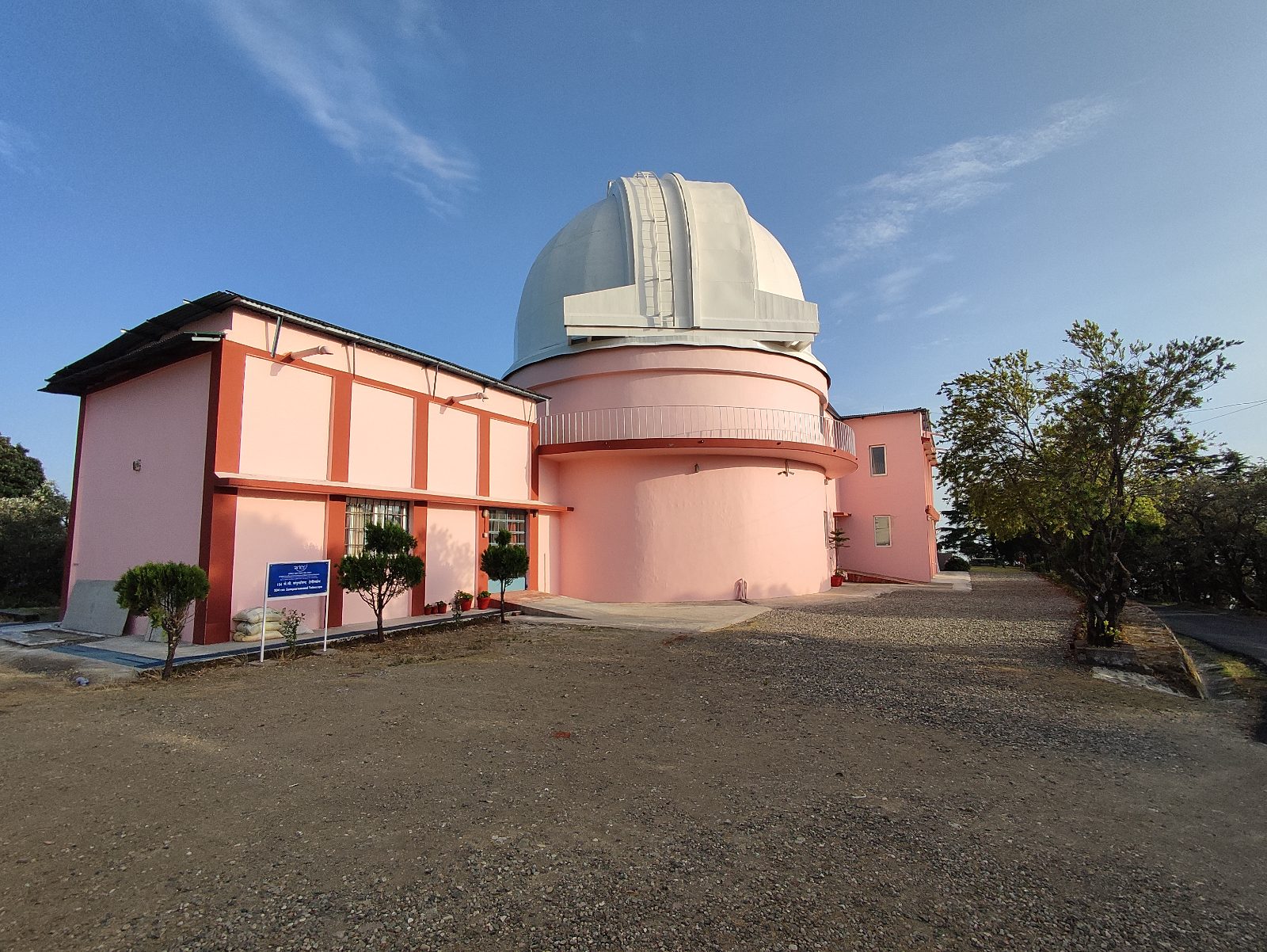
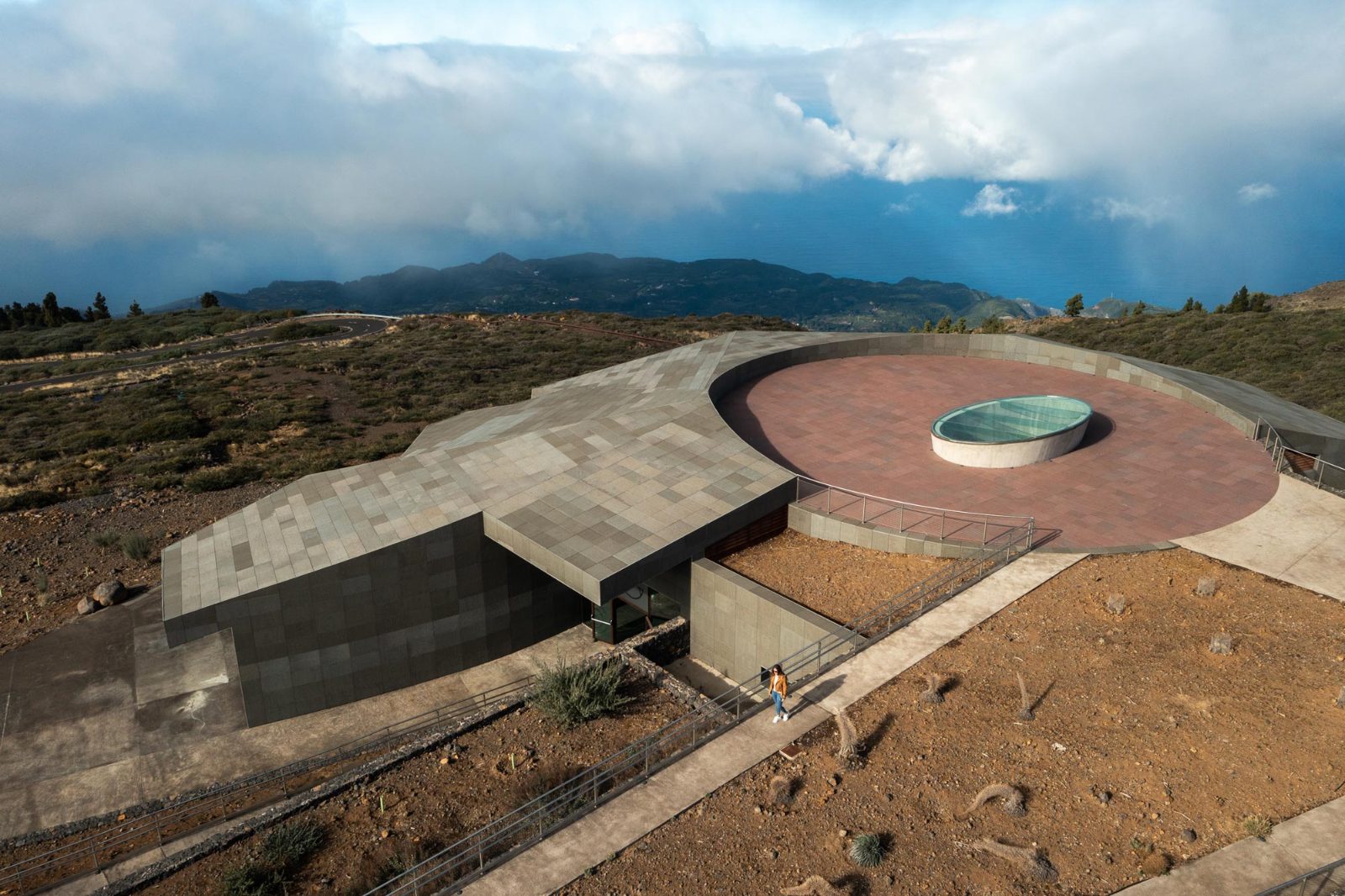
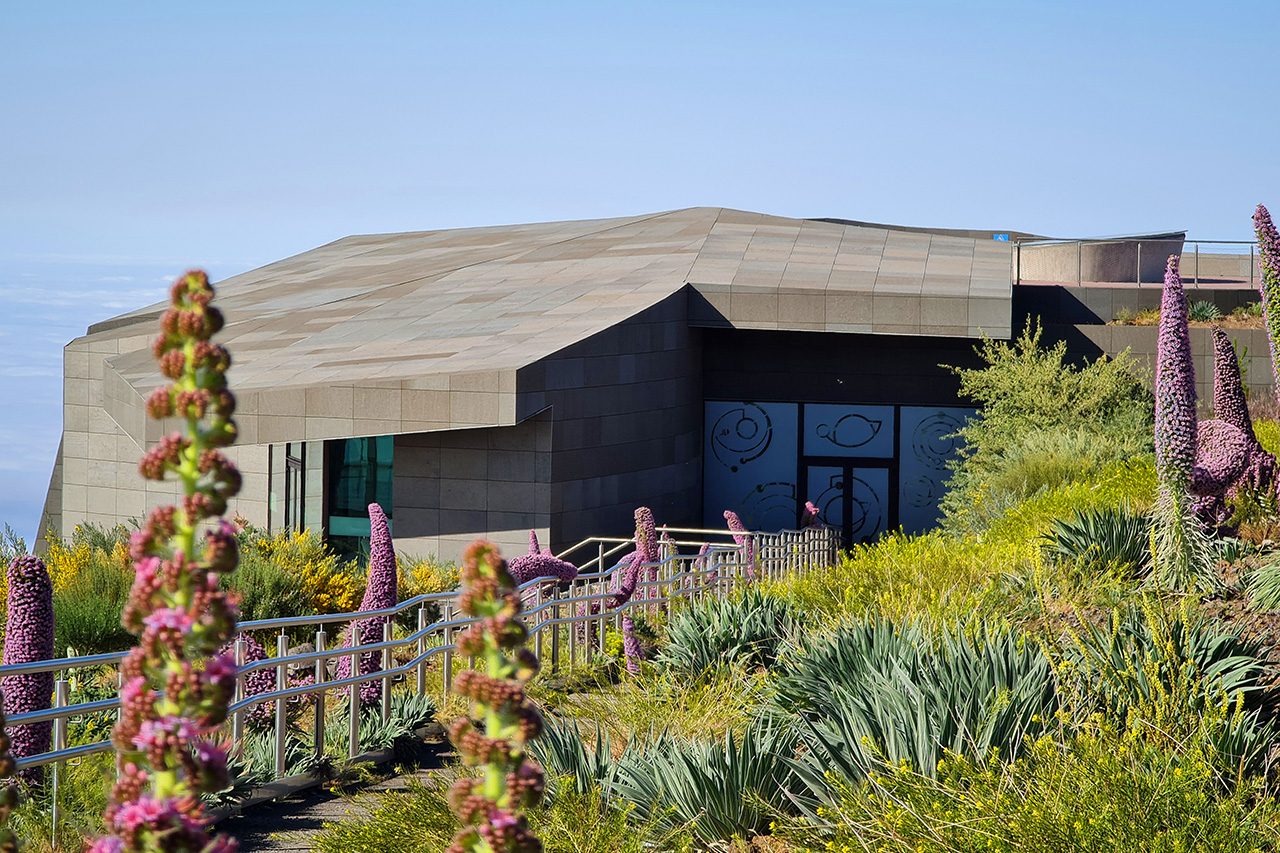
Frame the geometric architecture of the facility against the dark volcanic landscape. This area offers a stable foundation for night sky long exposures when participating in organized stargazing la palma tours.

Pico de la Cruz

Pico de la Cruz

Best light · Twilight

Set up at this nearby summit to obtain a wider panorama of the Caldera de Taburiente interior. It is a preferred location for those seeking stargazing la palma tickets for nocturnal workshops.

LP-4 Roadside Pull-offs

LP-4 Roadside Pull-offs

Best light · Night

Use these designated stopping points along the mountain pass to photograph the winding road leading toward the summit. These spots are ideal for capturing light trails and the Milky Way using stargazing la palma tour transport.

Gallery

Moments from Stargazing La Palma

Customer Reviews

What travelers say about Stargazing La Palma

Real experiences from real travelers

4.5
Based on 2,400 reviews
1 ★ 840
2 ★ 610
3 ★ 1150
4 ★ 4200
5 ★ 16800
M
Marta L.
Spain · 2026-07-29

Cold air, clear sky

We drove up from the capital and the temperature dropped about fifteen degrees by the time we reached the ridge, so the extra fleece the guide mentioned was not a joke. Above the cloud layer the Milky Way was bright enough to cast a faint shadow on the gravel. Booking stargazing la palma tickets in advance mattered because the group cap was small.

T
Thomas B.
Germany · 2026-06-14

Above the clouds

The sea of clouds sat below us like a second ocean and the light pollution from Santa Cruz simply vanished behind the ridge. Our guide worked a green laser across Scorpius and Sagittarius, then swung the telescope to Saturn, which showed the rings cleanly at that altitude. Being on the island with the Starlight Reserve certification really does show.

A
Aiko T.
Japan · 2026-05-02

Saturn through the eyepiece

I have tried observing from home but nothing prepared me for how many stars fill the gaps between the constellations here. The volcanic ground still held warmth from the day while the air itself was sharp and dry. Stargazing la palma is worth the winding drive up the mountain road.

C
Callum R.
United Kingdom · 2026-04-18

Windy at the top

Excellent guide and a serious telescope, though the wind on the caldera rim was strong enough that we moved twice to find shelter. Bring gloves even in spring because your hands go numb holding the binoculars. The Perseid talk was a nice touch and the astrophotography portraits came through by email two days later.

S
Sofia M.
Brazil · 2026-03-09

Sky like a planetarium

Coming from a city I had never seen the Milky Way as a solid band of light rather than a faint smudge. We stopped at a mirador near Llano del Jable where the pines framed the sky and the guide explained why the observatories chose this ridge. Among stargazing la palma tours this one felt unhurried and genuinely knowledgeable.

D
Daniel K.
United States · 2026-02-25

Worth the altitude

At around 2,000 metres the sky is dry and steady, and the difference in seeing compared to sea level is obvious even to an amateur. Our guide pointed out the domes of the Roque de los Muchachos observatory glowing faintly on the ridge before full dark. The Andromeda galaxy through the big Dobsonian was the highlight for me.

I
Isabelle D.
France · 2026-01-11

Winter observation night

Very cold in January, but the payoff was Orion sitting high and razor sharp with the nebula clearly structured in the eyepiece. Hot infusion was handed round halfway through which made the two hours far more comfortable. Observación de estrellas en La Palma in winter suits anyone who does not mind layering up properly.

A
Andreas P.
Greece · 2025-11-30

Guide made it

What lifted the evening was the storytelling, moving between Canarian navigation lore and how the Starlight Reserve protects the darkness overhead. We could hear nothing but wind through the Canary pines for long stretches. A Santa Cruz de La Palma stargazing tour like this gives you far more than a list of constellations.

N
Nina S.
Netherlands · 2025-09-06

Cloud gamble paid off

Half the island was under cloud when we set out and I assumed the night was lost, then we climbed straight through it into clear air. The guide was honest about the odds beforehand and offered a reschedule, which I appreciated. Meeting point in the old town near the harbour was easy to find on foot.

L
Lucas F.
Portugal · 2025-06-22

Meteors and Jupiter

We caught the tail of a meteor shower and counted more than a dozen streaks in under an hour above the volcanic ridge. Jupiter's moons lined up neatly in the eyepiece and the guide let everyone take a phone photo through it. If you only do one stargazing la palma tour, pick a night around new moon.

FAQ

Stargazing La Palma — frequently asked questions

Everything you need to know for your journey

Around the corner

More to see near Stargazing La Palma

Roque de los Muchachos

Roque de los Muchachos

0 min

landmark

The highest point on the island featuring dramatic volcanic ridges. It offers panoramic views of the entire caldera.

Mirador del Espigón del Roque

Mirador del Espigón del Roque

5 min

viewpoint

A popular vantage point for observing the surrounding national park. It provides clear views into the crater.

Where to stay

Where to stay near Stargazing La Palma

Santa Cruz de La Palma Hotels

Santa Cruz de La Palma Hotels

90 min drive

boutique

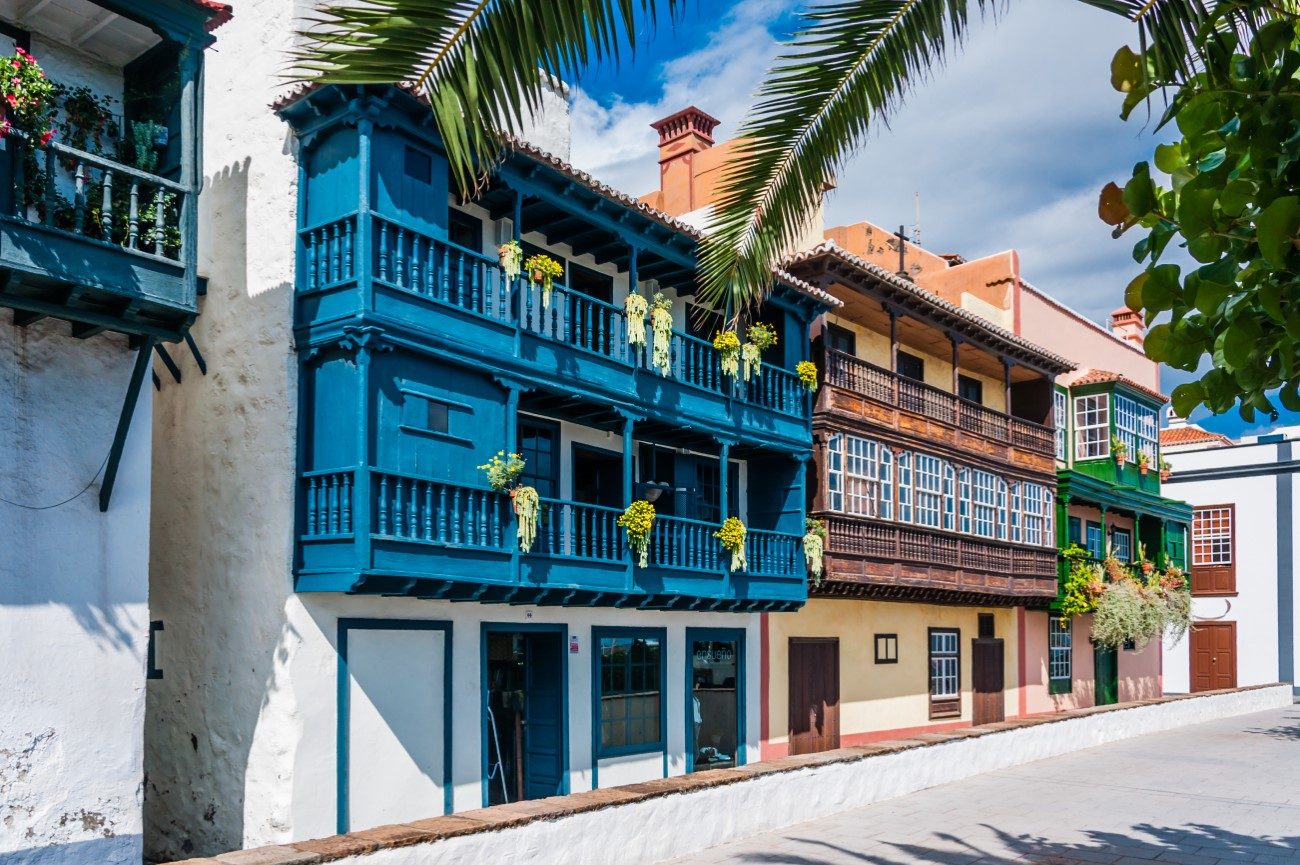
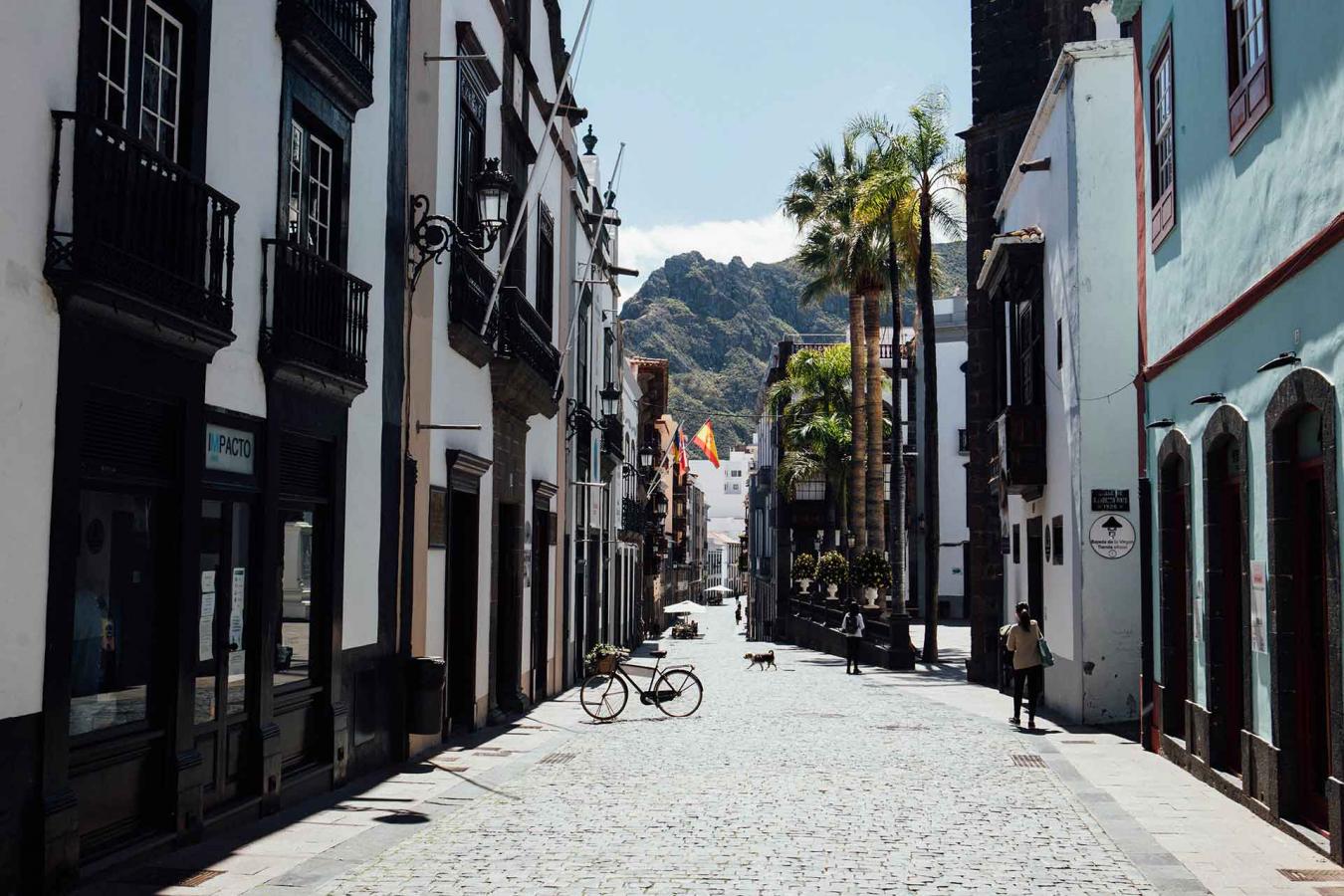
Historic town center accommodations located near the coast.

Rural Houses in Garafía

Rural Houses in Garafía

30 min drive

budget

Traditional stone houses situated in quiet mountain villages.

Ready for Adventure?

Join thousands of happy travelers who have discovered this incredible experience

Book Your Experience Now