

Quick answer
The Centro de Visitantes del Roque de los Muchachos opens 10:00–17:30 every day of the week, with standard adult entry at 15 EUR. It sits at Crta. LP-4, Km 37, 38728 Villa de Garafía. Daytime visits explain the observatory rather than offer telescope time; the domes themselves remain working scientific instruments, closed to casual walk-ins.
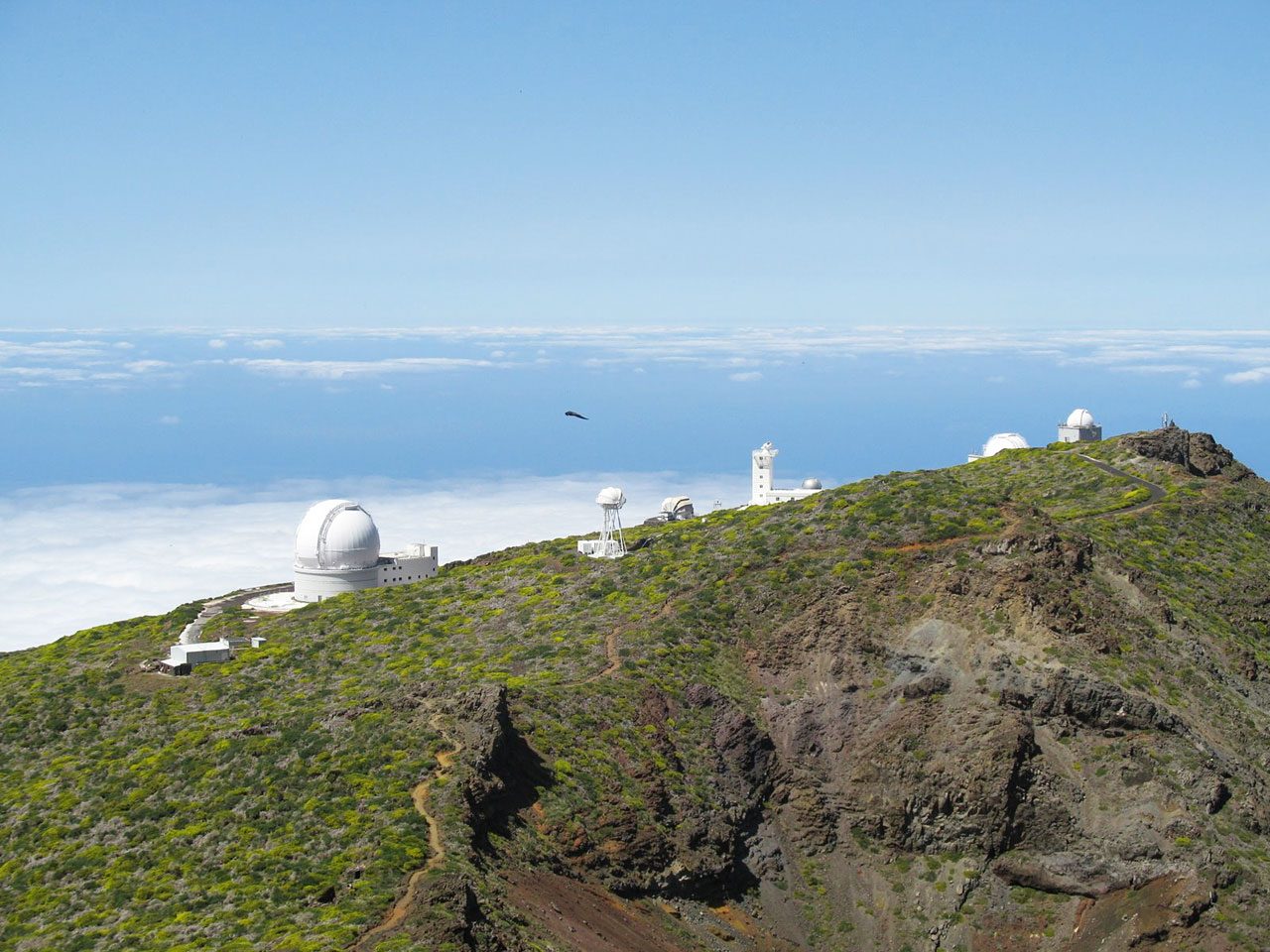
La Palma protects its darkness by law. The Ley del Cielo, passed in 1988, restricts lighting, air traffic and radio interference across the island — the first legislation of its kind anywhere, and the reason the Roque de los Muchachos ridge still delivers seeing conditions that rival Hawaii and northern Chile. UNESCO recognised the island as a Starlight Reserve in 2012. Sodium streetlamps in Santa Cruz de La Palma glow amber rather than white for the same reason. What this means practically is that astronomy la palma splits into two experiences that visitors often confuse. The first is the working Observatorio del Roque de los Muchachos, run by the Instituto de Astrofísica de Canarias at roughly 2,400 metres. It hosts the Gran Telescopio Canarias, whose 10.4-metre segmented mirror remains among the largest single-aperture optical instruments in operation, alongside the William Herschel Telescope, the Nordic Optical Telescope and the MAGIC gamma-ray arrays. These are research facilities. They do not function as public attractions, and their nights belong to allocated observing programmes. The second experience is the Visitor Centre on the LP-4, which interprets that science for a general audience — panels, models, and context on what the domes above are measuring. The geography rewards planning. The ridge sits above the inversion layer, meaning the sea of cloud that blankets the lower island frequently sits beneath the road rather than over it. Drivers from Santa Cruz de La Palma climb through pine forest and switchbacks before breaking into clear air near the Caldera de Taburiente rim. Weather at altitude turns quickly; temperatures can drop fifteen degrees below coastal readings even in August, and wind on the exposed summit is a genuine factor rather than a footnote. Stargazing itself happens elsewhere — at roadside miradores, at licensed Starlight-accredited viewpoints, and through guided operators who bring their own optics. Anyone treating this island astronomy tour as a single stop will miss the point. The daytime centre explains the instruments; the night sky, viewed from a pull-off with the Milky Way overhead and Venus setting into the Atlantic, delivers the payoff. Read the arrival-window guidance and the access notes on this page before committing to a date, because cloud cover, road conditions and seasonal darkness hours matter more here than opening times. A good astronomy la palma guide starts with the sky, not the schedule.
“The ridge sits above the inversion layer, meaning the sea of cloud that blankets the lower island frequently sits beneath the road rather than over it.”
Optimal Timing for Astronomy La Palma: Weather and Visiting Hours
The best arrival window is 10:00–16:00 to ensure clearer weather conditions and lower probability of afternoon cloud cover at high altitude. Planning your visit within this period maximizes the likelihood of stable conditions for observing the site's environment.
Summer (June–August)
HighWarm with 20°C–25°C temperatures
Clear skies are frequent, though popular with visitors.
Spring (March–May)
ModerateMild with 17°C–21°C temperatures
Cooler temperatures provide comfortable exploration conditions.
Autumn (September–November)
ModerateMild with 18°C–22°C temperatures
Stable weather patterns often persist through early autumn.
Winter (December–February)
LowCool with 14°C–18°C temperatures
Cloud cover risk increases, but crowds remain sparse.
Verdict: For optimal conditions, plan your arrival between 10:00 and 16:00 during the shoulder months of April or October.
Standard Operating Hours for Astronomy La Palma Visitors
The Visitor Centre maintains consistent operating hours throughout the week to provide access to astronomy exhibits. The facility is open daily from Monday through Sunday.
| Monday | 10:00–17:30 | |
|---|---|---|
| Tuesday | 10:00–17:30 | |
| Wednesday | 10:00–17:30 | |
| Thursday | 10:00–17:30 | |
| Friday | 10:00–17:30 | |
| Saturday | 10:00–17:30 | |
| Sunday | 10:00–17:30 |
Directions and Logistics: Navigating to Astronomy La Palma
The visitor centre is located on the LP-4 road at kilometer 37 in the municipality of Villa de Garafía. Access to this high-altitude mountain site is best achieved by private vehicle or taxi to navigate the winding roads of the northern landscape.
Follow the LP-4 road towards the Roque de los Muchachos Observatory
Private transfer service from Santa Cruz de La Palma
Check availability
Frequently asked questions about astronomy La Palma
Everything you need to know about astronomy la palma