

Quick answer
The highest-value cluster sits along the Roque de los Muchachos ridge at 2,426 metres, reached via the Carretera del Roque de los Muchachos, 38727 Garafía. The Visitor Centre there opens 10:00–17:30 daily, with adult entrance at 15 EUR, so daytime exhibition visits and night observing are separate trips. Cloud inversion usually sits below the rim, but summit weather can close the road.
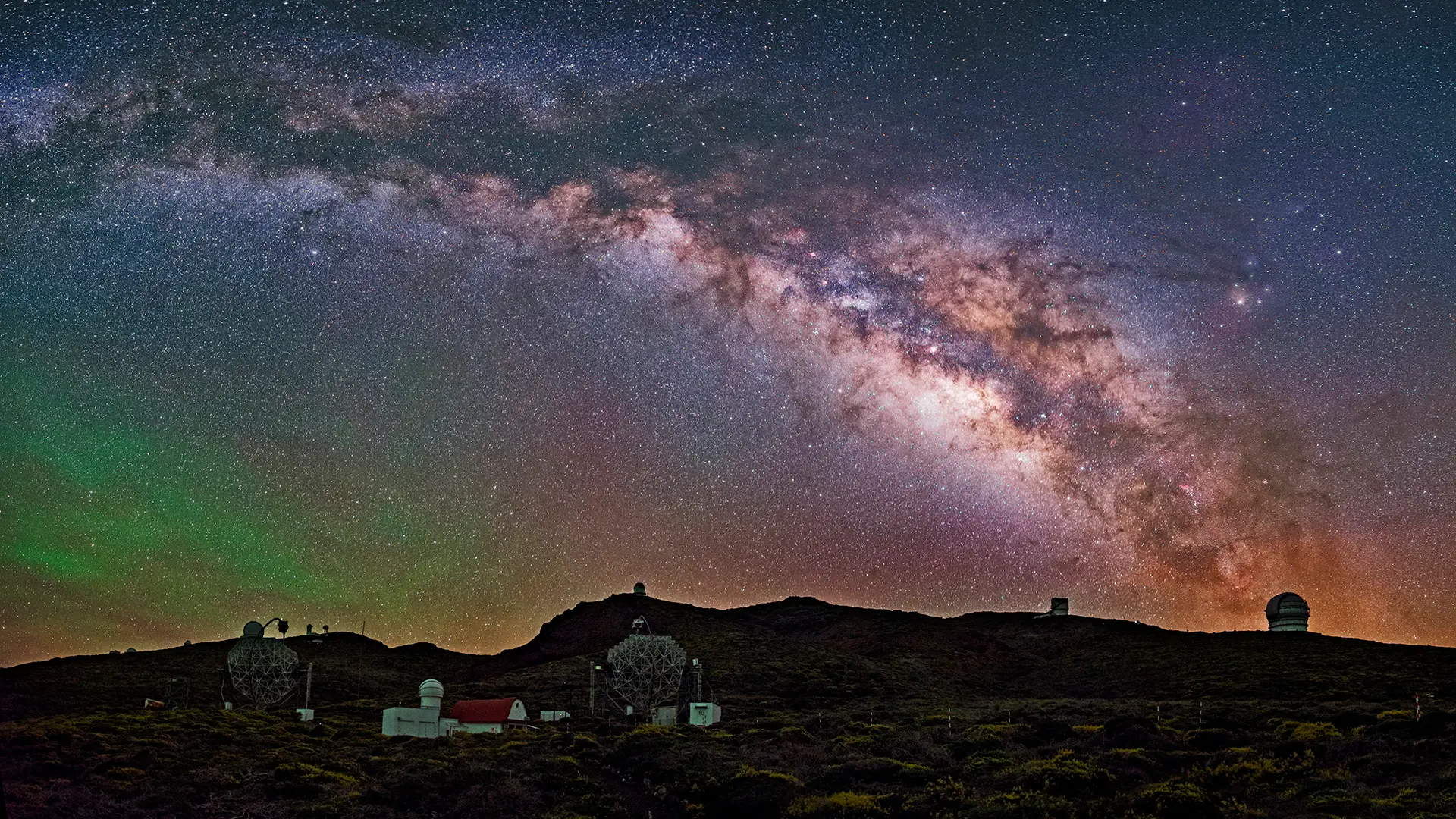
Above roughly 1,500 metres, La Palma sits over its own weather. The trade-wind inversion layer traps cloud below the caldera rim, leaving the summit under clear air for a large share of the year — the reason the Instituto de Astrofísica de Canarias built the Roque de los Muchachos Observatory here rather than anywhere else in Europe. The island was also the first place in the world certified a Starlight Reserve, and Spain's 1988 Sky Law restricts lighting across the whole of La Palma, not merely near the telescopes. That legal shield is why the best stargazing spots la palma offers are unusually consistent: darkness is a protected resource, not an accident of geography. The viewpoints divide into three tiers. The summit ridge holds the highest and driest sites, strung along the road that passes the Gran Telescopio Canarias and the Roque de los Muchachos Visitor Centre. Below it, mid-altitude miradores such as Llano del Jable and the pine-forest clearings above El Paso give lower altitude sickness risk, easier access from Santa Cruz de La Palma and Los Llanos, and skies still dark enough for the Milky Way core in summer. Nearer the coast, the certified Starlight viewpoints at Llano de las Brujas and San Antonio Volcano in Fuencaliente trade a little zenith darkness for shelter and shorter drives. Astronomical tourism on La Palma has grown around this ladder, and most guided outings pick a tier by weather rather than ambition. What the tiers share is a rhythm. Daylight belongs to the Visitor Centre and its exhibition halls, where the science behind the observatory is explained before the sky is ever seen. Night belongs to the miradores, and the two rarely fit into one comfortable visit. Calima — Saharan dust drifting over the archipelago, most common in summer — is the variable that undoes plans most often, followed by the full moon, which washes out faint structure for roughly a week each cycle. Checking the IAC forecast and the lunar calendar before committing does more for a night's observing than any equipment choice. Read the summit as a working scientific site with public access rather than a leisure destination, and the rest follows: fixed daytime hours, real altitude, no services after dark. Anyone weighing up the best stargazing spots la palma should treat viewpoint selection as a weather decision made on the day, with a fallback one tier lower already chosen. The dedicated sections that follow cover timing, access, hours, costs and what to bring.
“Darkness here is a protected resource, not an accident of geography.”
The Best Time for Stargazing Spots in La Palma
The period from April to October offers the most stable conditions for stargazing due to the atmospheric inversion layer, which traps clouds below the observatories. A moonless night remains the primary factor for achieving the highest level of celestial visibility.
Spring (April-May)
Low to moderateDry, 15-22°C; stable atmosphere
Clear skies are frequent as the Saharan dust influence is minimal.
Summer (June-August)
ModerateWarm, 20-25°C; inversion layer active
The inversion layer consistently keeps the mountain peaks above the cloud deck.
Autumn (September-October)
LowMild, 18-23°C; low humidity
Atmospheric conditions remain excellent before the onset of winter weather patterns.
Lunar Cycle
N/A—
Align visits with the new moon phase to minimize natural light pollution.
Verdict: Plan your visit during the new moon phase in April or October to take advantage of peak atmospheric stability and minimal cloud interference.
Getting to the Best Stargazing Spots in La Palma
The primary stargazing locations, including the area near the Roque de los Muchachos Observatory, are situated at high altitudes in the northern part of the island. Access is primarily managed via private vehicle or guided transport services, as there is no public bus service to the summit.
LP-4 road toward Roque de los Muchachos
Private hire from Santa Cruz de La Palma
Operator-provided transport from major hubs
Opening Hours for the Best Stargazing Spots in La Palma
The Visitor Centre is open daily to provide information and exhibition access for those planning to explore stargazing locations on La Palma. Please refer to the schedule below when organizing your visit.
| Monday | 10:00–17:30 | |
|---|---|---|
| Tuesday | 10:00–17:30 | |
| Wednesday | 10:00–17:30 | |
| Thursday | 10:00–17:30 | |
| Friday | 10:00–17:30 | |
| Saturday | 10:00–17:30 | |
| Sunday | 10:00–17:30 |
A Pre-Visit Checklist for Stargazing Spots in La Palma
The Roque de los Muchachos ridge sits above 2,200 m, so what you carry matters more here than the drive up.
-
Pack insulating layers and windproof shell — Summit temperatures drop near freezing after dark, even in August.
-
Bring a red-filter headlamp — Red light preserves night vision and avoids disturbing other observers.
-
Carry two litres of water per person — There are no shops or refill points on the ridge road.
-
Charge phone and camera batteries fully — Cold air drains lithium cells fast and there is no power on site.
-
Download offline maps before leaving town — Mobile coverage is patchy along Carretera del Roque de los Muchachos.
-
Check the IAC site for closures — Wind, snow or technical work can shut the access road at short notice via https://www.iac.es.
-
Bring photo ID and confirmation — Staff at the Visitor Centre may ask for both on arrival.
-
Add high-factor sun protection — Daytime UV at altitude is intense before the light fades.
Check availability
Frequently asked questions about best stargazing spots la palma
Everything you need to know about best stargazing spots la palma