English| EUR
Suggested for you
More currencies
Book Now
Open today · 10:00–17:30

Astronomy Tour La Palma

Astronomy Tour La Palma — Observatory Visits & Guided Stargazing

Ridge light fades at 2,396 metres, the Milky Way arrives.

50K+ travelers chose this
Free Cancellation
Right now: Moderate — summer peak season Clear skies expected for stargazing tonight.
Free Cancellation
Free cancellation Instant confirmation Mobile voucher Verified partner Book now, pay later
15 EUR
Adult entry fee
Card payment only
2,400 m
Peak altitude
Roque de los Muchachos Observatory
7 days
Weekly opening
Open Monday to Sunday
10:00–16:00
Best arrival window
Clearer weather and peak hours
Choose your ticket

Astronomy Tour La Palma tickets at a glance

Compare fares, pick the fit — all bookings are mobile-voucher and eligible for free cancellation where shown.

Stargazing Experience at La Palma's World-Class Observatory Sites 1 hr 30 min
Standard Entry

Stargazing Experience at La Palma's World-Class Observatory Sites

4.6 (162)
€38
  • Entry ticket
  • Mobile voucher
  • Valid same day
  • Free cancellation
Book this ticket
La Palma Night Sky Exploration with Professional Astronomer 2 hr
Standard Entry

La Palma Night Sky Exploration with Professional Astronomer

4.9 (20)
€39
  • Entry ticket
  • Mobile voucher
  • Valid same day
  • Free cancellation
Book this ticket
Compare options

Compare Astronomy Tour La Palma ticket options

Experience DurationRatingPickupGuideSmall groupFree cancel. Price
Guided Experience
Most popular
Roque de los Muchachos Stargazing Experience with Wine
7 hr★ 4.4 €55 Book →
Standard Entry
Stargazing Experience at La Palma's World-Class Observatory Sites
1 hr 30 min★ 4.6 €38 Book →
Standard Entry
La Palma Night Sky Exploration with Professional Astronomer
2 hr★ 4.9 €39 Book →

Is an Astronomy Tour La Palma Visit Worth the Cost?

Worth it for stargazers, skippable for casual daytime visitors

The value math on an astronomy tour la palma splits cleanly by what you're actually buying. The daytime Roque Observatory & Visitor Centre Experience costs 15 EUR for standard adult entry, card payment only — reasonable for exhibits explaining the Gran Telescopio Canarias and the island's Starlight Reserve status, but you see domes from outside, not working optics. The guided night options are where the money earns out: professional astronomer commentary, tripod-mounted telescopes, and a Roque de los Muchachos summit at 2,400 metres above the trade-wind inversion layer, where the caldera rim gives you Milky Way detail no coastal beach delivers. Astronomy tour la palma tickets for the wine-paired or private telescope formats cost more, and that premium buys smaller groups and equipment you won't carry yourself. For anyone chasing dark-sky observation, the guided route pays. For a passing sightseer, the entry fee alone is the honest ceiling.

What makes it worth it

  • Summit sits above the inversion cloud layer
  • Professional astronomer explains what you actually see
  • Telescope equipment included, no gear purchase needed
  • 15 EUR visitor centre entry is modest
  • Private and small-group formats genuinely reduce crowding

Keep in mind

  • Card payment only at the visitor centre
  • Guided night tours cost well above entry fee
  • Cloud or wind can cancel observation
  • Remote summit means real transport cost

Bottom line: Book an astronomy tour la palma tour if dark skies are why you came; otherwise the 15 EUR centre visit is enough, and the guided astronomy tour la palma tours are the upgrade worth paying for only when you'll actually look through the eyepiece.

Head to head

Roque de los Muchachos Visitor Centre vs Astronomy Tour La Palma — Which Is Better?

They complement each other; most visitors who do both call the nightly astronomy tour la palma the more thrilling choice for direct sky observation. While the visitor center offers essential daytime educational context, specialized night-time tours provide the authentic stargazing experience seekers crave.

Top pick
Visitor Centre
Stargazing Tour
Timing After sunset
Primary Focus Guided night sky observation
Telescope Access Portable amateur telescopes
Altitude 1,300 m–2,426 m
Duration 1.5–4 hours
Price 30 EUR+ (varies)
Best For Astronomy enthusiasts

Verdict: Choose the visitor center for daytime learning at the summit, or book an astronomy tour la palma tour for a deep-space night viewing session with professional guidance.

Featured Experiences

Popular Astronomy Tour La Palma tours & activities

Hand-picked experiences loved by thousands of travelers

Recommended Experience

Powered by GetYourGuide

Another traveler favorite

Powered by GetYourGuide
Private Telescope Stargazing Experience in La Palma 1.5 hours Free Cancellation

Private Telescope Stargazing Experience in La Palma

Explore the cosmos with your own dedicated telescope at a certified dark-sky site in the Canary Islands

4.7 (14)
FromFrom €50
See details
Roque Observatory & Visitor Centre Experience 5.5 - 6.5 hours Free Cancellation

Roque Observatory & Visitor Centre Experience

Journey to La Palma's summit to explore world-class telescopes and discover why this location is perfect for astronomy

4.5 (10)
FromFrom €58
See details
Wine & Stars at Bodegas Teneguía 2 hours Free Cancellation

Wine & Stars at Bodegas Teneguía

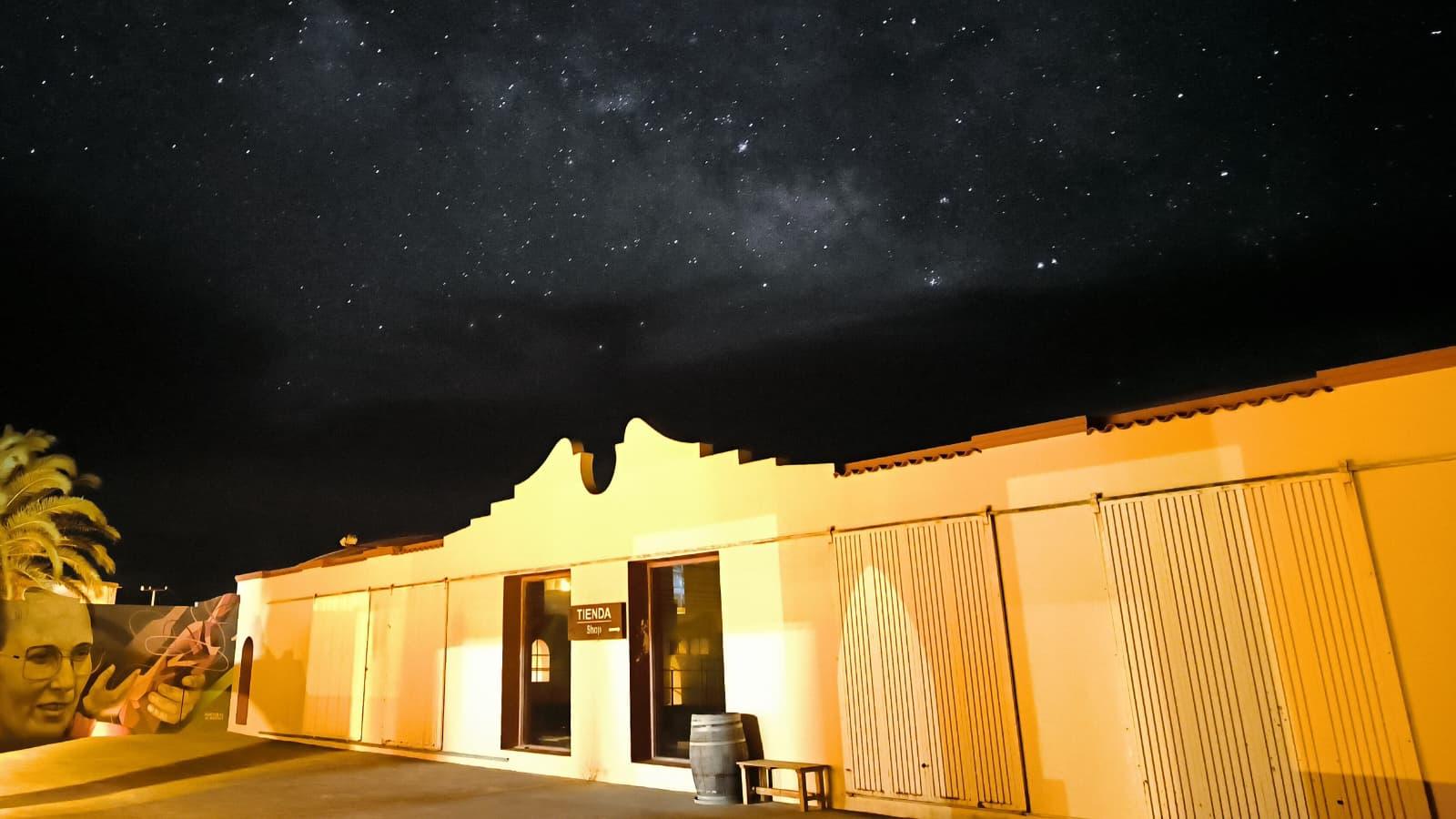
Sip volcanic wines under La Palma's pristine night sky at a historic Canary Islands winery

5 (3)
FromFrom €35
See details
Premium Stargazing Experience at Roque de Los Muchachos 1.5 hours Free Cancellation

Premium Stargazing Experience at Roque de Los Muchachos

Explore the cosmos from La Palma's highest observatory point with expert guides and professional telescopes

4.1 (60)
FromFrom €75
See details
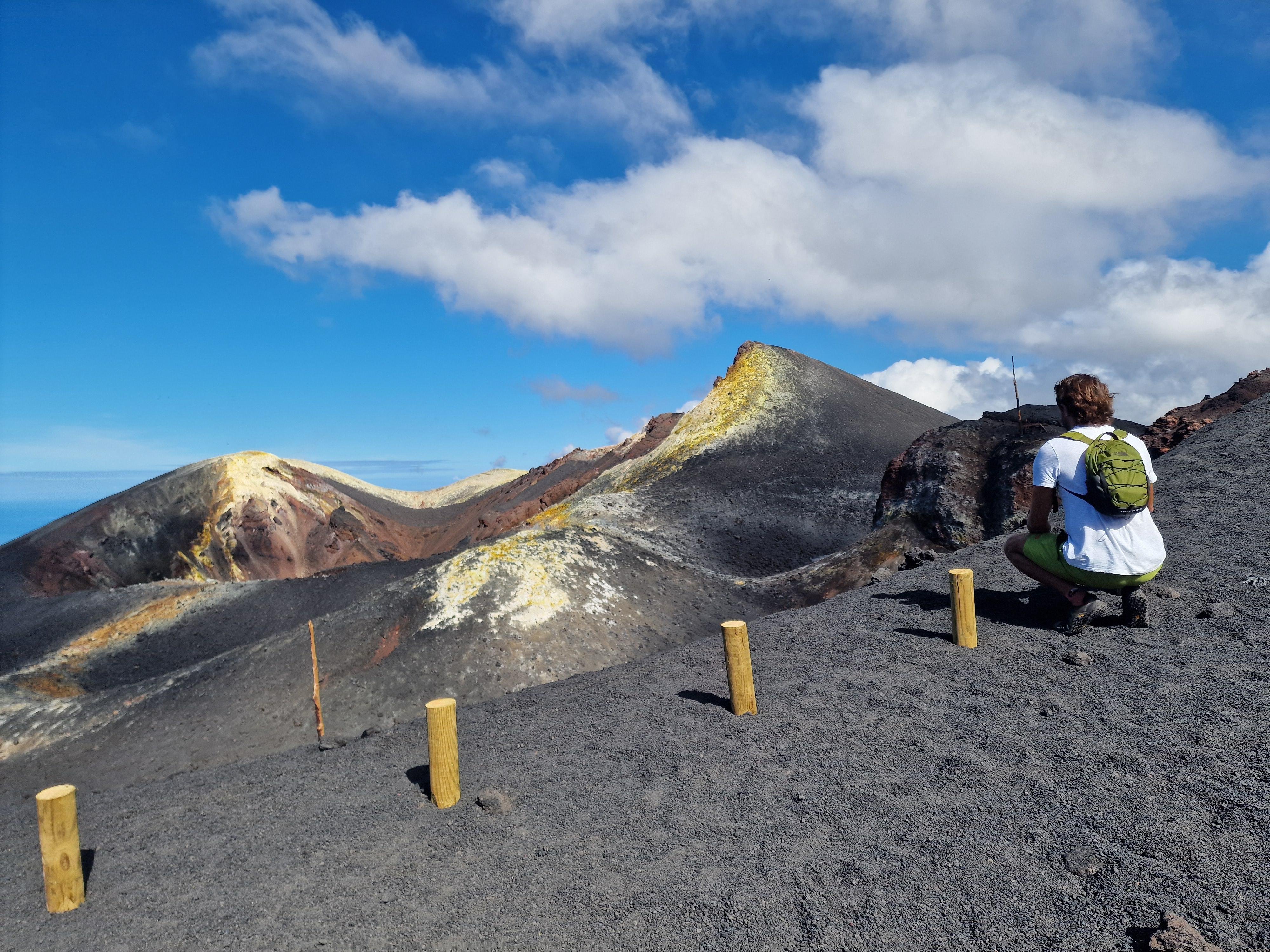
Tajogaite Volcano Hike & Sunset Picnic 5 hours Free Cancellation

Tajogaite Volcano Hike & Sunset Picnic

Explore La Palma's newest volcanic landscape, witness nature's raw power, and savor local flavors at sunset

4.9 (12)
FromFrom €45
See details
Tajogaite Volcano Guided Trek 4 hours Free Cancellation

Tajogaite Volcano Guided Trek

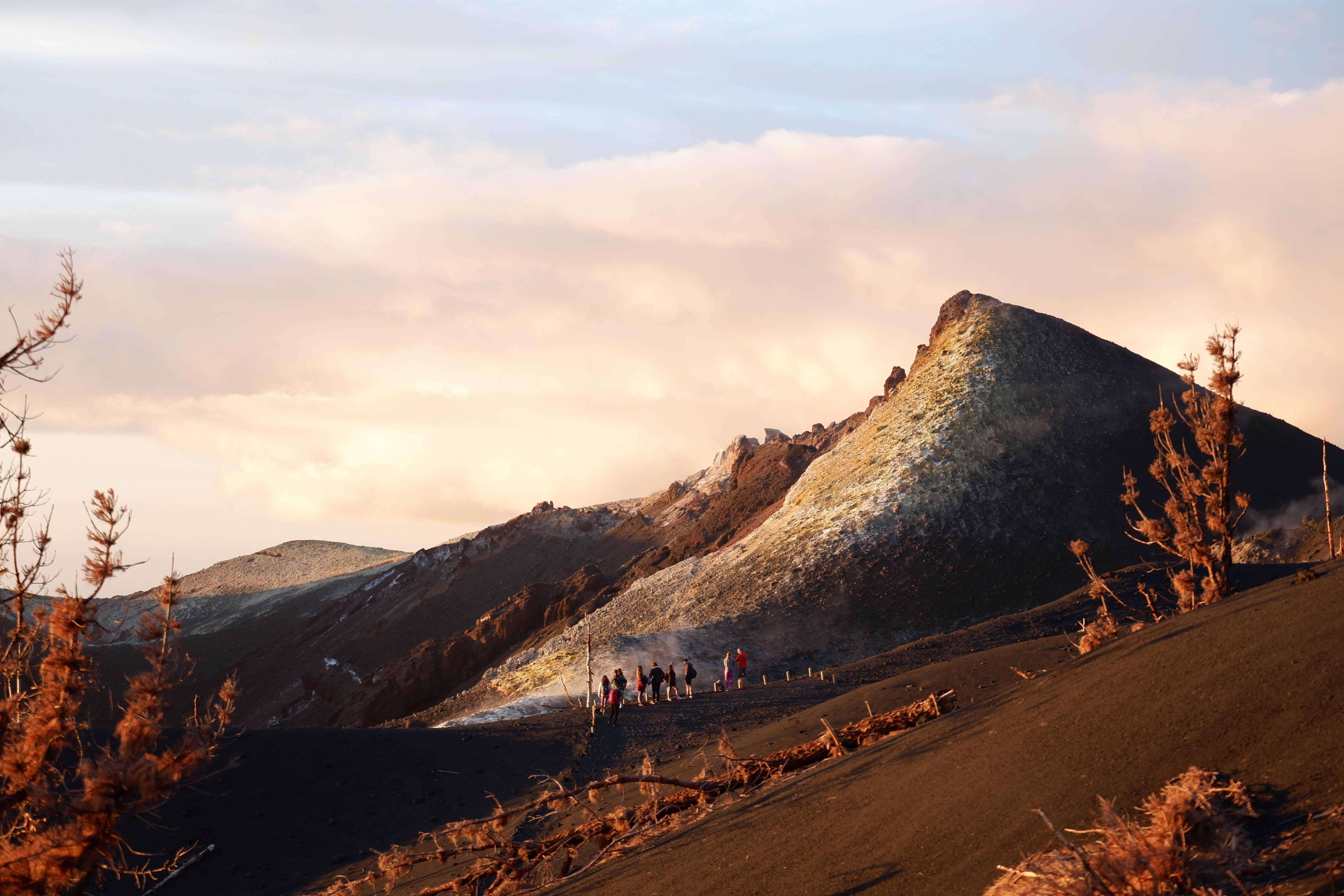
Trek to La Palma's newest volcanic crater, formed in 2021, and witness the dramatic landscape created in 85 days

4.8 (2100)
FromFrom €38
See details
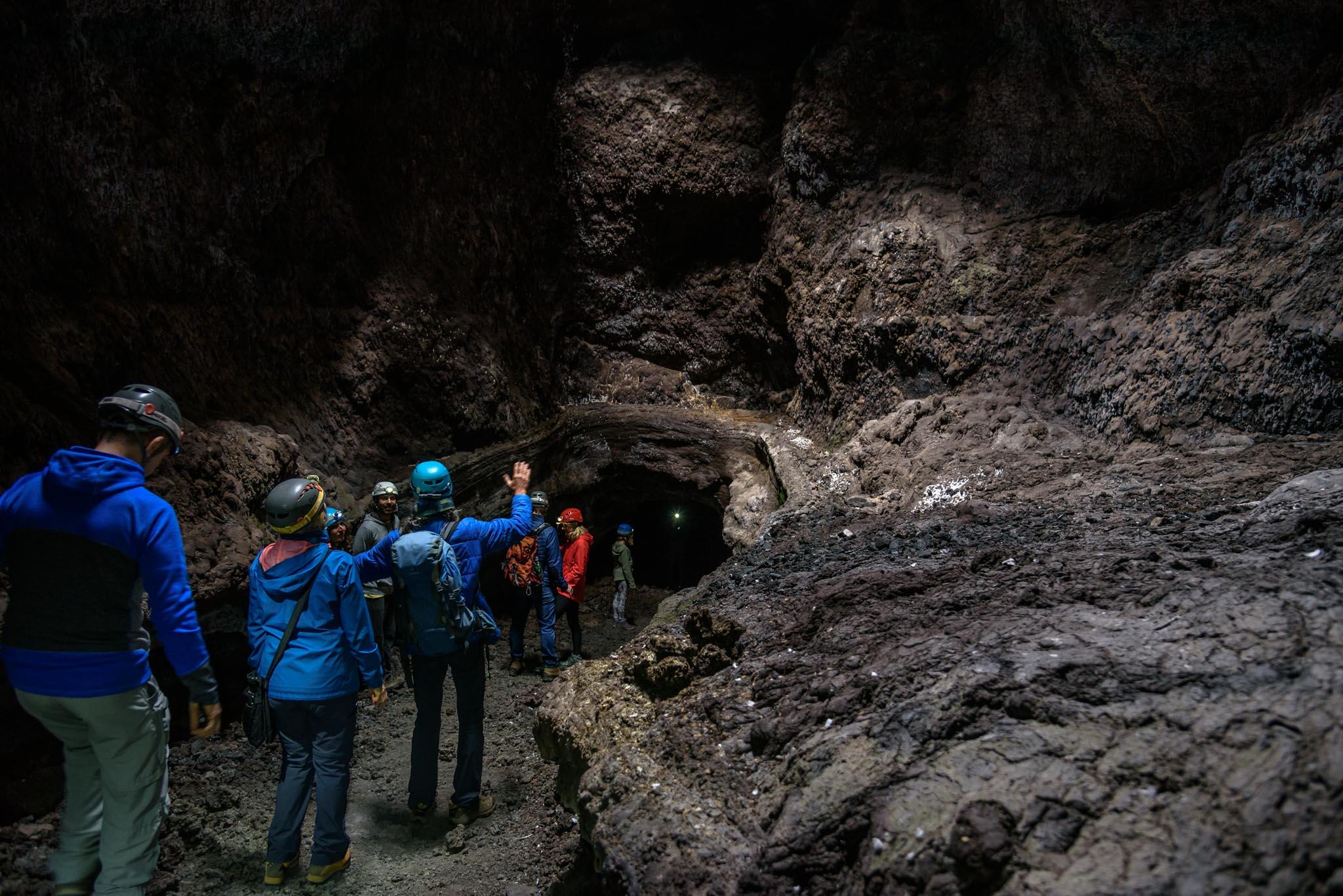
Cueva de Las Palomas Volcanic Tube Exploration 2 hours Free Cancellation

Cueva de Las Palomas Volcanic Tube Exploration

Journey into a 500-meter lava tunnel formed during a 1949 eruption on this guided volcanic adventure

4.7 (660)
FromFrom €25
See details
La Palma Full-Day Scenic Bus Exploration 8 - 9 hours Free Cancellation

La Palma Full-Day Scenic Bus Exploration

Experience La Palma's volcanic landscapes, mountain peaks, and coastal vistas on this comprehensive island tour

4.6 (313)
FromFrom €48
See details
Your journey

Your Astronomy Tour La Palma day, step by step

1
Arrival

Arrival

Check-in and orientation at the center

2
Exhibition Tour

Exhibition Tour

Exploring the astrophysical displays

3
Observatory Walk

Observatory Walk

Walking to the panoramic observation points

What you'll see

What you'll see at Astronomy Tour La Palma

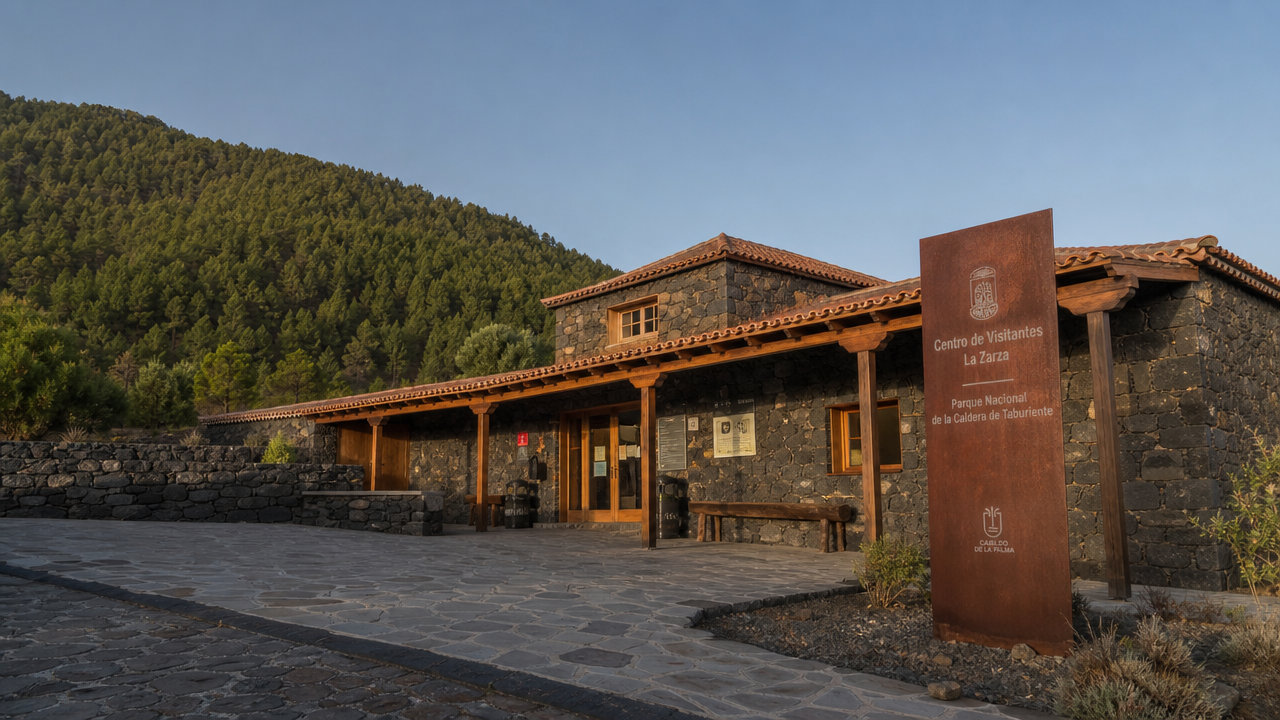
Visitor Center Hub

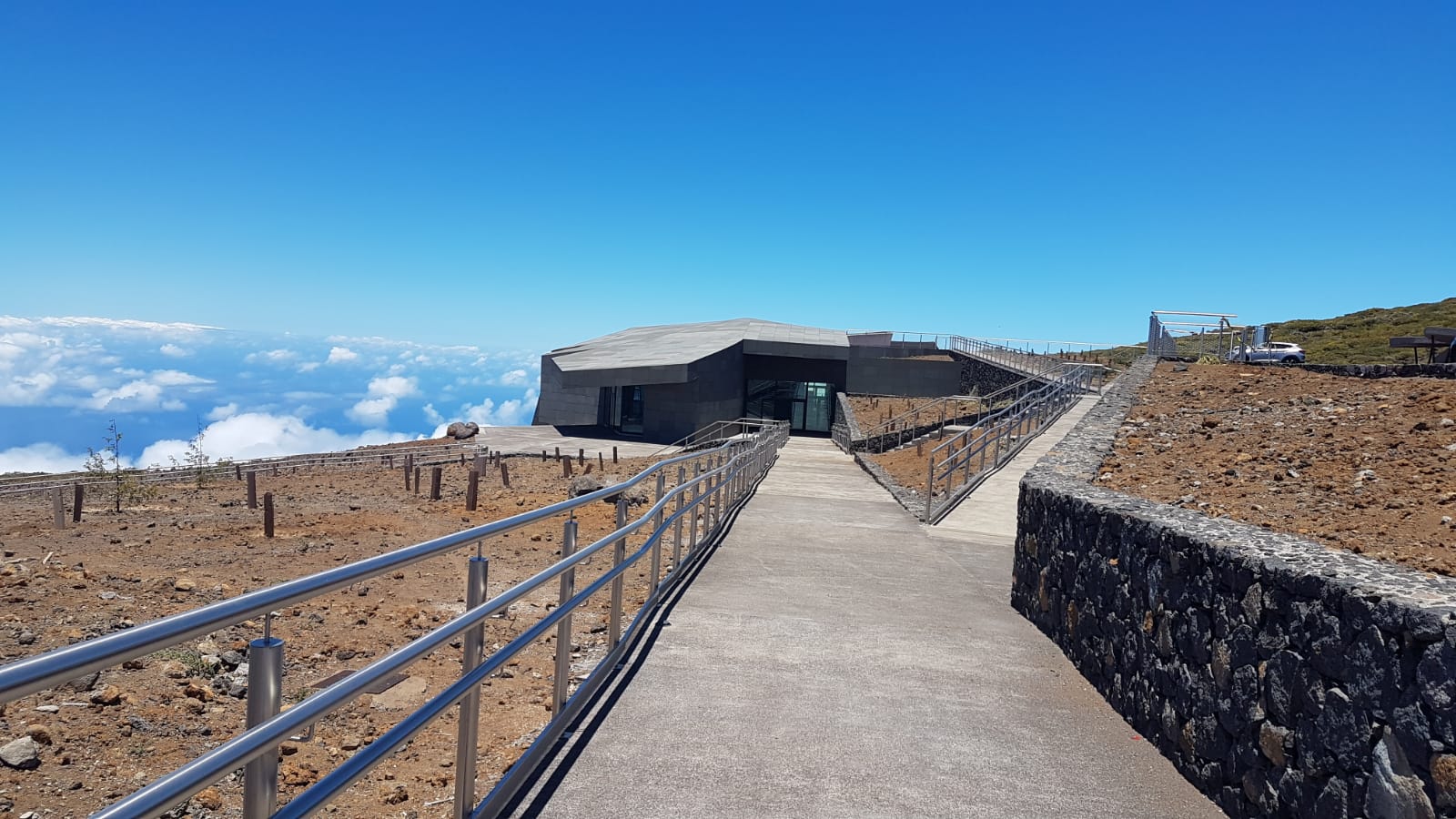
The heart of the facility where interactive displays explain the history of the universe and the island's unique telescopes. A 15 EUR fee grants access to these exhibits

Visitor Center interior

Visitor Center

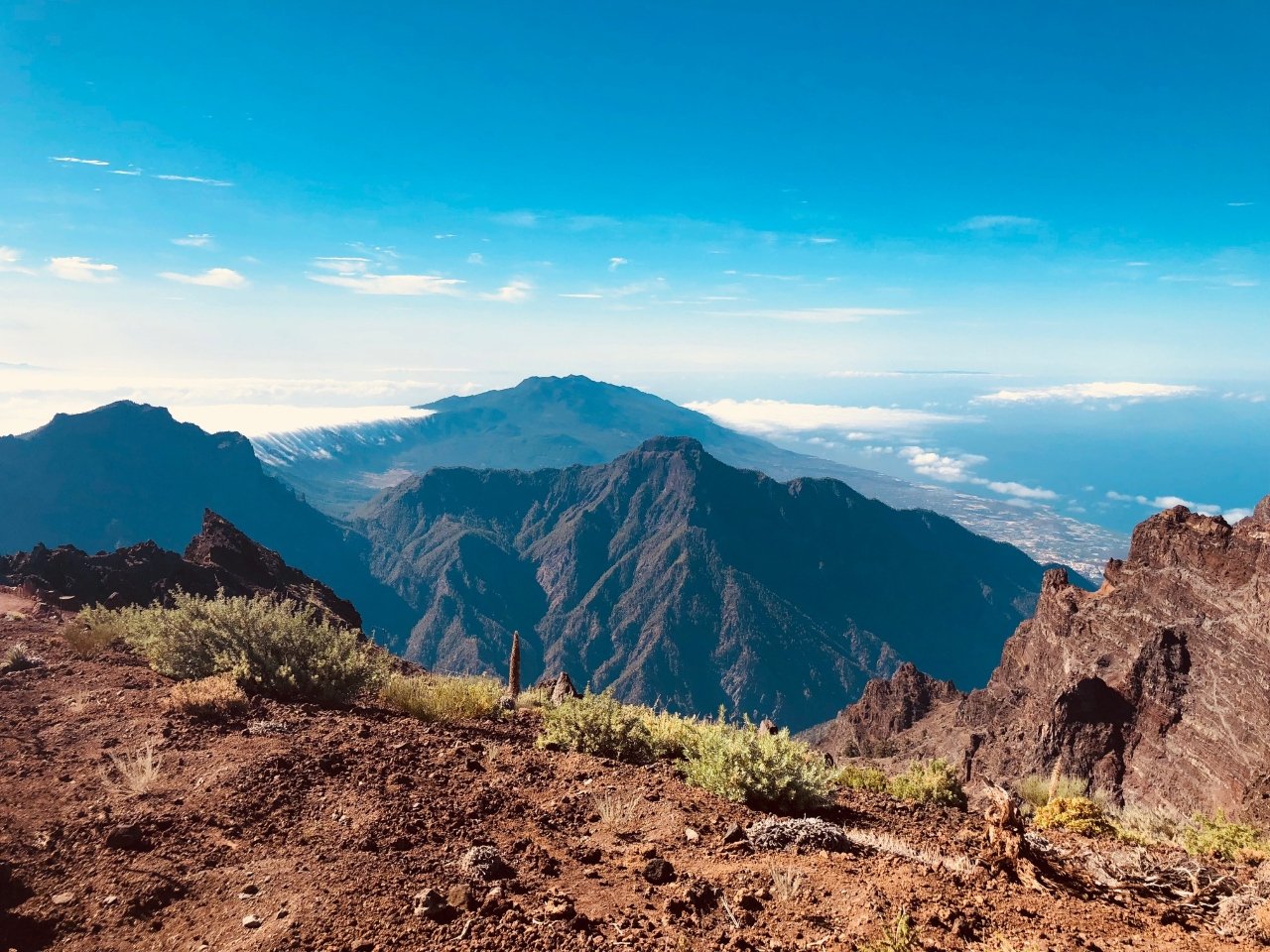
Mirador del Roque

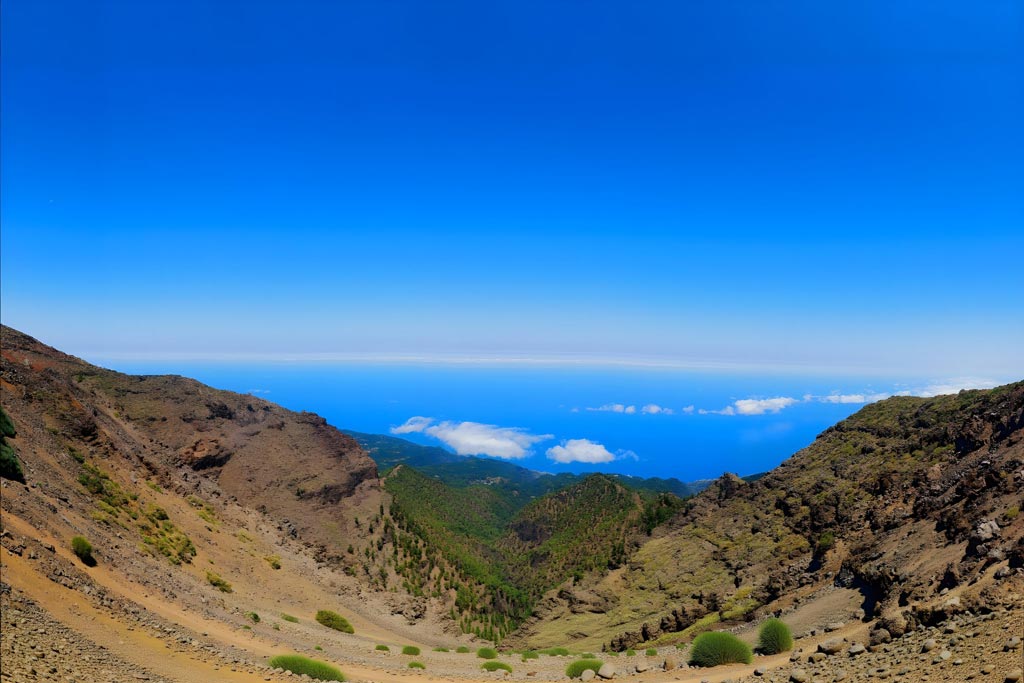
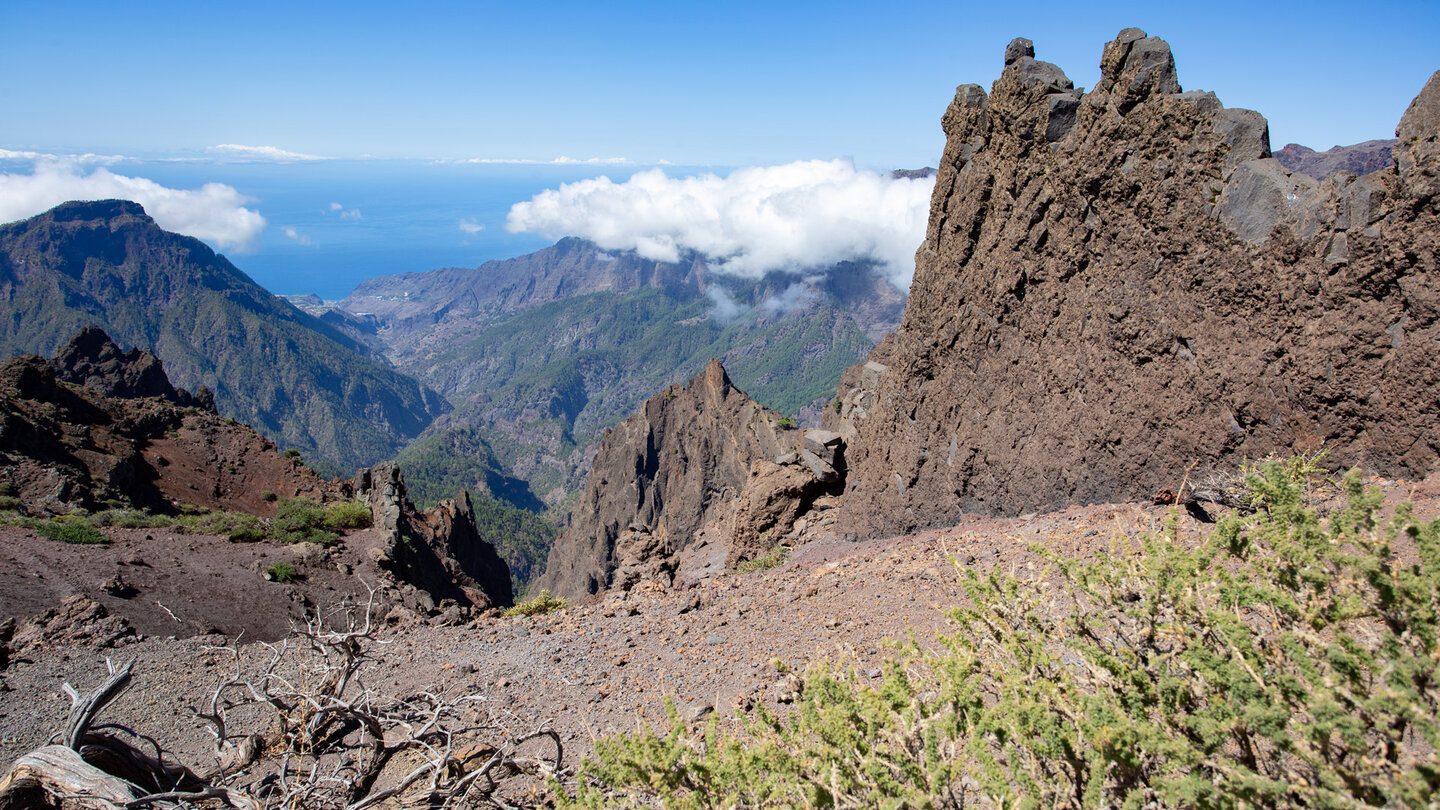
Located at the highest point of the island, this site offers views 2,426 meters above sea level. It is the primary spot for viewing the surrounding caldera

Roque de los Muchachos views

Roque de los Muchachos

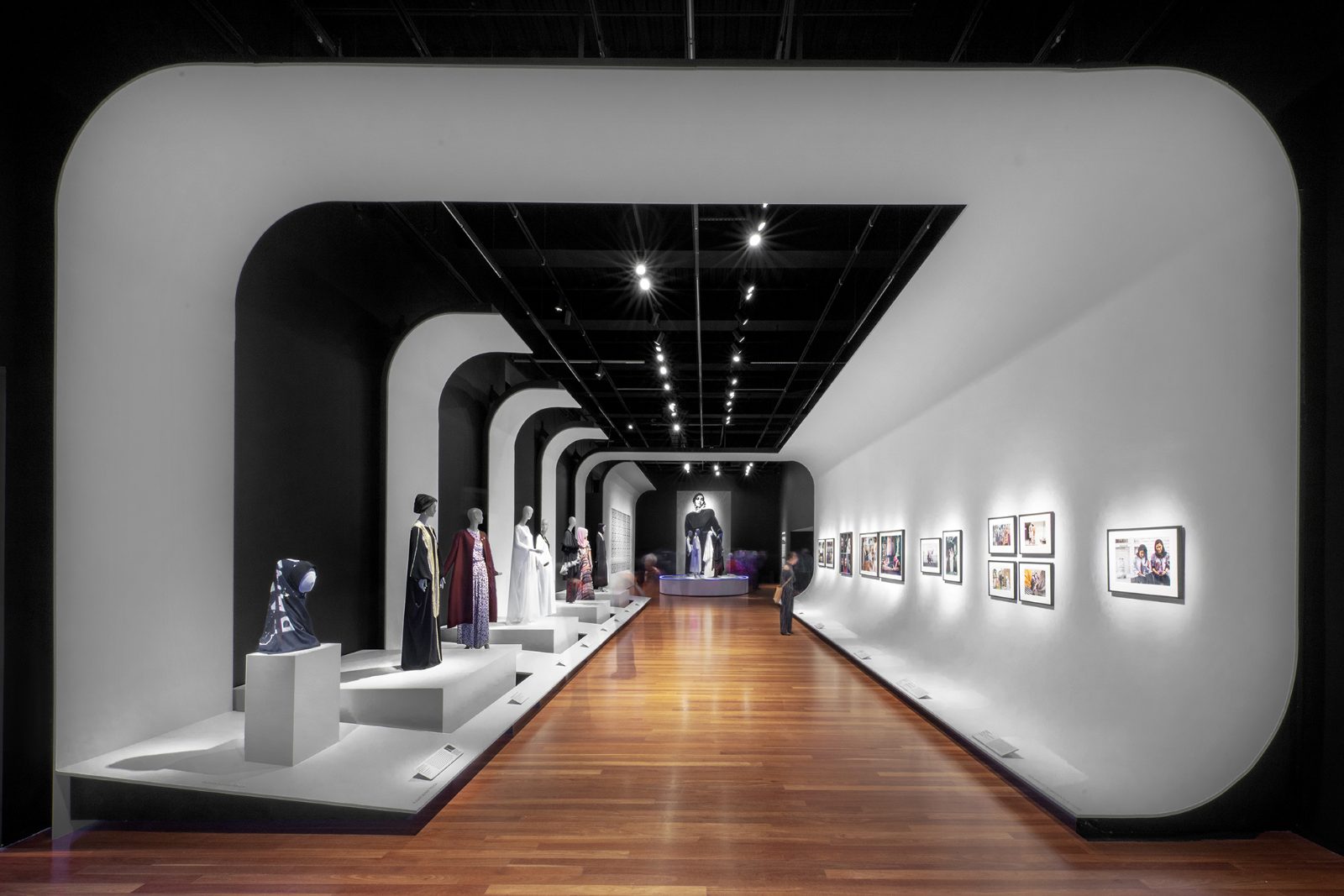
Astrophysical Displays

Educational installations detailing the Gran Telescopio Canarias and international research. These exhibits provide context for the site's scientific significance

Scientific exhibits display

Astrophysics display

Picnic Observation Area

A designated space where visitors can rest and look out over the horizon. It is a quiet zone for observing the unique high-altitude flora

Outdoor mountain picnic area

Picnic area

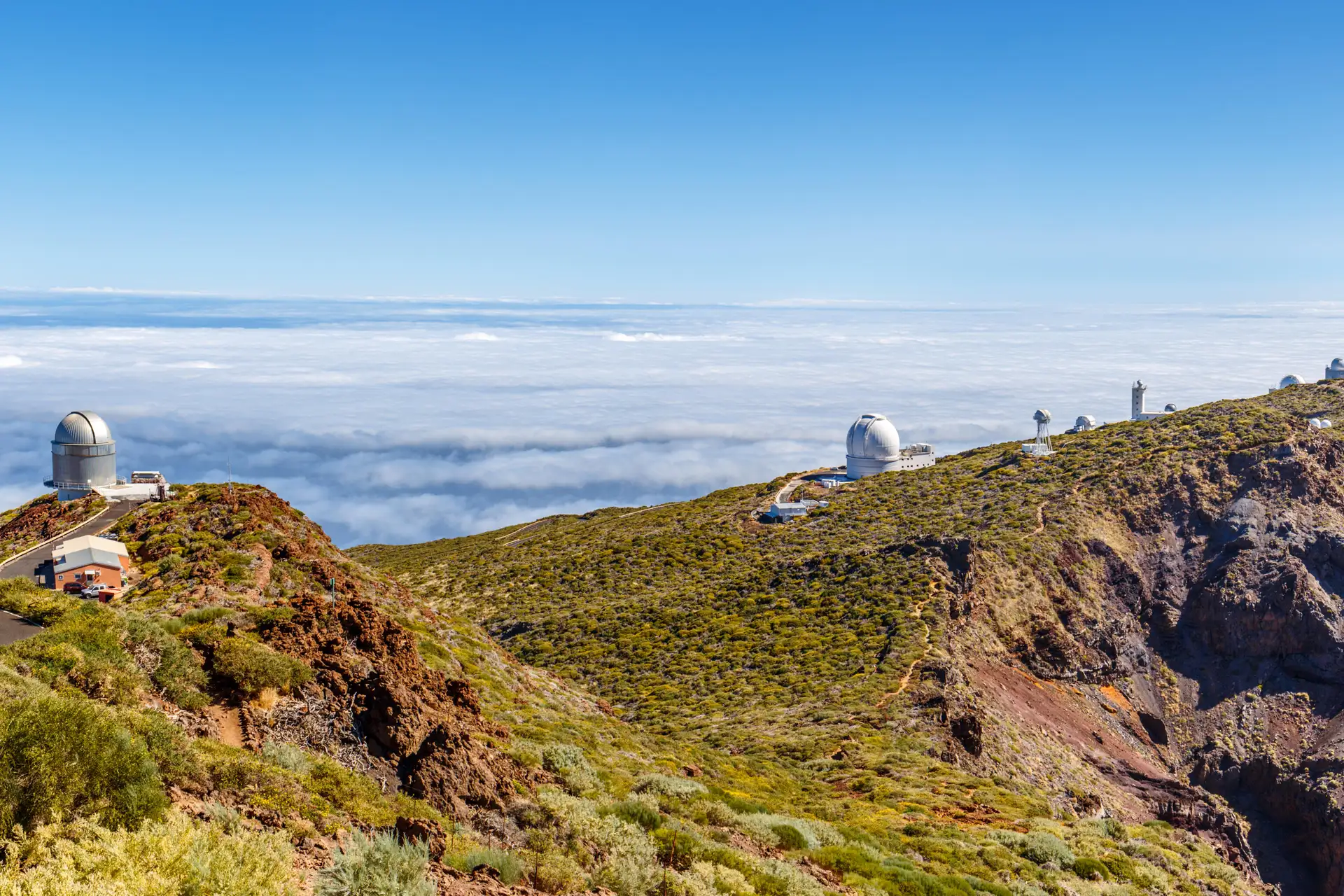
Research Observatory Grounds

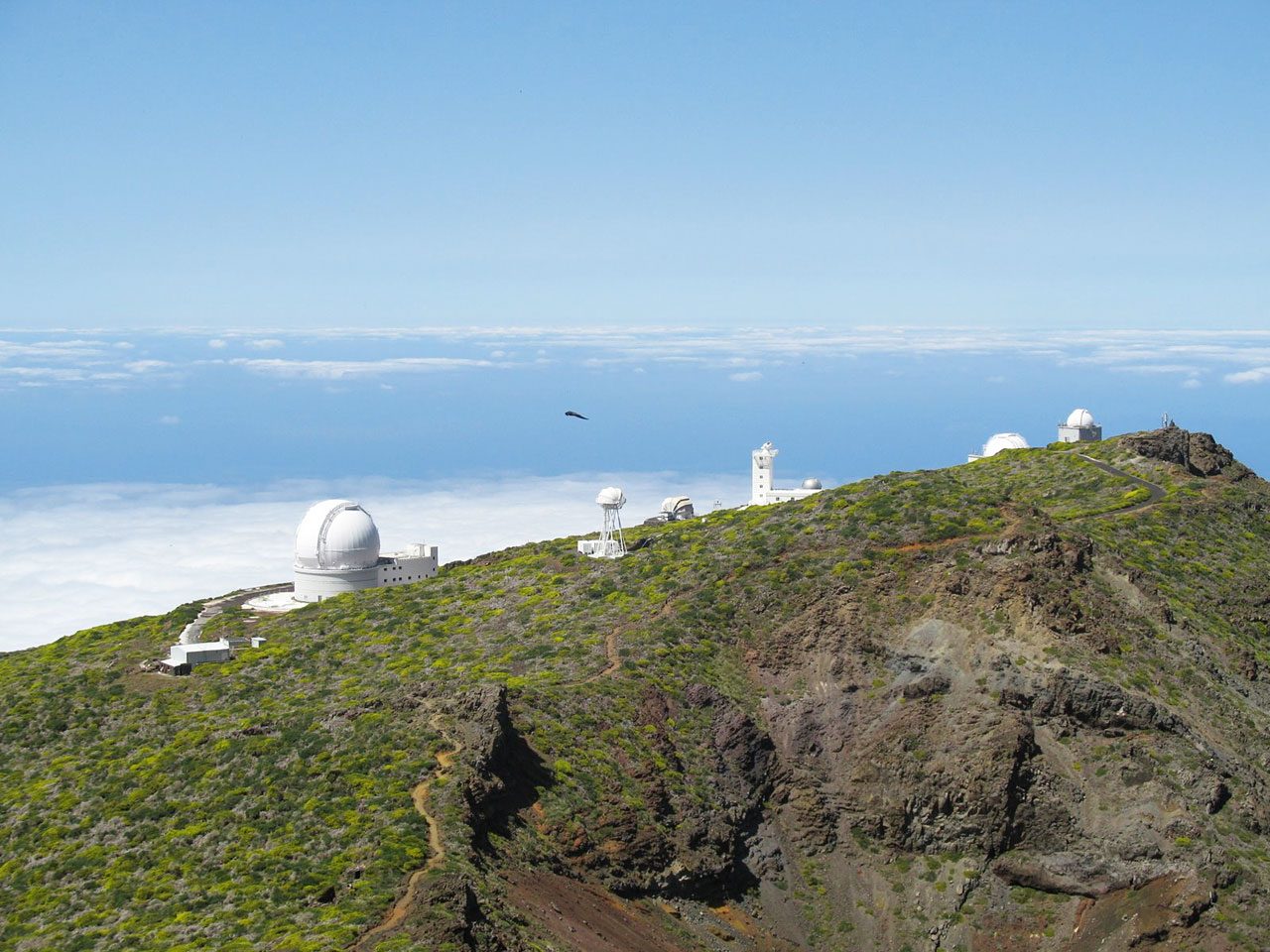
The perimeter trails provide views of the various telescope domes operated by different nations. It highlights the global importance of La Palma for astronomy

Telescope domes on ridge

Observatory domes

The experience

What visiting Astronomy Tour La Palma is really like

You leave Santa Cruz de La Palma and climb the LP-4, a road that gains more than two thousand metres in a series of switchbacks through pine forest. Somewhere near the tree line you break through the cloud layer and the horizon flattens into white.

Read more Show less

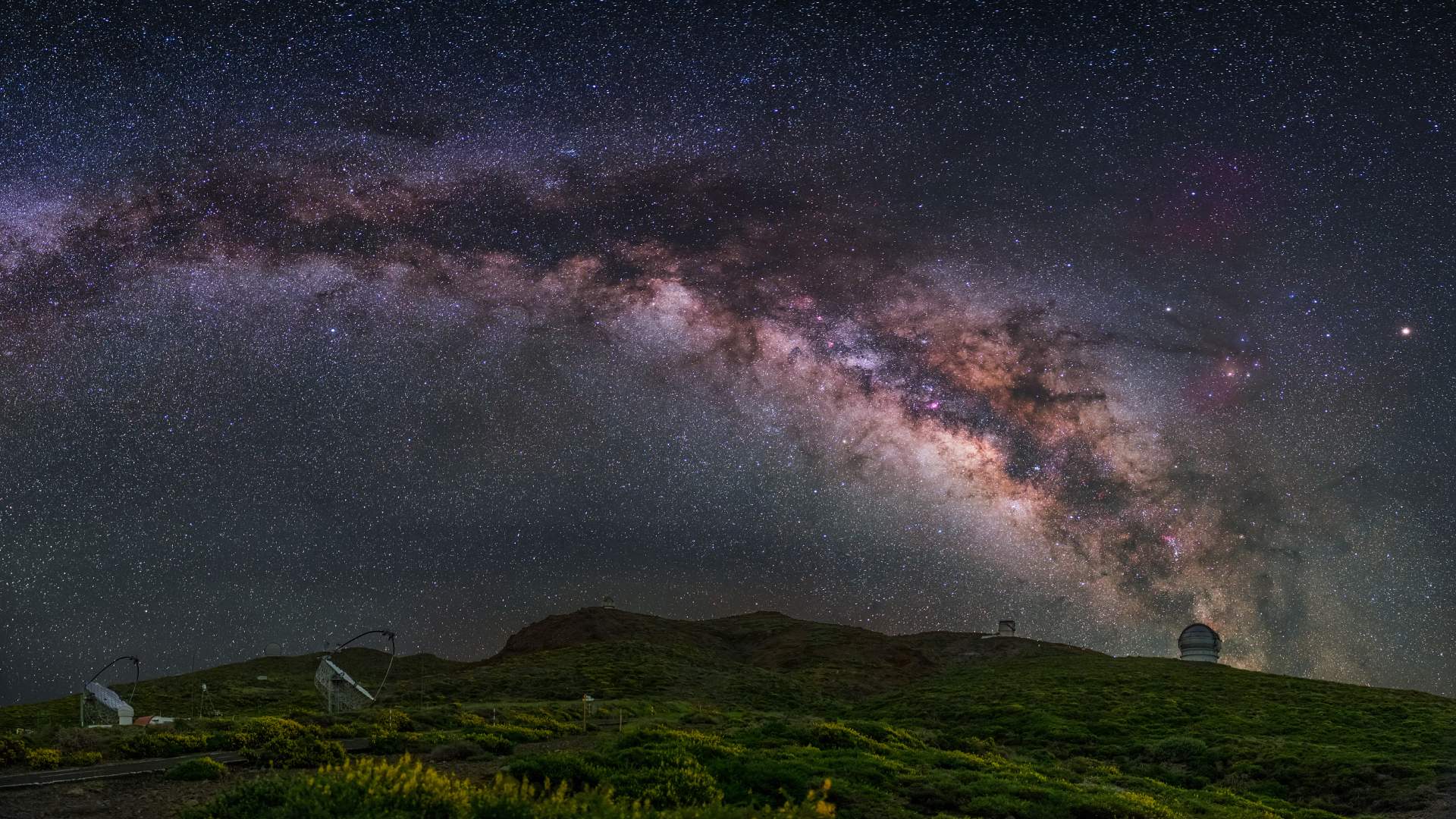
At Km 37 you park and step into thinner, colder air — pack a jacket, even in August. The visitor centre opens 10:00–17:30 daily and charges 15 EUR, card payment only; arriving between 10:00 and 16:00 gives you the clearest weather and full centre operation. Inside, you follow the exhibition on adaptive optics and volcanic geology, then walk the exterior path where the domes of the Gran Telescopio Canarias and the MAGIC arrays stand against bare lava.

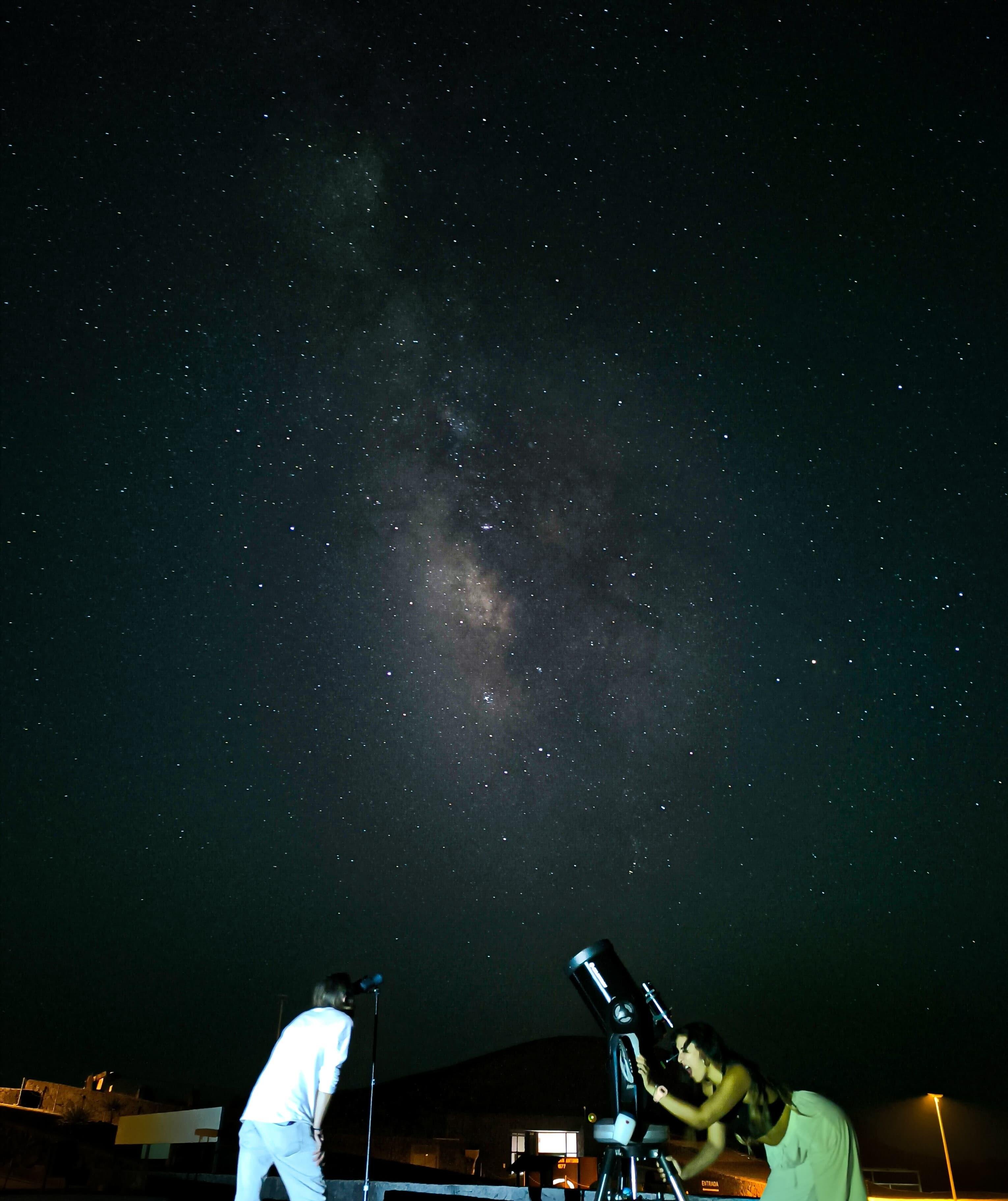
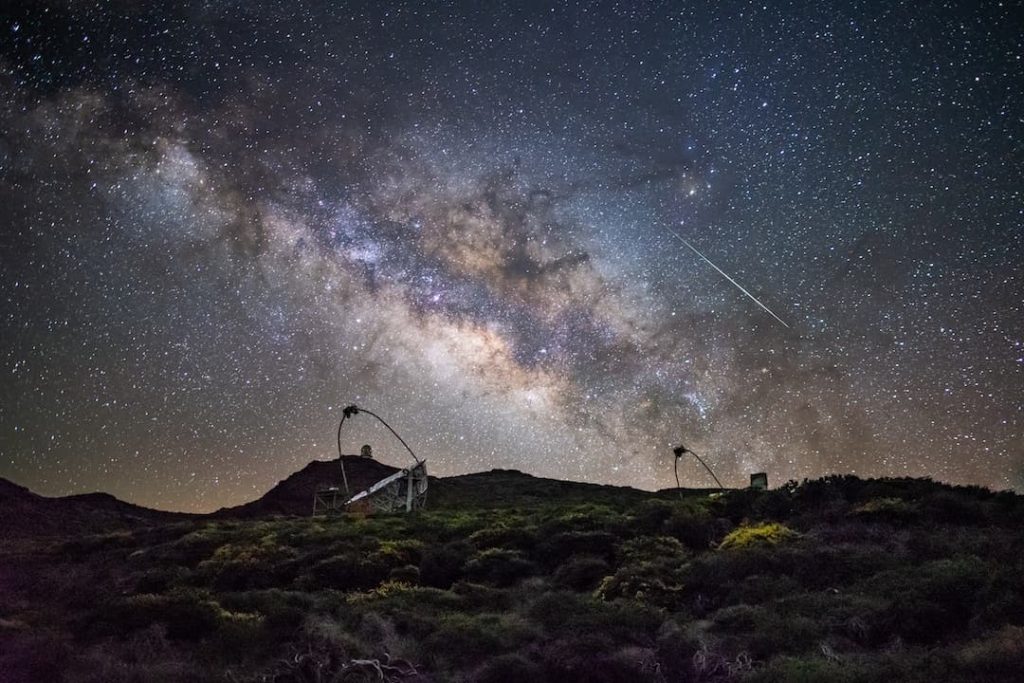
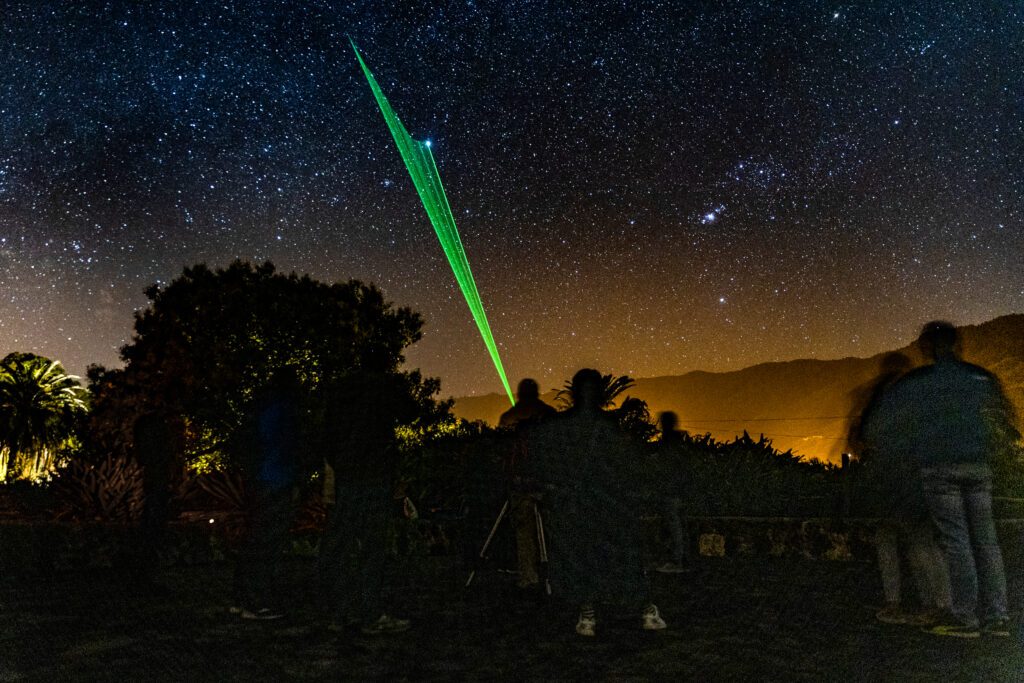
After dark the astronomy tour la palma programmes take over. A guide sets up a telescope, aligns on Saturn or the Ring Nebula, and hands you the eyepiece. On the wine-paired outing a glass is poured while your eyes adapt; on the private option you choose the targets yourself. You lie back, the guide traces constellations with a green beam, and the Milky Way resolves into structure rather than haze. You drive down slowly, headlights dipped, the sea of cloud glowing faintly below.

Astronomy Tour La Palma
Everything You Need to Know

Your complete Astronomy Tour La Palma guide

All the details about your upcoming adventure in one place

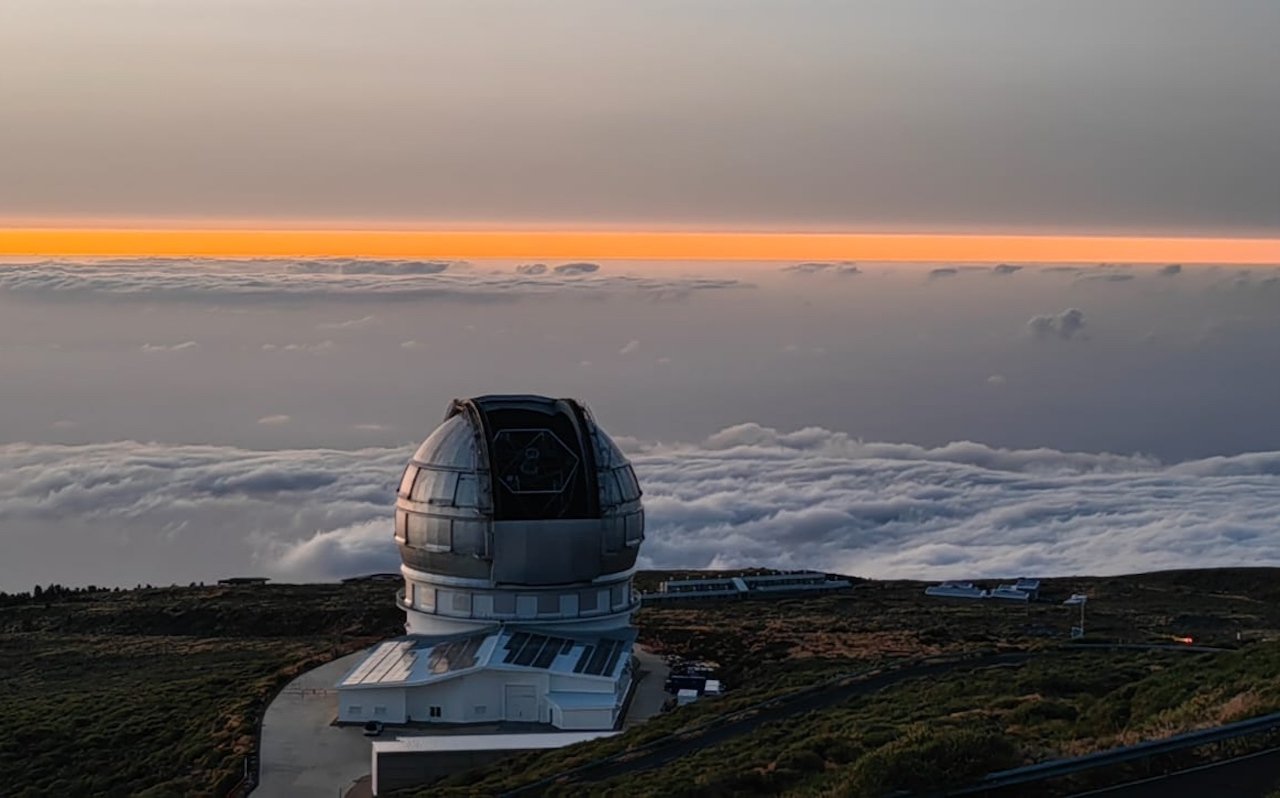
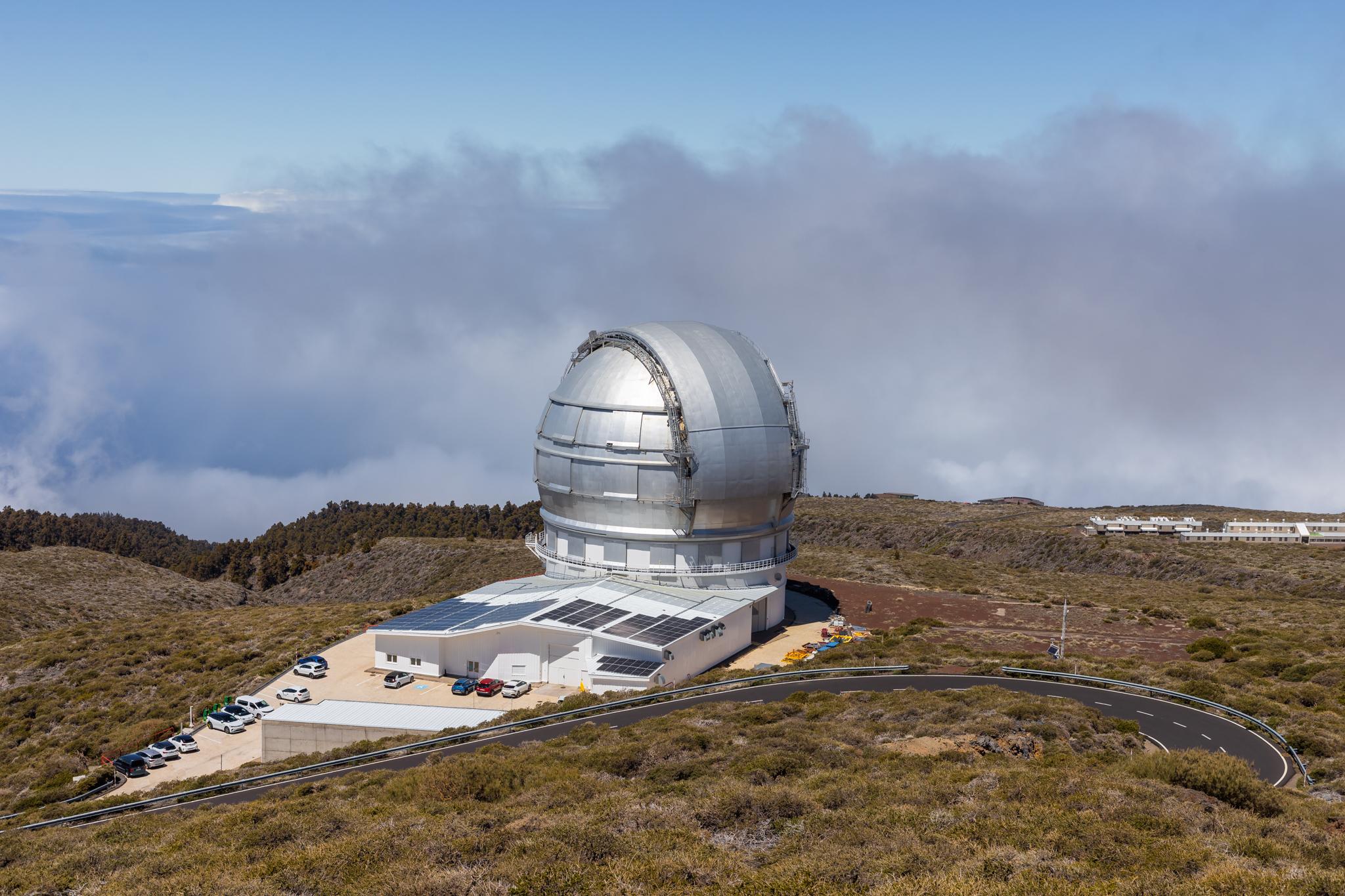
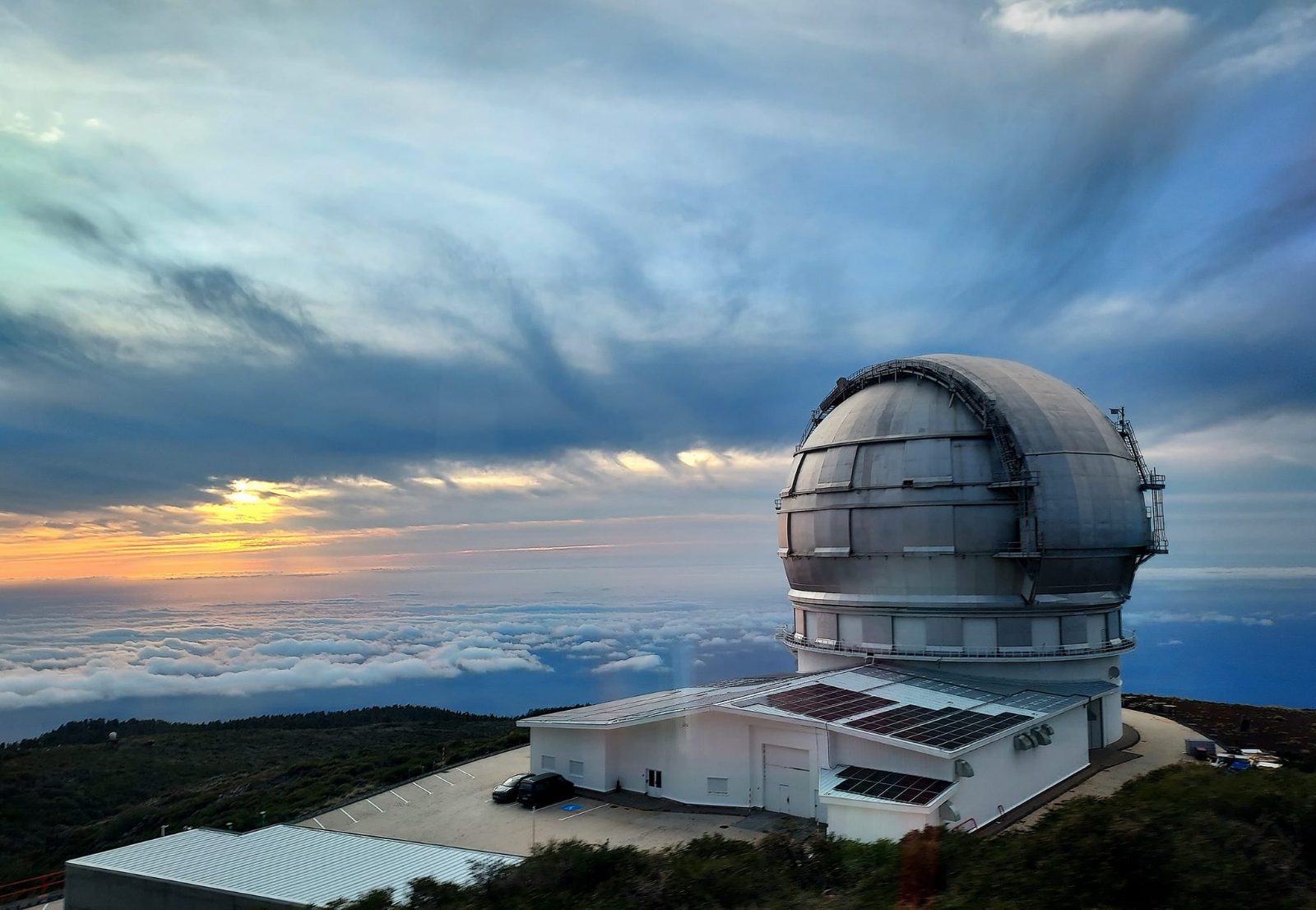
The Gran Telescopio Canarias carries a segmented primary mirror 10.4 metres across — for years the largest single-aperture optical telescope on Earth. It sits on a volcanic rim in Garafía, at the northern end of an island 47 kilometres long.

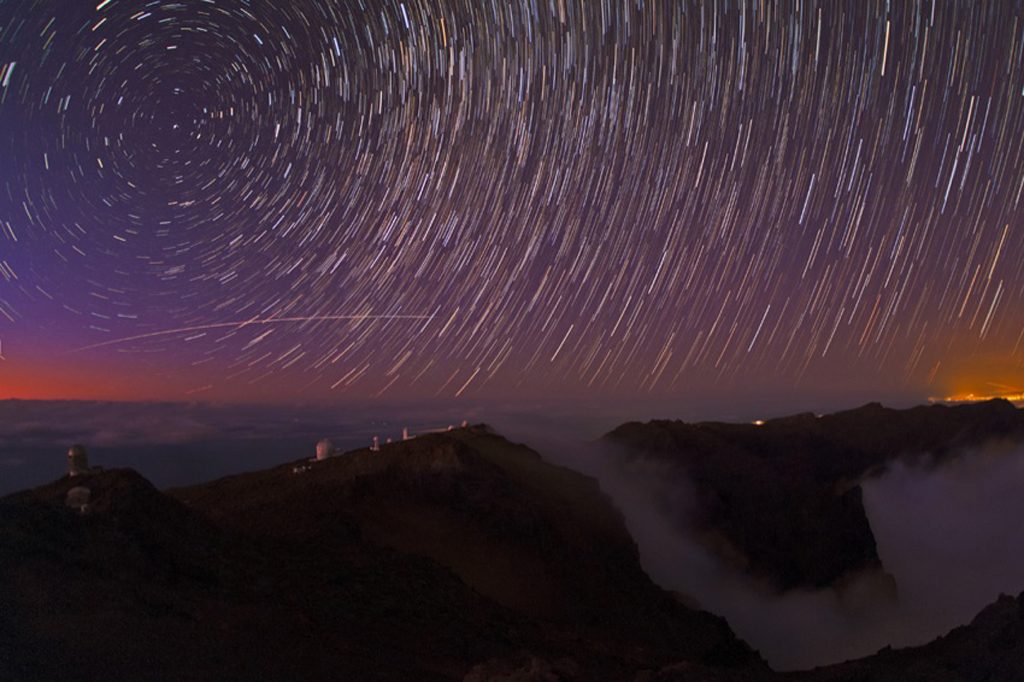
The ridge was chosen for physics rather than scenery. A temperature inversion parks a sea of cloud below the summit for much of the year, while the trade winds arrive laminar and steady after crossing open Atlantic. The result is exceptional seeing, and it drew instruments from more than a dozen nations to a single caldera edge after the 1979 international agreement that established the site. Today the Observatorio del Roque de los Muchachos hosts the Isaac Newton Group, the Nordic Optical Telescope, the Swedish Solar Telescope and the MAGIC gamma-ray arrays, whose 17-metre dishes hunt Cherenkov flashes lasting billionths of a second. Any serious astronomy tour la palma itinerary circles this cluster of white domes.

Protection came early. The Sky Law of 1988 regulates lighting, air traffic and radio interference across the island, and in 2012 La Palma was certified a Starlight Reserve — the first of its kind. Sodium streetlamps in Santa Cruz de La Palma point downward. Municipal ordinances cap upward light spill. That legal scaffolding, not luck, is why the summit still measures among the darkest accessible skies in the Northern Hemisphere.

The architecture reflects the same discipline. Domes are clad in reflective white to shed daytime heat; enclosures vent to equalise with ambient air before nightfall; the road, LP-4, climbs in tight switchbacks so that vehicle headlights rarely face the instruments. The Roque de los Muchachos Visitor Centre, at LP-4 Road, Km 37, Garafía, La Palma, interprets all of this at ground level, with an entrance fee of 15 EUR and doors open 10:00–17:30 daily. Guided stargazing La Palma programmes operate separately, after dark, under the same protected sky.

The mountain also carries older meaning. Benahoarita inhabitants held the caldera rim sacred long before optics arrived, and the rock formations that give the peak its name — the Boys — stand at the highest point of the island. Volcanology, astrophysics and pre-Hispanic memory occupy the same 2,426-metre summit. Astronomy tour la palma tours draw their subject from that overlap: an island whose darkness is a managed public resource, and whose scientific reputation was built on air quality rather than architecture.


The summit's darkness is not an accident of geography but a matter of law.

Dress code

Wear warm, layered clothing as temperatures drop significantly at this high altitude near the Roque de los Muchachos Observatory. Sturdy shoes are recommended for walking on uneven terrain.

Bags & security

Small backpacks are permitted, but visitors must keep personal belongings with them at all times. Large luggage is not allowed inside the facility.

Photography

Non-professional photography is permitted for personal use. The use of tripods requires prior authorization from the site management.

Families & strollers

Children are welcome and can benefit from the educational exhibits. Parents should supervise children closely near the edges of rocky overlooks.

Accessibility

The visitor center facilities are equipped with ramps and accessible restrooms. Paths outside the center may have steep grades typical of high-altitude volcanic terrain.

Food & drink

Consumption of food and drinks is allowed only in designated picnic areas. No food or beverage services are available inside the main exhibition halls.

Not allowed

× Drones × Professional lighting equipment × Alcohol × Pets × Loud speakers × Dangerous goods × Glass containers × Large tripods

What to bring

✓ Water bottle ✓ Warm jacket ✓ Sunglasses ✓ Sunscreen ✓ Camera ✓ Valid identification

Opening hours

Mon 10:00–17:30
Tue 10:00–17:30
Wed 10:00–17:30
Thu 10:00–17:30
Fri 10:00–17:30
Sat 10:00–17:30
Sun 10:00–17:30

How to get there

Closures & exceptions

  • ·Dec 25 — Christmas Day
  • ·Jan 1 — New Year's Day

At a glance

Opening Hours

10:00–17:30

Address

LP-4 Road, Km 37, Garafía, La Palma

Wheelchair Access

Available in visitor areas

Best Time

10:00–16:00

Storage

Not provided

Navigation

Accessible via LP-4 Road

Getting there

Car

The most reliable way to reach the site is via the LP-4 road. Parking is available near the entrance, but fills quickly during peak hours.

Cancellation policy

Cancellations made at least 24 hours in advance receive a full refund of the 15 EUR entrance fee. No refunds are provided for no-shows or late cancellations.

Plan your time

Managing Your Astronomy Tour La Palma Schedule

Recommended time

2-3 hours

Plan for approximately 90 minutes of driving from Santa Cruz de La Palma to reach the high-altitude site, where you should budget additional time to acclimate to the elevation. Visitors typically spend several hours exploring the exhibits and celestial displays when booking an astronomy tour la palma. You can secure your astronomy tour la palma tickets in advance to ensure smoother entry, as crowd levels fluctuate significantly between these Santa Cruz landmarks throughout the day.

Crowd levels through the day

10:00–11:30 Light
11:30–13:30 Moderate
13:30–15:00 Peak
15:00–16:00 Moderate
16:00–17:30 Light
Plan ahead

Best time to visit Astronomy Tour La Palma

Weather · crowds · average price — dots go green to amber to red as each metric rises.

Summer

Ideal for clear night skies and stable temperatures during the day. August is popular for meteor showers.

Autumn

Features crisp air and stable atmospheric conditions. Perfect for astronomical observations.

Winter

Cooler temperatures require heavy winter gear. Be aware of potential road closures on LP-4 due to snow.

Spring

Mild daytime weather with blooming local flora. A great time for hiking before the summer heat.

Insider tips

Helpful tips for visiting Astronomy Tour La Palma

Avoid high-glare times

Arrive between 10:00–16:00 to ensure the clearest weather for viewing displays. Mid-day sun is intense at this altitude.

Book in advance

While standard entry is 15 EUR, check for availability during peak astronomical events. Use official channels to secure your spot.

Check road status

Weather in the mountains changes rapidly. Consult local traffic reports for LP-4 road conditions before your departure.

Where to meet

Astronomy Tour La Palma meeting points

Visitor Center Main Entrance

Visitor Center Main Entrance

LP-4 Road, Km 37, Garafía

Look for the prominent signage near the entrance

Get directions
The story

The history of Astronomy Tour La Palma

The story begins with a barometer, not a telescope. In 1856 Charles Piazzi Smyth, Astronomer Royal for Scotland, sailed to Tenerife and proved that mountain summits above the inversion layer deliver steadier images than any sea-level observatory. His Teide experiment set the precedent that would eventually bring the astronomy tour la palma visitor up a volcanic road to 2,396 metres. La Palma's own chapter opened much later. Site testing at Roque de los Muchachos began in 1972, measuring seeing, humidity and the behaviour of the trade-wind cloud sea below the caldera rim. The results were decisive, and in 1979 the Acuerdos de Cooperación en materia de Astrofísica were signed, binding Spain to share its skies with international partners. King Juan Carlos I inaugurated the Observatorio del Roque de los Muchachos on 29 June 1985, alongside King Carl XVI Gustaf of Sweden and other heads of state — an unusually crowded summit for a mountain that had known mainly shepherds and the Caldera de Taburiente's pilgrim paths. Protection followed capability. Spain's Ley del Cielo of 1988, the first law of its kind, restricted lighting, flight paths and atmospheric pollution across the island; Santa Cruz de La Palma retrofitted its street lamps accordingly. The Gran Telescopio Canarias, with its 10.4-metre segmented mirror, saw first light on 13 July 2007. Near-disaster came in September 2021, when the Tajogaite eruption on Cumbre Vieja closed airspace and coated the island in ash — the observatory itself was spared, and stargazing excursions in La Palma resumed. What survives today is the whole apparatus: the domes at Garafía, the dark-sky law, the Starlight Reserve designation of 2012. Book astronomy tour la palma tickets through the live grid above, where each astronomy tour la palma tour lists its own duration and price. Only the operators shown there run astronomy tour la palma tours to the summit road.

1856

Charles Piazzi Smyth's Teide expedition demonstrates the scientific value of high-altitude Canarian observing sites.

1972

Systematic site testing starts at Roque de los Muchachos, measuring seeing above the trade-wind inversion.

1979

The international Agreements on Cooperation in Astrophysics open Canarian summits to foreign institutions.

1985

King Juan Carlos I formally inaugurates the Observatorio del Roque de los Muchachos on 29 June.

1988

Spain enacts the Ley del Cielo, the world's first law protecting an observatory's night sky.

2007

The Gran Telescopio Canarias, with a 10.4-metre segmented mirror, achieves first light on 13 July.

2012

La Palma is certified a Starlight Reserve, formalising island-wide dark-sky protection.

2021

The Tajogaite eruption on Cumbre Vieja disrupts access for months without damaging the observatory.

Photo spots

Best Vantage Points for an Astronomy Tour La Palma Experience

Roque de los Muchachos Observatory Perimeter

Roque de los Muchachos Observatory Perimeter

Best light · Best arrival window

Position your tripod along the outer fencing to capture the massive telescope domes against the horizon. This location is essential for your astronomy tour la palma documentation during the day.

Mirador de los Andenes

Mirador de los Andenes

Best light · Golden hour

This vantage point offers a panoramic perspective of the caldera rim and the rugged volcanic terrain. It is a preferred spot for those seeking high-altitude landscape imagery during their La Palma stargazing tour.

Pico de la Cruz

Pico de la Cruz

Best light · Before 09:00

Located along the ridge, this spot provides an unobstructed field of view for wide-angle shots of the night sky or cloud inversions. Secure your astronomy tour la palma tickets for transport to this area if hiking is not preferred.

Roque de los Muchachos Visitor Centre Terrace

Roque de los Muchachos Visitor Centre Terrace

Best light · 10:00–16:00

The terrace provides a structured view of the surrounding peaks and is an accessible location for detailed gear setup. This serves as a central hub for visitors preparing for an astronomy tour la palma excursion.

Gallery

Moments from Astronomy Tour La Palma

With kids

Visiting Astronomy Tour La Palma with kids

Planning an astronomy tour la palma with children offers a unique opportunity to explore scientific discovery in an accessible environment. Families can engage with the cosmos while navigating this high-altitude facility comfortably.

Strollers

The center is stroller-accessible, allowing parents to move through the exhibitions with ease while managing young children. Keep in mind that outdoor paths around the site are rugged and better suited for carriers.

Facilities

The visitor center provides essential amenities including baby-change facilities for families needing a quick stop. These functional spaces ensure you can manage care tasks while securing your astronomy tour la palma tickets.

Best ages

School-aged children often gain the most from the interactive exhibits, though the visual displays appeal to younger visitors as well. This astronomy tour la palma tour works best when kids have a natural curiosity about space and stars.

Pacing

Given the high altitude, we recommend a steady pace to help younger family members adjust to the environment. The clear weather during the 10:00–16:00 window allows for a relaxed visit without the rush often found at popular Santa Cruz de La Palma landmarks.

Rainy-day plan

While clear skies are the goal for viewing the night sky, indoor exhibitions remain open during the standard operating hours of 10:00–17:30. These indoor sections provide a reliable backup plan for families considering astronomy tour la palma tours during overcast weather.

Food & drink

Where to Find Food During an Astronomy Tour La Palma

Visitors planning an astronomy tour la palma should be aware that there are no dining facilities at the Roque de los Muchachos site. It is recommended to eat in the towns of Garafía or Santa Cruz de La Palma before departing for your celestial observation.

Restaurante Parrilla Las স্থাপন

€€

Bistro — 20 min drive

Located on the route to the observatory, this venue serves hearty Canarian grilled meats and local wine. It is a popular stop for groups arranging astronomy tour la palma tours who need a substantial meal before heading up the mountain.;Cafetería Roque de los Muchachos

FAQ

Astronomy Tour La Palma — frequently asked questions

Everything you need to know for your journey

Around the corner

More to see near Astronomy Tour La Palma

Roque de los Muchachos Observatory

5 min

Observatory

World-class telescope facility used for deep space research. Access to specific telescope domes is restricted to scientists.

Mirador de los Andenes

10 min

Viewpoint

Panoramic cliffside outlook offering views of the Caldera de Taburiente. A top spot for cloud-sea photography.

Caldera de Taburiente National Park

15 min

National Park

A massive volcanic crater with extensive hiking trails. Known for its unique geological formations and pine forests.

Where to stay

Where to stay near Astronomy Tour La Palma

Hotel Hacienda de Abajo

45 min

Luxury

Historic manor house with gardens. Located in the Tazacorte area.

La Palma Princess

60 min

Mid-range

Large resort with sea views. Suitable for families and longer stays.

Rural Cottages Garafía

20 min

Boutique

Authentic accommodation options in the northern region. Offers dark sky views from the terrace.

Ready for Adventure?

Join thousands of happy travelers who have discovered this incredible experience

Book Your Experience Now