

Quick answer
A stargazing trip la palma normally splits in two: the Roque de los Muchachos Visitor Centre opens 10:00–17:00 every day of the week for daylight access, with adult admission at 15 EUR, while the observing itself happens after dark from public viewpoints lower down. Clear visibility and daylight hours are required for observatory visitor centre access, so cloud on the ridge changes the plan, not the date.
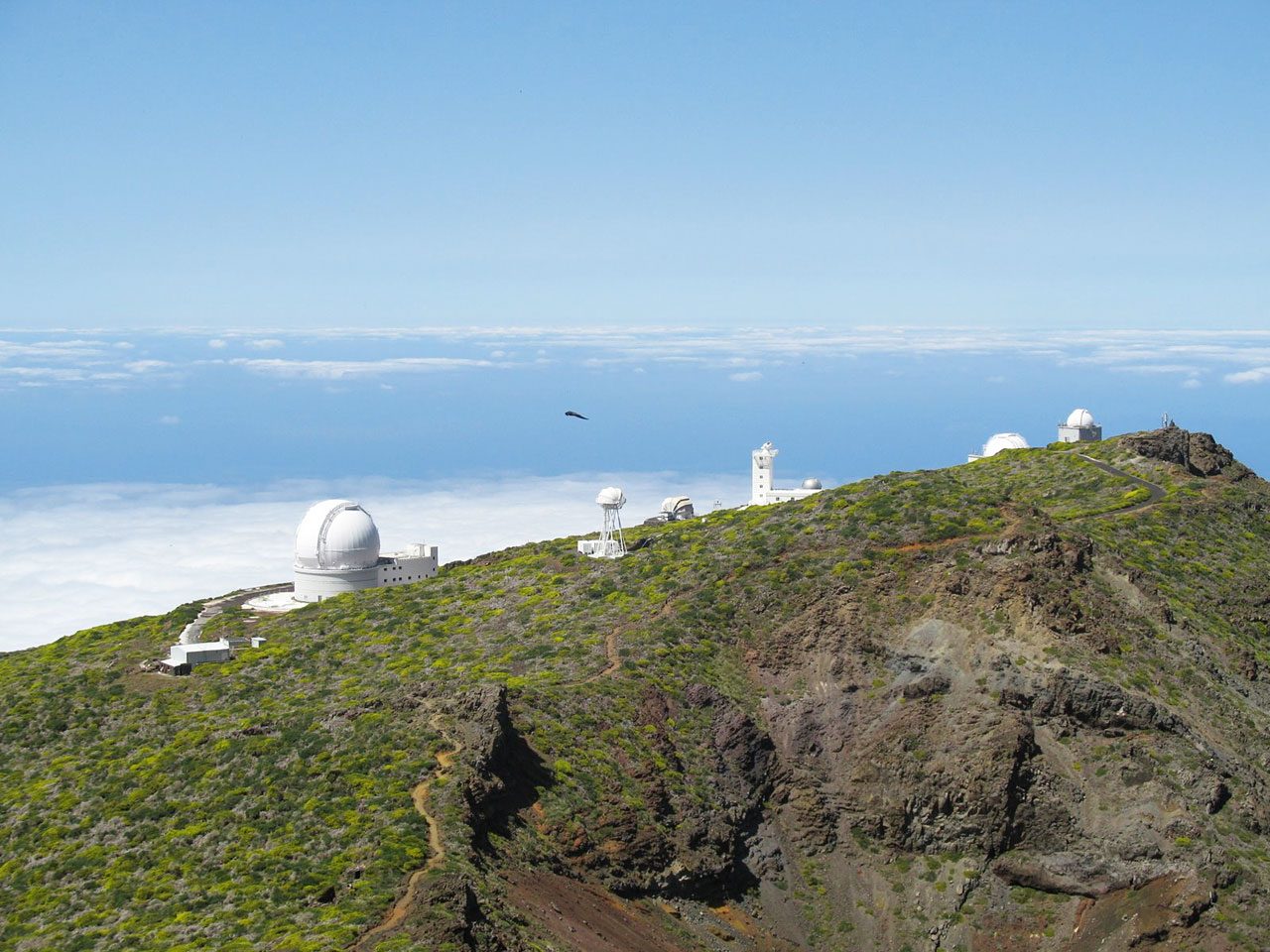
The Milky Way casts shadows here. That claim sounds like tourist-board language until you stand on the caldera rim on a moonless night and watch your own outline appear on pale volcanic gravel — a phenomenon recorded only in a handful of places on Earth. La Palma earned this by law as much as by geography: the 1988 Ley del Cielo restricts lighting, air traffic and radio interference across the island, and UNESCO named it the world's first Starlight Reserve in 2012. The result is an astronomical observation site shared by fifteen telescopes from more than a dozen countries, including the Gran Telescopio Canarias, whose 10.4-metre segmented mirror is among the largest single-aperture optical instruments in use. Visitors arriving from Santa Cruz de La Palma tend to conflate two different experiences. The Roque de los Muchachos Observatory sits at Carretera del Roque de los Muchachos, 38727 Garafía, and welcomes people in daylight, when the domes are shut and the science is paused. Night observing happens elsewhere — at the Llano del Jable viewpoint, the Mirador del Llano de las Ánimas, or the astronomical viewpoints at San Antonio Volcano and Fuencaliente, each fitted with orientation panels rather than instruments. A well-planned stargazing trip la palma therefore stacks a summit visit against an evening under the trade-wind inversion layer, which usually parks a sea of cloud below 1,500 metres and leaves the ridge clear. What defeats people is weather, not logistics. The calima, a Saharan dust haze, can dull transparency for days in summer; winter storms close the mountain road outright. Astronomers judge conditions by seeing, the atmospheric steadiness measured in arcseconds, and La Palma's median figure of roughly 0.76 is why the site was chosen at all. Check the island's forecast the morning of your visit rather than the week before. Treat the summit as the reference point and build outward. Confirm current conditions with the Instituto de Astrofísica de Canarias at +34922405500 or iac.es, allow for a road that climbs through pine forest and thins into lava field, and accept that a la palma observatory tour is guided, seasonal and finite in capacity. Dedicated sections below cover timing, costs, the drive and what to carry.
Optimal Timing for Your Stargazing Trip La Palma
The best time to visit La Palma for astronomical activities involves balancing daytime access to the observatory with clear, dark nights. Planning your trip between spring and autumn maximizes both visitor center access and stable atmospheric conditions.
Spring (April-May)
Low to ModerateMild temperatures, 15°C–22°C
Clear skies and steady temperatures define this season for stargazing.
Summer (June-August)
HighWarm, 20°C–28°C
Increased visitor numbers at the observatory coincide with stable weather.
Autumn (September-October)
ModerateCooler, 16°C–23°C
Reduced crowds and excellent transparency make this a prime window.
Daytime (10:00–16:00)
Peak for center—
The best arrival window is 10:00–16:00 for observatory visitor center access. Clear visibility and daylight hours are required.
Verdict: The optimal period for a trip is between April and May or September and October, ensuring you arrive within the 10:00–16:00 window for visitor center access.
Stargazing Trip La Palma: Visitor Centre Hours
The Visitor Centre at the Roque de los Muchachos Observatory is open daily to accommodate visitors. The facility operates on a consistent weekly schedule.
| Monday | 10:00–17:00 | |
|---|---|---|
| Tuesday | 10:00–17:00 | |
| Wednesday | 10:00–17:00 | |
| Thursday | 10:00–17:00 | |
| Friday | 10:00–17:00 | |
| Saturday | 10:00–17:00 | |
| Sunday | 10:00–17:00 |
Admission Fees for a Stargazing Trip La Palma
Access to the Visitor Centre at the Roque de los Muchachos observatory requires a standard admission fee. There are no additional hidden surcharges beyond the official entrance cost.
A typical adult pays 15 EUR, with the final cost determined solely by the age of the visitor.
Planning Your Journey for a Stargazing Trip La Palma
The Roque de los Muchachos Observatory is located at the highest point of La Palma. Reaching the site requires driving via mountain roads, as public transport options do not provide direct access to the visitor facilities.
LP-4 road via Santa Cruz de La Palma
LP-4 road via Garafía
Private hire from Santa Cruz de La Palma
Preparation Checklist for Your Stargazing Trip La Palma
The Roque de los Muchachos sits above 2,400 m, so preparation for cold, altitude and mountain driving matters more than anything else you pack.
-
Pack insulated layers and a windproof jacket — Summit temperatures run far colder than the coast, even in August.
-
Add gloves, hat and closed walking shoes — Wind chill on exposed ridges bites quickly at altitude.
-
Bring high-factor sunscreen and sunglasses — Thin mountain air lets UV through at much higher intensity.
-
Check tyres, brakes and coolant beforehand — The mountain road climbs steeply and continuously for over 30 km.
-
Fill the fuel tank in the valley — There are no fuel stations along the Roque de los Muchachos road.
-
Carry water, snacks and any medication — No shops or cafés operate near the observatory site.
-
Download offline maps before setting off — Mobile coverage drops out on much of the ascent.
-
Carry photo ID and a red-light torch — ID may be requested on site, and white light disturbs observations.
Check availability
Frequently asked questions about stargazing trip la palma
Everything you need to know about stargazing trip la palma